
Conclusion First
Aluminum is one of the best materials for CNC machining because it combines low weight, strong machinability, corrosion resistance, and excellent dimensional stability.
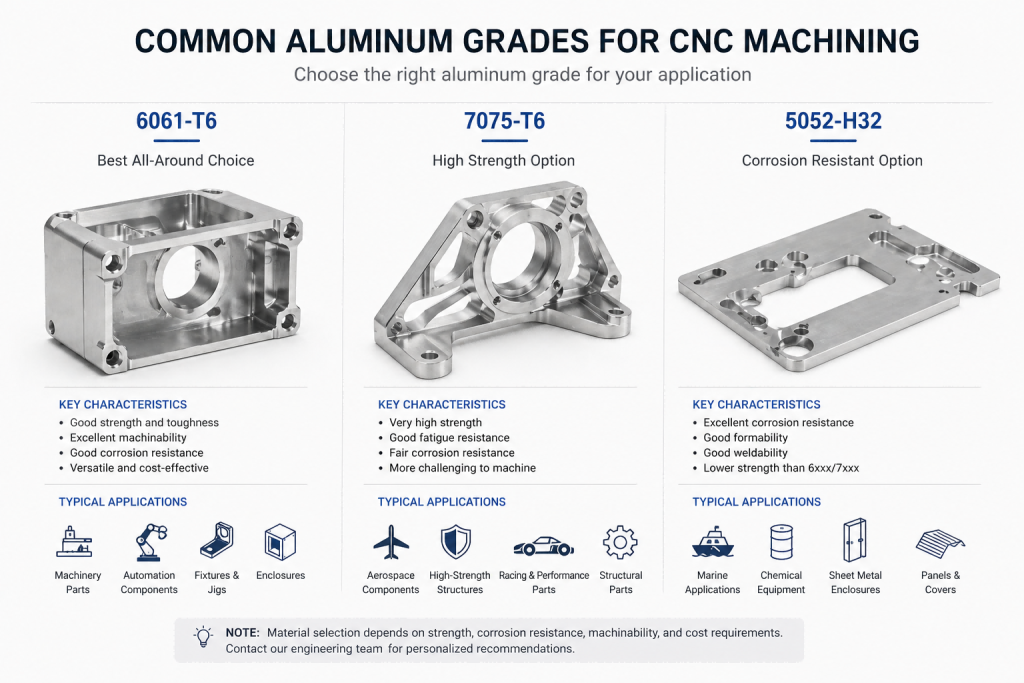
For most precision parts, 6061-T6 offers the best balance of cost and performance, while 7075-T6 is preferred for high-strength aerospace or structural components.
The key to successful aluminum machining is choosing the right alloy, setting realistic tolerances, selecting the proper finish, and working with a supplier that understands threading, burr control, and fixture strategy.
If you need custom production support, RapidEfficient provides aluminum CNC machining from prototype to volume production.
Why Aluminum Is Ideal for CNC Machining
Aluminum is widely used because it offers:
- high strength-to-weight ratio
- fast machining speeds
- excellent corrosion resistance
- good thermal conductivity
- clean cosmetic finishes
- lower cycle time than steel or titanium
This makes it ideal for housings, brackets, fixtures, heat sinks, medical devices, robotics parts, and electronics components.
Best Aluminum Grades for CNC Machining
| Grade | Best For | Main Advantage |
|---|---|---|
| 6061-T6 | General precision parts | Best cost/performance |
| 7075-T6 | High strength parts | Excellent strength |
| 5052 | Covers and enclosures | Corrosion resistance |
| 2024 | Aerospace parts | Fatigue resistance |
| MIC6 | Tooling plates | Flatness and stability |
For buyers comparing popular alloys, see our detailed guide on [6061 vs 7075 aluminum for CNC machining]
What Tolerances Are Realistic?
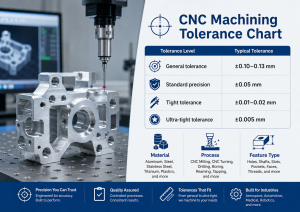
Standard CNC tolerances for aluminum parts are often:
- ±0.05 mm for general features
- ±0.02 mm for precision fits
- ±0.01 mm for critical bores or datums
- tighter tolerances possible with process control or secondary operations
Tighter tolerances increase setup complexity, inspection time, and machining cost.
You can also review how we maintain precision in our [brass electrical connectors case study]
Surface Finish Options
Common surface finishes include:
- As-machined
- Bead blasted
- Clear anodized
- Black anodized
- Hard anodized
- Powder coating
- Cosmetic brushed finish
If appearance or sealing surfaces matter, read our [surface finish guide for CNC machined aluminum]
Threads, Burrs, and Edge Quality
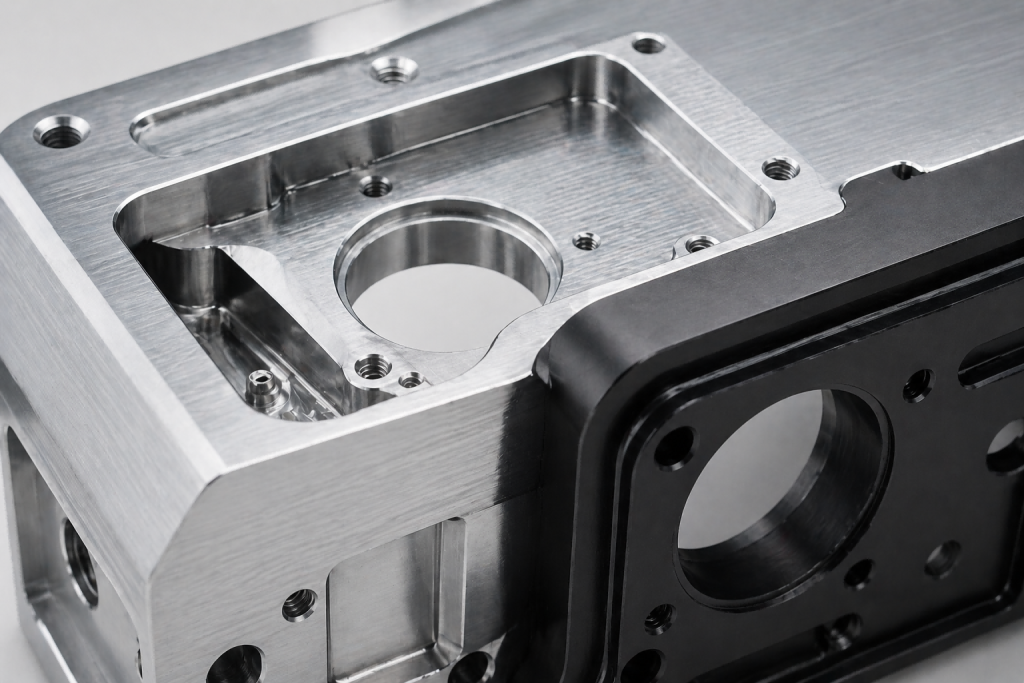
Many aluminum parts fail not on dimensions, but on finishing details such as damaged threads, sharp burrs, poor chamfers, or cosmetic scratches.
For stronger tapped holes and cleaner thread entry, read our [aluminum thread machining guide]
To improve edge quality and remove sharp exits, review our [aluminum burr control guide]
Cost Drivers in Aluminum Machining
Main cost factors include:
- material grade
- part size
- cycle time
- setup quantity
- tool wear
- tolerance level
- finishing process
- order quantity
Design Tip
Adding standard radii, realistic tolerances, and tool-accessible geometry can significantly reduce machining cost.
If you’d like feedback before production, RapidEfficient offers free DFM review for custom aluminum parts.
When to Use 5-Axis CNC
5-axis machining is ideal for:
- complex housings
- multiple-angle holes
- curved surfaces
- reduced setups
- improved positional accuracy
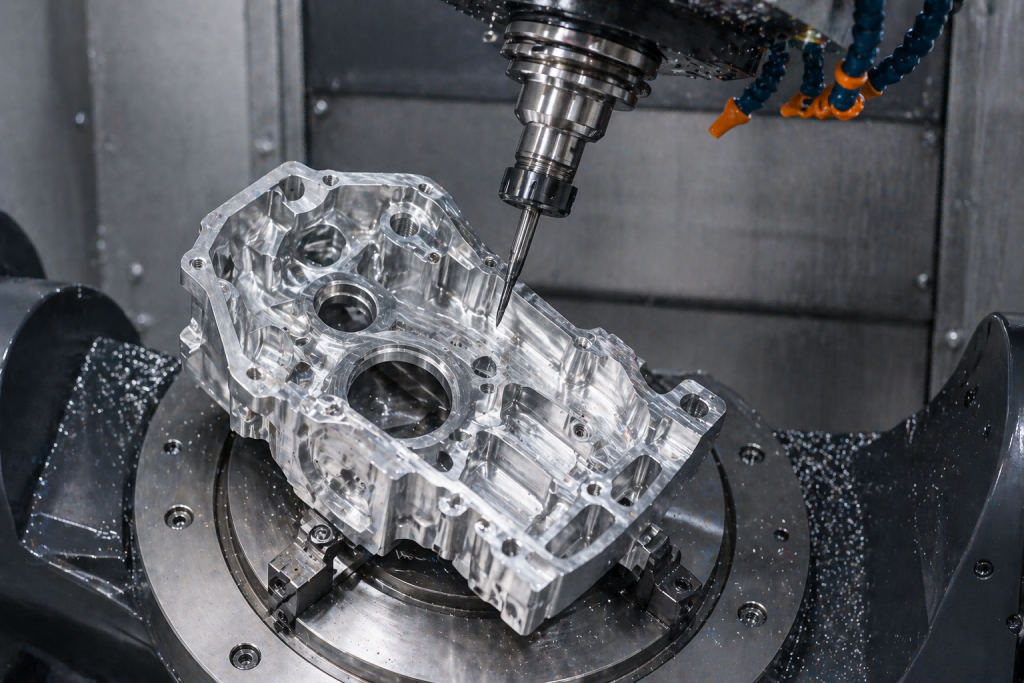
For complex aluminum housings, 5-axis machining often reduces lead time while improving accuracy.
You can also explore our [5-axis CNC machining capabilities]
Engineer’s Note
Many buyers focus only on unit price.
The best suppliers reduce total project cost through better fixture design, fewer defects, cleaner finishes, faster communication, and fewer production delays.
FAQ
What is the easiest aluminum to machine?
6061-T6 is usually the best all-around option.
Is 7075 harder to machine than 6061?
Yes. It is stronger and more abrasive, but excellent for structural precision parts.
Can aluminum hold tight tolerances?
Yes. Precision aluminum parts regularly achieve ±0.01 mm with proper controls.
Does anodizing affect dimensions?
Yes. Critical fits should account for coating thickness buildup.
Need Precision Aluminum Machined Parts?
RapidEfficient produces custom aluminum components from prototypes to production with tight tolerances, clean finishes, and global delivery.
Upload your CAD file for a free DFM review within 24 hours.