Industry News
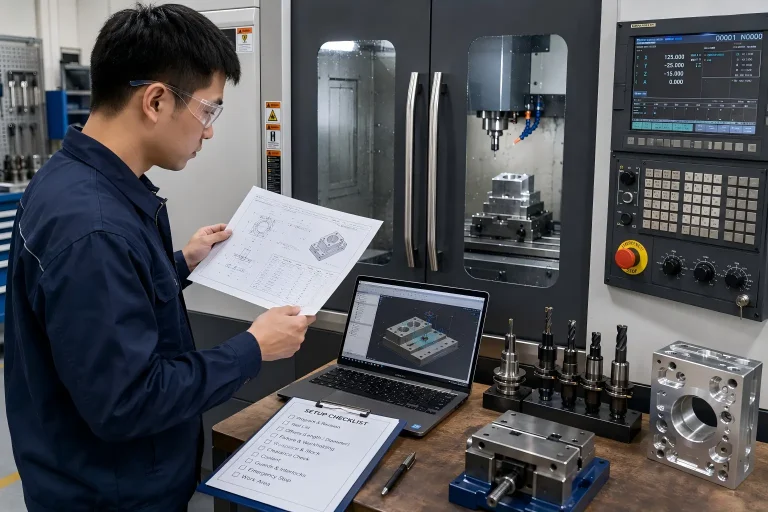
CNC Machining Principles and Safety Precautions: A Practical Guide
Stable CNC machining depends on more than entering a program and pressing cycle start. The machine, cutting tool, fixture, workpiece,…
Industry News
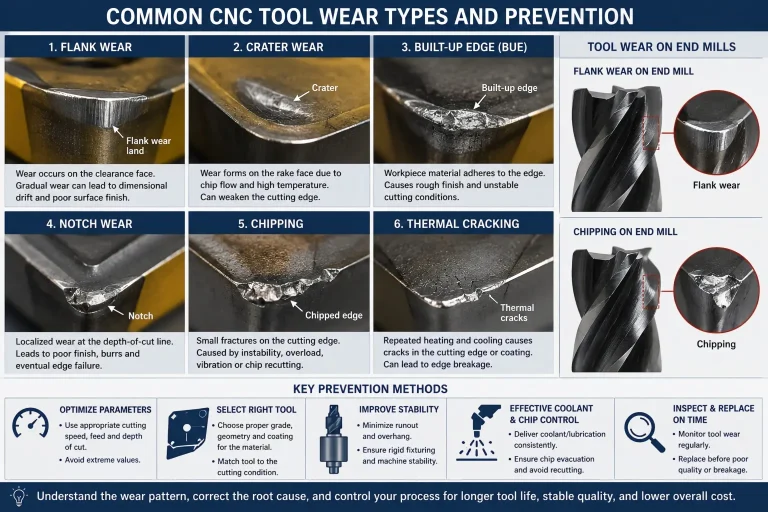
Tool Wear in CNC Machining: Types, Causes, and Prevention
Quick Answer: How Can CNC Tool Wear Be Reduced? The main tool-wear patterns in CNC machining include flank wear, crater…
Industry News
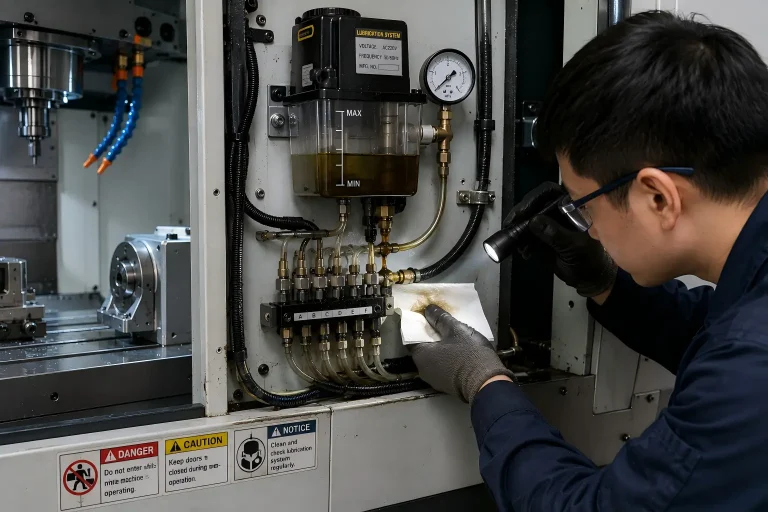
What Causes Oil Leakage in CNC Machining Centers?
Quick Answer Oil leakage in a CNC machining center is commonly caused by loose or damaged fittings, cracked tubing, worn…
Industry News
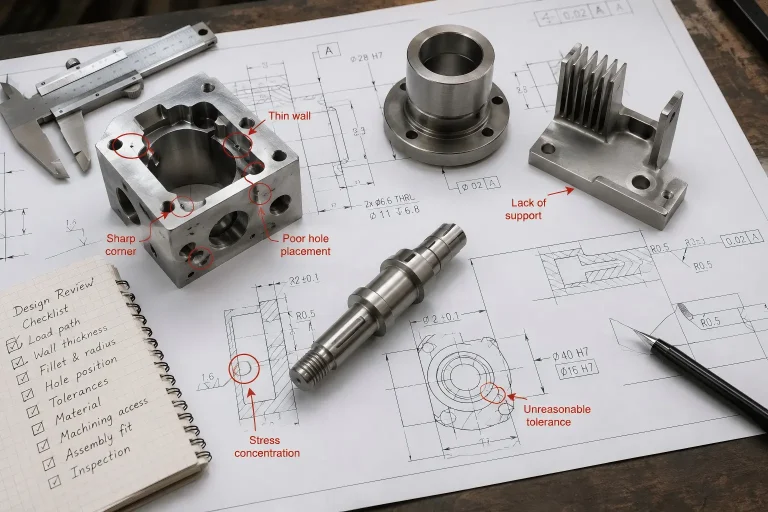
Common Faulty Structures in Mechanical Design and How to Avoid Them
Quick Answer: Common faulty structures in mechanical design include poor load distribution, wrong material selection, improper tolerances and clearances, weak…
Industry News
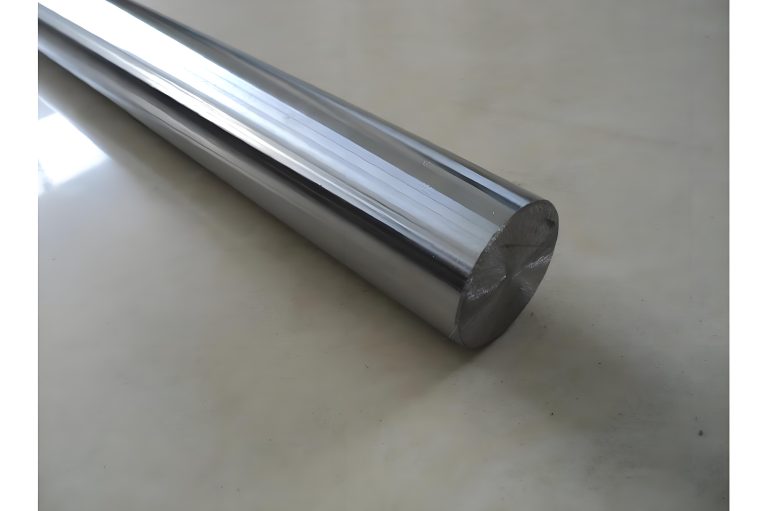
What is the difference between high carbon steel SK2, SK4, SK5, SK7, etc.?
Quick Answer: SK2, SK4, SK5, and SK7 are Japanese high carbon tool steels that mainly differ in carbon content, hardness,…
Industry News
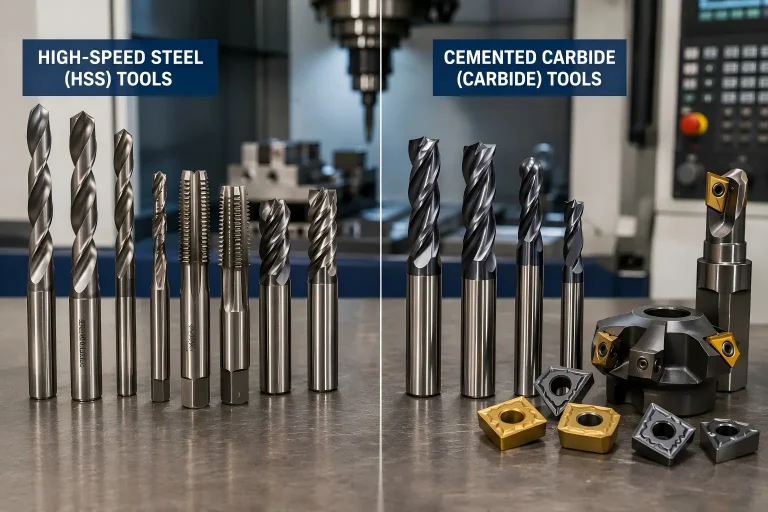
High-Speed Steel vs Carbide Tools: Which Is Better for CNC Machining?
Quick Answer: Should You Choose HSS or Carbide Tools? Choose high-speed steel, or HSS, when the operation needs greater toughness,…
Industry News
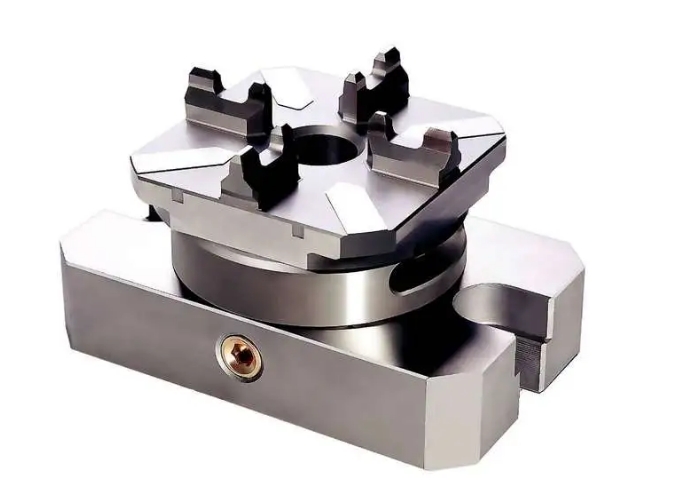
6 Positioning Methods in CNC Machining: Mastering the 3-2-1 Rule for ±0.005mm Precision
In CNC machining, positioning is not only about holding a part in place. It controls how the workpiece is located,…
Industry News
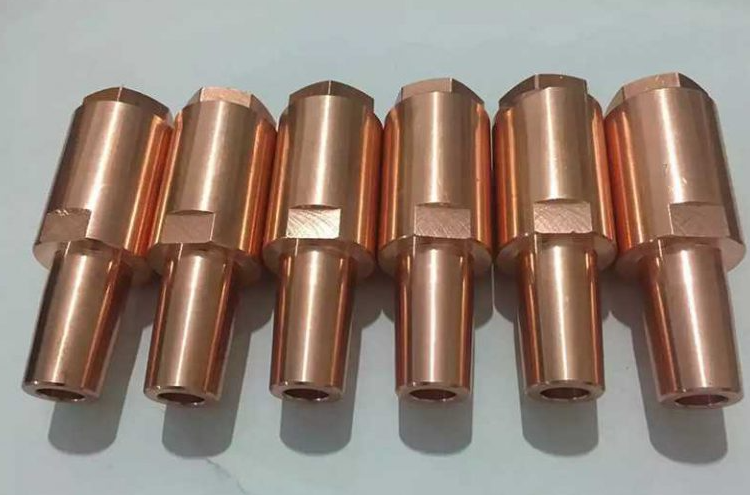
How to deal with surface oxidation of copper parts
1、Understanding Surface Oxidation of Copper Parts What is surface oxidation of copper parts? Surface oxidation of copper parts occurs when…
Industry News
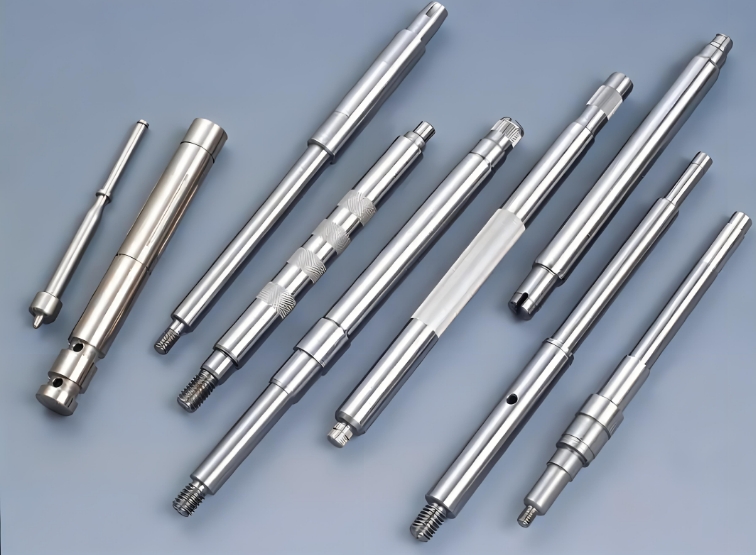
Shaft Parts Machining Sequence: Turning, Milling, Grinding, and Inspection
Quick Answer: What Is the Correct Shaft Machining Sequence? A common shaft machining sequence is material and blank review →…