Industry News
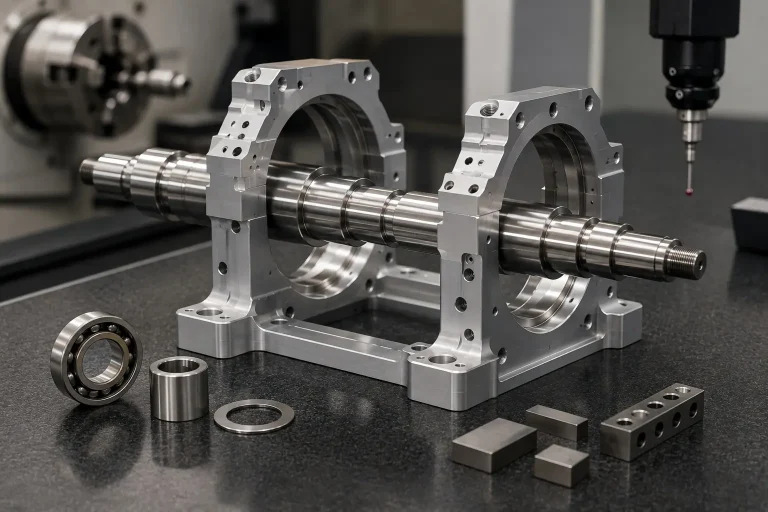
What Is Concentricity in CNC Machining? Concentricity vs Runout
Concentricity is commonly used to describe how closely two or more circular or cylindrical features share the same center or…
Industry News
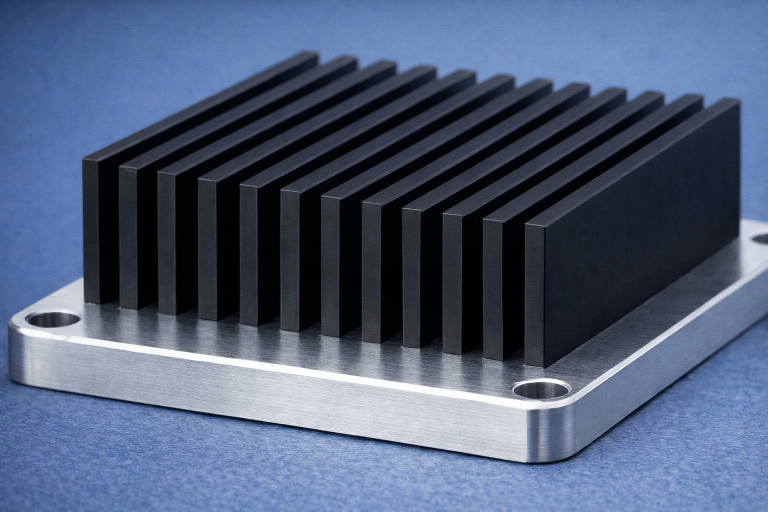
What Is CNC Heat Sink Machining? Design and Manufacturing Guide
A CNC-machined heat sink is a custom thermal component produced by removing material from a solid plate, block, extrusion, or…
Industry News
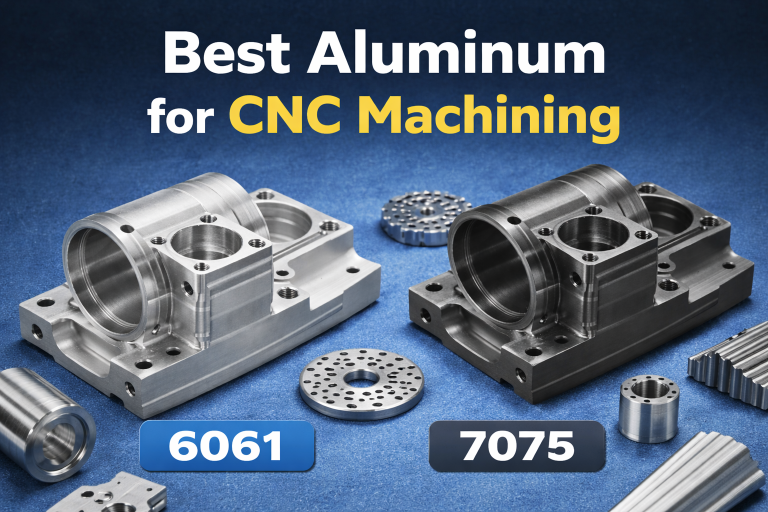
Best Aluminum for CNC Machining: How to Choose the Right Alloy
Quick Answer: What Is the Best Aluminum for CNC Machining? 6061-T6 or 6061-T651 is the best all-around starting point for…
Industry News
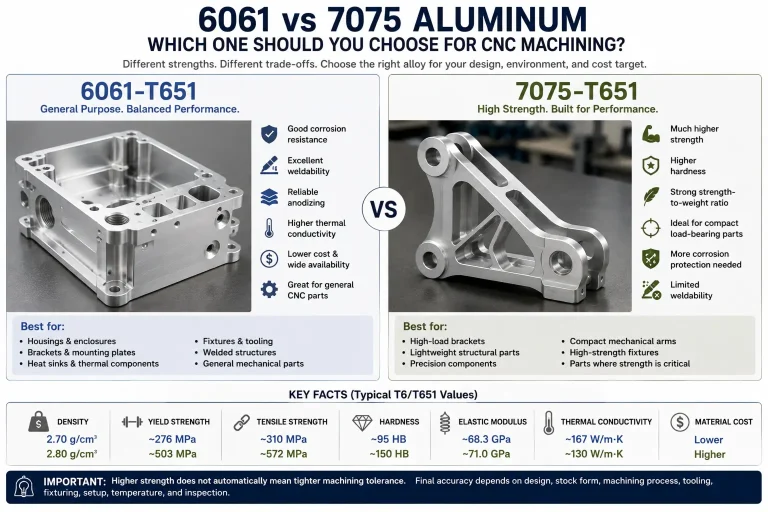
6061 vs 7075 Aluminum: Which One Should You Choose for CNC Machining?
Quick Answer: Should You Choose 6061 or 7075 Aluminum? Choose 6061-T6 or 6061-T651 for general CNC housings, brackets, plates, fixtures,…
Industry News
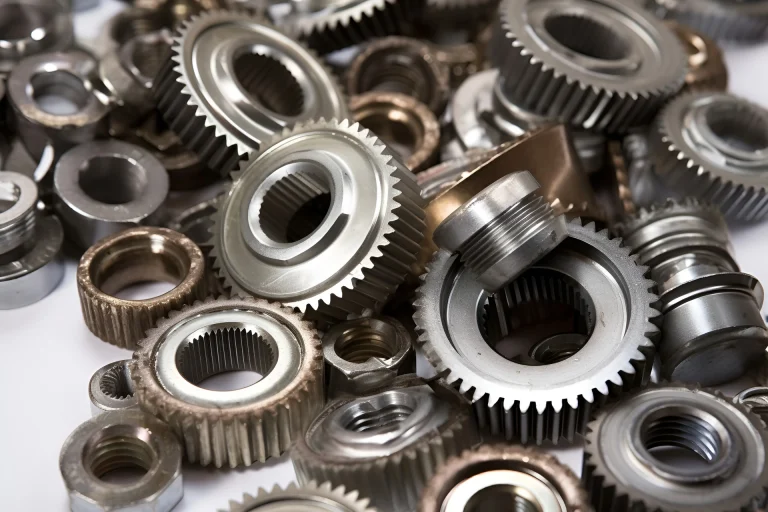
Guide to High-Quality Surface Finishing for CNC Machined Aluminum Parts
Introduction Aluminum alloys are widely used in industries such as aerospace, automotive, electronics, and industrial equipment due to their excellent…
Industry News
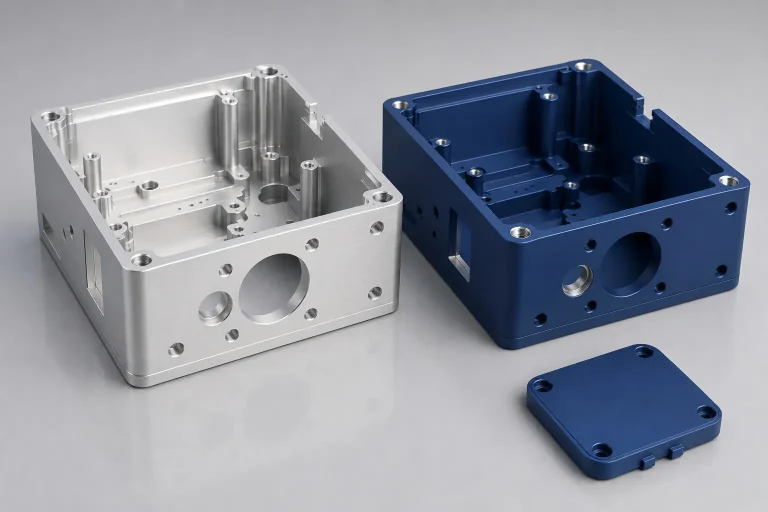
Anodizing vs Spray Painting for CNC Prototypes
Anodizing and spray painting can both add color and protection to CNC-machined prototypes, but they are fundamentally different finishing processes.…
Industry News
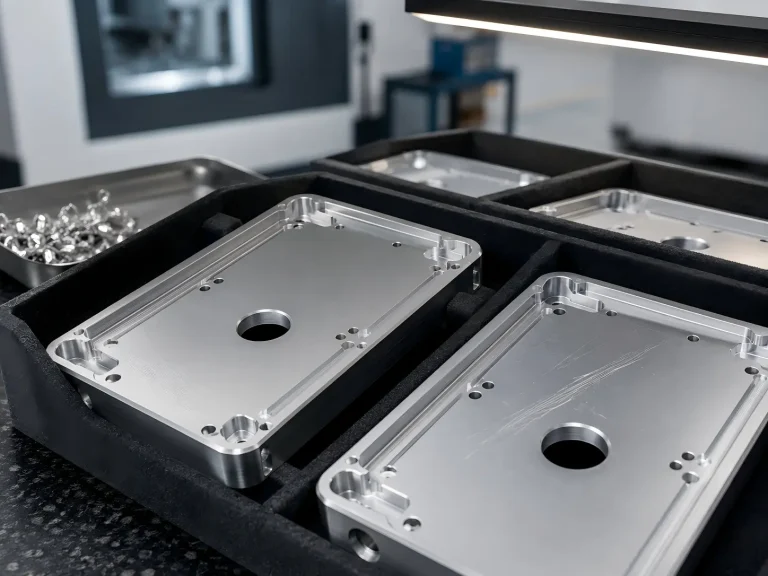
How to Prevent Scratches on CNC-Machined Aluminum Parts
Scratches on CNC-machined aluminum parts do not occur only during cutting. A part may leave the machine with a clean…
Industry News
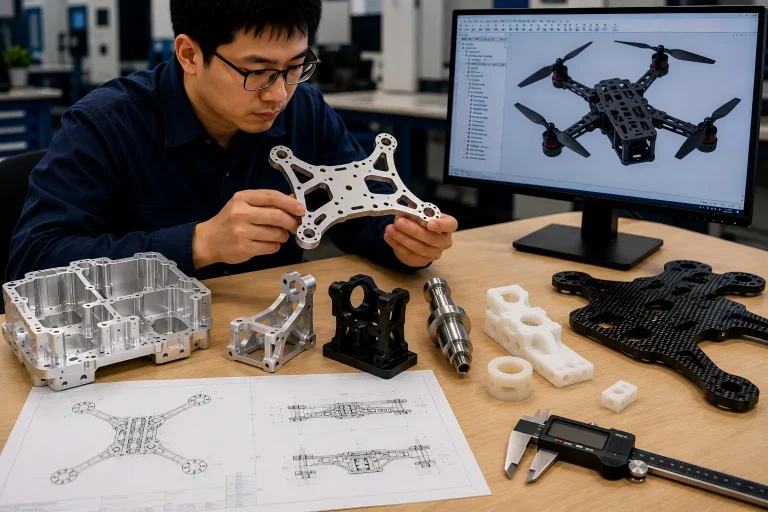
Best Materials for CNC Drone Parts: Strength, Weight, and DFM
Material selection affects much more than the finished weight of a drone component. The material also influences stiffness, fatigue resistance,…
Industry News
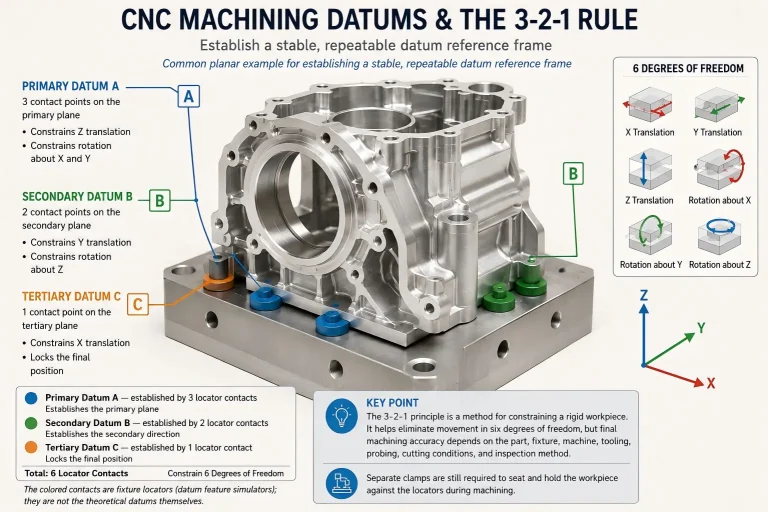
Types of CNC Machining Datums: The 3-2-1 Setup Rule
Why Datum Selection Matters in CNC Machining A CNC datum is not simply a convenient point selected by the operator.…