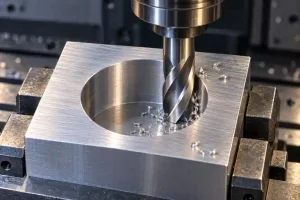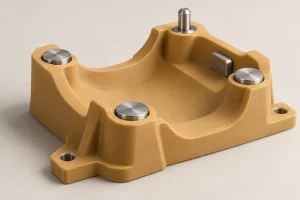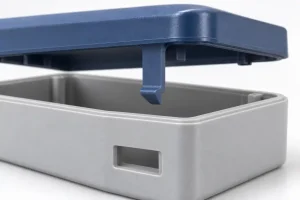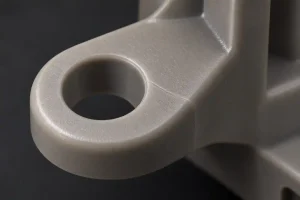

Two plastic bushings can leave final inspection at the intended size and behave differently after storage, humidity exposure, assembly, and continuous load.
One may retain the required shaft clearance. The other may change enough to increase drag, loosen the fit, or alter alignment. The result does not depend only on whether the drawing says Delrin or nylon.
It also depends on:
- The exact polymer grade
- Homopolymer, copolymer, or polyamide type
- Unfilled or modified material
- Stock form and manufacturing history
- Dry or conditioned state
- Service humidity and water exposure
- Temperature
- Sustained and impact loads
- Mating material
- Lubrication and contamination
- Machining geometry
- Inspection timing
Delrin, or correctly specified POM-H, is often a practical starting point when low moisture sensitivity, stiffness, clean machining, and dimensional fit are priorities.
Nylon may be the stronger candidate when toughness, impact resistance, abrasion behavior, or shock loading matters more than minimizing moisture-related dimensional change.
These are screening directions, not universal conclusions. A specific nylon grade can behave very differently from another nylon, and an actual Delrin grade should not be replaced automatically with generic acetal.
The correct choice is the material that protects the required function after the part enters its real operating condition.
Start With the Material Name, Not the Marketing Shortcut
“Delrin vs nylon” sounds like a comparison between two clearly defined materials. In practice, both sides of the RFQ may be less precise than they appear.
Delrin is a registered material name associated with acetal homopolymer, also described as POM-H. POM is the broader polyoxymethylene material family and also includes acetal copolymers, commonly described as POM-C.
A drawing that says only “acetal” does not necessarily require an actual Delrin grade.
Nylon is even broader. It may refer to:
- PA6
- PA66
- PA12
- Cast PA6
- Extruded nylon
- Glass-filled nylon
- Oil-filled nylon
- Impact-modified nylon
- Bearing grades
- Other modified polyamides
These materials do not have identical moisture response, stiffness, toughness, wear behavior, machinability, or stock availability.
| RFQ Term | What It May Mean | Hidden Purchasing Risk |
|---|---|---|
| Delrin | Actual Delrin POM-H grade | The drawing may require a specific brand or grade that the quotation does not identify |
| POM | POM-H or POM-C | Homopolymer and copolymer may be substituted without reviewing the application |
| Acetal | Generic POM family | The buyer may assume it means Delrin when generic acetal is acceptable or supplied |
| Nylon | Any of several PA types | Moisture absorption, stiffness, wear, and machining behavior remain undefined |
| Cast nylon | Usually a cast polyamide stock shape | Cast stock behavior and internal condition may differ from extruded stock |
| Filled nylon | Glass, oil, solid lubricant, or another modification | The filler can change tool wear, stiffness, friction, edge quality, and dimensional behavior |
The material note should therefore answer two separate questions:
- Is an exact brand and grade required?
- If substitution is permitted, which properties and operating conditions must the alternative satisfy?
The Delrin CNC machining guide explains the distinction between Delrin, POM-H, POM-C, and generic acetal in more detail.
The Same Dimension Can Represent Different Material States
A plastic dimension is measured in a physical condition.
That condition may not match the part’s later service state.
A nylon component may pass inspection shortly after machining and then absorb moisture during storage or operation. Moisture can change its dimensions and mechanical behavior. The magnitude depends on the exact polyamide, part thickness, exposure, time, temperature, and surrounding humidity or water.
Water can act as a plasticizer in many nylon grades. Compared with the dry state, a conditioned nylon may show lower stiffness together with greater ductility or impact response.
This is a change in material state, not a universal improvement.
A dry nylon component is not automatically brittle, and a conditioned component is not automatically tougher enough for the application. Grade, temperature, notch geometry, wall thickness, processing history, and loading mode still determine whether a clip, gear, bushing, or thin feature survives.
This distinction matters for snap features. A feature tested in a conditioned laboratory state may not behave identically after dry storage or in a cold environment. Conversely, a dimension established in a dry state may move after the part absorbs moisture.
Moisture may also change nylon’s electrical properties rather than affecting size and stiffness alone.
Delrin and other POM materials generally have lower moisture sensitivity than many common nylons. However, they still respond to temperature, sustained load, residual stress, machining heat, and clamping.
Low moisture absorption does not make a POM part dimensionally permanent.
| Part State | What May Be Happening | Question the Drawing Should Answer |
|---|---|---|
| Raw stock in storage | Moisture and temperature may differ from the machining area | Is a specific storage or conditioning state required? |
| During machining | Cutting heat, clamping, and material removal may temporarily affect shape | Which features are sensitive to release or cooling? |
| Immediately after machining | The part may still be warm or mechanically restrained | Is immediate inspection acceptable? |
| Free-state inspection | Thin or flexible features may recover after unclamping | How should the part be supported? |
| Warehouse or transport | Humidity and temperature may differ from inspection conditions | Could storage change a fitted dimension? |
| Humid or wet service | Nylon may absorb additional moisture | Which clearance or electrical requirement must remain functional? |
| Loaded assembly | Creep and stress relaxation may change contact pressure | Must interference, clamp force, or preload be retained? |
| Repeated motion | Wear, frictional heat, and debris may change the interface | What wear limit or backlash is acceptable? |
For a clearance-sensitive bushing, the buyer should not define only the initial bore diameter.
The drawing or specification should also clarify the mating shaft, required clearance, operating environment, and condition in which the dimension is accepted.
Fit Retention Matters More Than the First Inspection Result
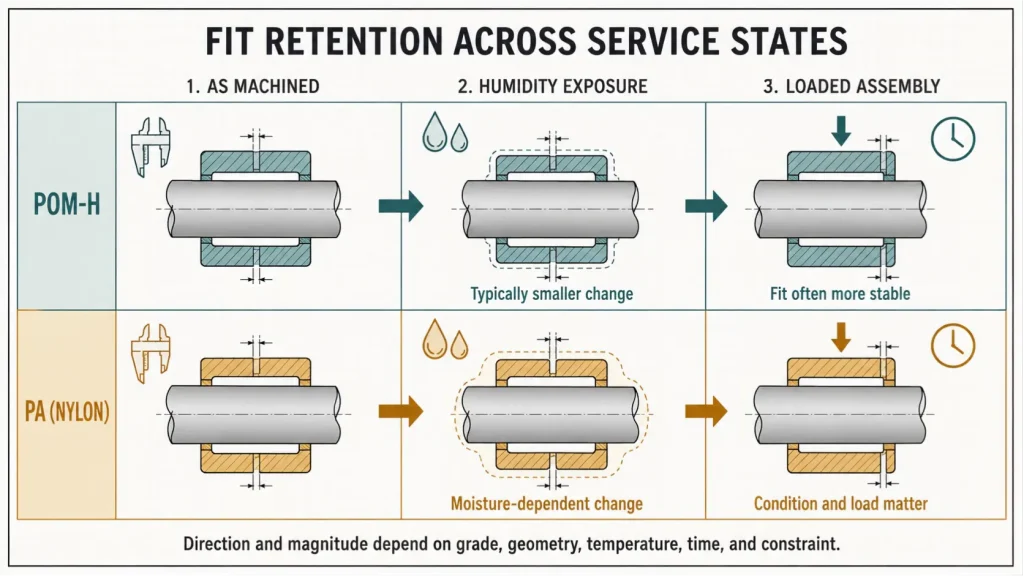
A fitted plastic component can pass dimensional inspection and still fail to retain the intended relationship during use.
Clearance fits
Consider a plastic bushing running on a metal shaft.
The important characteristic is not only the bushing bore at final inspection. It is the operating clearance after the bushing experiences:
- Humidity
- Water or cleaning exposure
- Temperature change
- Assembly constraint
- Continuous radial load
- Frictional heating
- Wear
- Time under load
For nylon, moisture-related dimensional change can reduce or alter a planned clearance. The direction and amount of movement depend on geometry and exposure, so a universal compensation value should not be copied into every drawing.
Delrin may reduce the moisture-related part of that risk, but temperature, load, wear, and material creep still need review.
Press and interference fits
A press fit creates strain in the plastic and stress at the interface.
Over time, polymers can creep or relax under sustained strain. This may reduce contact pressure even if the original interference was machined correctly.
Increasing the interference is not automatically the answer. Excessive interference may create:
- Assembly damage
- Local yielding
- Cracking around thin sections
- Bore distortion
- High insertion force
- Unstable dimensions after assembly
- Excessive stress near sharp geometry
The press-fit decision should include the material grade, wall thickness, mating material, temperature, insertion process, required retention load, and expected service duration.
Thin rings and sleeves
A short, thick bushing usually resists clamping and measurement forces better than a long, thin sleeve.
A flexible sleeve may become oval in a chuck, under a micrometer, or during assembly. It may then recover after the force is removed.
The drawing should define whether the diameter applies:
- In the free state
- On a specified support
- Installed on the mating component
- At an agreed temperature and moisture condition
- Before or after conditioning
Without that definition, the supplier and buyer may both report correct measurements from different physical states.
Wear, Friction, and Impact Are System Properties
Both Delrin and nylon are used for gears, bushings, rollers, guides, wear pads, and sliding components.
That does not mean one material has a universally better wear rate.
Wear belongs to a system containing two surfaces and an operating condition.
| Design Question | Why It Changes the Material Decision |
|---|---|
| What is the mating material? | Steel, aluminum, plastic, coated surfaces, and rough counterfaces can produce different wear mechanisms |
| Is the motion sliding, rolling, oscillating, or intermittent? | Contact and heat generation change with motion type |
| What load and contact pressure are present? | Higher pressure may increase deformation, heat, and wear |
| What speed or duty cycle applies? | Continuous motion behaves differently from occasional adjustment |
| Is lubrication present? | Dry running and lubricated service can favor different grades |
| Can dust or abrasive particles enter the interface? | Debris can dominate wear regardless of the nominal material |
| Is impact or shock loading expected? | Toughness and notch behavior may become more important than initial stiffness |
| Must backlash or running clearance remain narrow? | Moisture and thermal movement may become more important than nominal wear data |
| Is quiet operation important? | Noise depends on stiffness, geometry, load, tooth contact, and the mating component |
| What is the acceptable wear limit? | A visible wear mark is different from a functional loss of fit or alignment |
Delrin often provides a useful combination of stiffness, low friction, fatigue behavior, clean tooth definition, and relatively low moisture sensitivity for precision gears and moving components.
Nylon may be attractive where toughness, impact absorption, abrasion resistance, or shock loading is important. However, the actual dry or conditioned grade must be evaluated because moisture can change both dimensions and mechanical behavior.
Do not turn counterface selection into a universal pairing rule
POM running against POM is not automatically prohibited. Suitable grades and operating conditions can produce a functional same-material pair.
However, dry polymer contacts can develop variable friction, stick-slip, noise, heat, or accelerated wear when the grade, surface, alignment, load, speed, or contamination is unsuitable.
Pairing POM with nylon or using a polymer against a metal shaft may change the friction and wear behavior. It does not automatically solve the interface.
A metal counterface still requires review of:
- Hardness
- Surface roughness
- Coating
- Corrosion condition
- Alignment
- Edge damage
- Lubrication
- Shaft wear
- Generated heat
The material pair should be selected and tested as a tribological system instead of following a universal POM-to-nylon or polymer-to-steel rule.
Filled or internally lubricated grades can change the comparison again.
A low-friction additive may improve one sliding pair while affecting strength, machining, availability, color, compliance documentation, or cost.
The correct question is not:
Which plastic has the lowest coefficient of friction?
It is:
Which specified grade maintains acceptable clearance, wear, strength, and surface behavior against this mating material under the real load and environment?
Delrin–Nylon Fit-Retention Decision Matrix
The following matrix provides a starting direction. It does not replace grade-level data or application testing.
| Functional Requirement | Main Failure to Avoid | Delrin / POM-H Starting Direction | Nylon / PA Starting Direction | Confirmation Before Selection |
|---|---|---|---|---|
| Close clearance fit in changing humidity | Swelling or loss of running clearance | Often the more practical starting point because of lower moisture sensitivity | Requires exact PA grade and conditioned-state review | Humidity, water exposure, mating shaft, minimum operating clearance |
| Precision gear with controlled backlash | Tooth or bore movement changes engagement | Useful when stiffness, tooth definition, and dimensional control are priorities | May be suitable where toughness or impact behavior is more important | Gear grade, load, speed, lubrication, temperature, backlash limit |
| Shock-loaded roller or guide | Cracking or impact damage | Suitable grades may work, but impact demand must be checked | Often considered when toughness and impact absorption are priorities | Impact energy, support, notch geometry, temperature, moisture state |
| Dry sliding bushing | Wear, heat, or seizure | Frequently considered for low-friction precision sliding parts | May also provide useful wear behavior depending on grade | Pressure, speed, counterface, lubrication, heat removal |
| Wet or washdown bushing | Clearance changes or water-related property shift | Lower moisture sensitivity may simplify fit control | Grade-specific water absorption becomes a central design variable | Immersion, cleaning chemical, temperature, target clearance |
| Press-fit sleeve | Loss of retention or assembly damage | Creep and stress relaxation still require review | Moisture and conditioned modulus add further variables | Interference, wall thickness, insertion force, retention load, service time |
| Thin flexible feature | Permanent set or fracture | Stiffness may help geometry control but can increase local stress sensitivity | Conditioned or modified grades may offer useful flexibility | Root radius, deflection, cycle count, temperature, moisture state |
| Abrasive or contaminated motion | Accelerated surface wear | A wear grade may be required rather than standard material | Abrasion-resistant or filled PA grades may be considered | Particle type, counterface hardness, sealing, replacement interval |
| Electrical insulation in humidity | Dimensional or electrical-property change | May offer a more stable starting point for selected conditions | Moisture condition and electrical data must be specified | Voltage, humidity, contamination, required certification and test method |
The matrix is a screening tool, not a substitute for grade-level data or application testing.
A decision can reverse when the nylon changes from PA6 to PA12, when a filler is added, when the counterface changes, or when the part moves from dry indoor service to water exposure.
CNC Machining Changes the Comparison
A material can have suitable service properties and still create avoidable machining or inspection risk in a particular geometry.
Cutting response
Unfilled Delrin and POM commonly produce clean chips and well-defined machined edges when sharp tools and suitable cutting conditions are used.
This can help with:
- Small slots
- Gear teeth
- Bushing faces
- Thin edges
- Threads
- Precision holes
- Cosmetic surfaces
Nylon machinability depends strongly on the PA type and condition.
PA6, PA66, PA12, cast PA6, and modified nylon grades can differ significantly in stiffness, chip formation, burr behavior, and clamping response. Moisture condition, filler, tool sharpness, heat, chip evacuation, and wall support can further change the result.
Cast and extruded nylon stock are not interchangeable
Extrusion is commonly used for standardized rods, sheets, and tubes. Casting is often used for large PA6 stock shapes and can provide lower internal stress for suitable semi-finished stock.
Cast PA6 may therefore be worth reviewing for:
- Large-diameter rollers
- Thick wear plates
- Large bushings
- Pulleys
- Large asymmetric components
- Parts requiring heavy stock removal
This does not mean cast PA6 automatically produces a more stable finished part than extruded PA66.
Final stability still depends on:
- The specific material grade
- Moisture condition
- Stock quality
- Stock dimensions
- Material-removal balance
- Pocket depth
- Wall thickness
- Part symmetry
- Clamping
- Machining heat
- Inspection timing
The correct stock form should be selected from the finished geometry and service condition, not from a universal claim that casting is always more stable.
Clamping and recovery
Both materials can deform under excessive clamping force.
Nylon’s flexibility may make thin walls, sleeves, and unsupported features especially sensitive to chucking and measurement pressure. Delrin is generally stiffer, but a thin POM part can still distort while clamped and recover after release.
The process may require:
- Larger fixture contact areas
- Soft jaws or supported bores
- Lower and repeatable clamping force
- Balanced stock removal
- Separate roughing and finishing stages
- Inspection after unclamping
- A defined free-state support method
These are possible process responses, not mandatory steps for every part.
Burrs and edge quality
Delrin often machines with crisp edges, but burrs can still occur around drill exits, threads, parting faces, thin ribs, and gear teeth.
Nylon may produce flexible or feathered burrs depending on grade, tool condition, and feature geometry. Aggressive manual deburring can also change a fitted edge or small functional feature.
The drawing should identify burr-sensitive areas instead of applying only a general “deburr all edges” note.
Filled grades
Glass-filled nylon is not simply stiffer unfilled nylon.
Fibers can change:
- Tool wear
- Cutting-edge selection
- Surface appearance
- Edge breakout
- Local anisotropy
- Dimensional response
- Inspection results
Filled Delrin, lubricated POM, and bearing-grade nylon also require their own review.
A quotation based on an unfilled generic material should not be reused automatically after the grade changes.
Why cost may increase
The material price per kilogram is only one part of the comparison.
Cost can increase because of:
- Exact-brand material requirements
- Certified or regulated grades
- Limited stock dimensions
- Additional stock needed for stable workholding
- Filled-material tool wear
- Staged machining
- Conditioning or stabilization requirements
- Matched-part inspection
- Functional fit checks
- Environmental inspection requirements
- Extra samples for wear or assembly testing
- Tight tolerances applied without a defined material state
Choosing the cheaper stock material can produce a more expensive part if it creates additional machining, inspection, validation, or assembly work.
Use the Failure Mode to Break the Tie
Delrin may be the more practical starting point when the main risk is:
- Moisture-related loss of dimensional control
- Narrow clearance in a changing indoor environment
- Crisp machined teeth, slots, or edges
- Stiffness in an unfilled precision plastic
- Low-friction sliding with controlled geometry
- Maintaining a bore or shaft relationship after machining
- Reducing uncertainty between dry inspection and humid storage
Nylon may be the more practical starting point when the main risk is:
- Impact damage
- Shock loading
- Abrasive contact
- The need for a tougher or more flexible response
- Large wear components where an appropriate cast or modified grade is available
- An application already designed and validated around a specific PA grade
Neither list is a final approval.
A glass-filled nylon may be stiffer than an unfilled POM grade. A low-moisture PA12 may control dimensions better than a generic statement about “nylon” suggests. A modified Delrin grade may behave differently from standard POM-H.
The exact grade and condition can reverse the first screening result.
When Neither Material Should Be Selected Yet
A Delrin-versus-nylon comparison can create a false two-material choice.
The selection should be reopened when the component requires:
- Service temperature beyond the qualified grade
- Aggressive chemical exposure
- Steam or repeated hot-water exposure
- Very low creep under sustained load
- Extreme pressure and sliding speed
- Very low friction against a sensitive counterface
- Tight dimensions through severe humidity change
- Low outgassing
- Specialized electrical performance
- Flame-retardant certification
- Food-contact or other regulatory documentation
- Transparent or optical function
- Structural properties beyond an unfilled engineering plastic
Depending on the dominant requirement, PEEK, PET, UHMW, PTFE, PPS, PEI, a filled polymer, or even a metal may deserve review.
The best plastics for CNC machining guide provides a broader starting comparison, but final selection still requires the exact grade and operating condition.
Inspection Must Reproduce the Required Part State
A measurement instrument does not remove uncertainty about the part condition.
The inspection plan should define:
- When the part is measured after machining
- Whether it is dry, conditioned, or exposed to service humidity
- The temperature condition
- Whether the part is free or restrained
- How thin rings and sleeves are supported
- Whether the mating component is available
- Which measurement force is acceptable
- Whether the requirement applies before or after assembly
Calipers and micrometers may be suitable for many ordinary dimensions, but contact pressure can influence flexible parts.
A plug gauge or mating shaft may provide useful fit information, but it does not automatically prove roundness, cylindricity, wall thickness, or long-term service clearance.
A CMM can measure complex feature relationships, but probe force and support strategy still need review for thin plastic components.
For critical fits, the inspection plan may combine:
- Dimensional measurement
- Free-state geometry checks
- Functional gauges
- Actual mating-part checks
- Environmental conditioning
- Repeat measurement after an agreed interval
- Material certificates
- Lot or stock identification
The CNC machining tolerances guide explains why engineering-plastic tolerances need a defined material, environment, inspection timing, and functional reference condition.
The Drawing Must Define Condition, Fit, and Counterface
A 3D model defines nominal geometry. It does not fully define a functional Delrin or nylon component.
| Required Information | Unclear Instruction | What the Final Specification Should Establish |
|---|---|---|
| Polymer identity | “Plastic” | POM-H, POM-C, PA6, PA66, PA12, cast PA, or another defined family |
| Brand requirement | “Delrin” used generically | Whether actual Delrin brand and grade are mandatory |
| Grade modification | “Nylon” | Unfilled, glass-filled, oil-filled, impact-modified, bearing grade, or another specified modification |
| Stock form | Not stated | Rod, plate, tube, cast stock, extruded stock, or customer-approved alternative |
| Color | Assumed from material name | Required color and whether color is functional or cosmetic |
| Moisture condition | Not stated | Dry, conditioned, as-machined, or another agreed inspection state |
| Service environment | “Indoor use” | Expected humidity, water, cleaning fluid, temperature, and exposure duration |
| Functional fit | Only nominal bore shown | Clearance, interference, retention, backlash, or acceptable movement |
| Mating component | Not supplied | Shaft or housing material, nominal size, finish, coating, and tolerance |
| Load and motion | “Wear part” | Static, sliding, rotating, oscillating, impact, speed, and load direction |
| Lubrication | Not stated | Dry running, external lubrication, or internally lubricated material |
| Critical edges | General deburr note | Gear teeth, sealing edges, thread starts, or sliding edges that need controlled burr removal |
| Inspection state | “Check dimensions” | Free or restrained state, timing, environment, support, and required gauge |
| Material evidence | “Certificate required” | Certificate type, brand traceability, lot identification, or regulatory evidence actually needed |
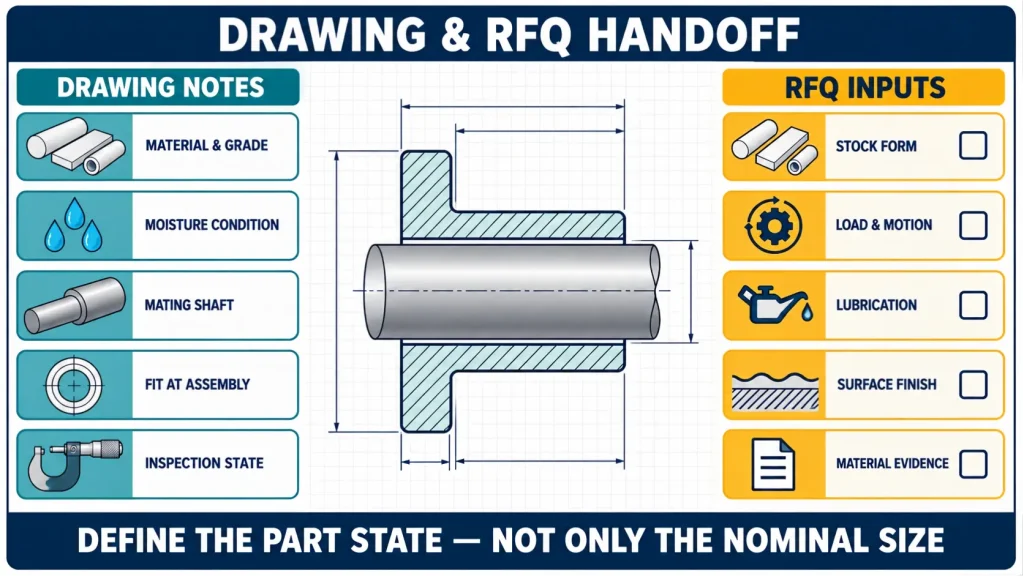
A useful material note should identify the polymer precisely enough for the supplier to source and inspect the intended stock.
For example, the buyer may need to state whether the requirement is:
- Actual Delrin POM-H
- Generic unfilled POM-H
- POM-C permitted as an alternative
- PA66 in an agreed condition
- Cast PA6
- A filled or bearing-grade nylon
- A supplier-proposed equivalent requiring approval
The drawing should not force a specific brand when the function does not require it. It should also not permit uncontrolled substitution when moisture, wear, compliance, or fit depends on the grade.
Send the Service Condition With the Drawing
For a useful Delrin-versus-nylon review, provide:
- 2D drawing and 3D CAD file
- Exact material name or permitted material family
- Brand and grade requirement
- Unfilled or modified-grade requirement
- Stock-form preference when relevant
- Operating humidity and water exposure
- Temperature range
- Mating material and mating-part dimensions
- Clearance, interference, backlash, or retention requirement
- Static, impact, and cyclic loads
- Sliding or rotational speed
- Lubrication condition
- Expected wear limit
- Critical burr-sensitive features
- Free-state or installed inspection requirement
- Conditioning requirement
- Material certificate or regulatory documentation
- Quantity and validation needs
Rapid Efficient can review material identity, stock availability, machining geometry, workholding risks, moisture-sensitive fits, mating relationships, burr control, and inspection conditions before quotation.
Our CNC machining services support custom engineering-plastic components for suitable prototype, low-volume, and repeat-production requirements.
The objective is not to declare one plastic the winner.
It is to select and verify the material state that preserves the required fit, motion, wear behavior, and assembly function.