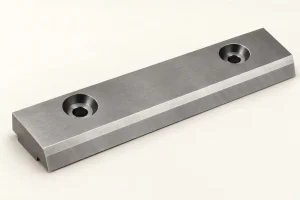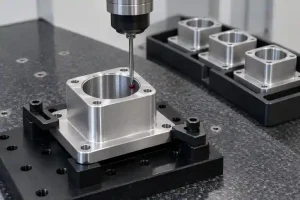

Suppose a coupling-hub drawing calls for “1045 steel, normalized,” while a supplier offers “1045 steel, annealed.” Matching the grade has not resolved the difference. The buyer still needs to establish what treatment is offered and whether the finished hub must be delivered in the normalized condition.
In a conventional comparison, normalizing uses air cooling after heating steel into the austenitic range, while full annealing uses much slower cooling, commonly in the furnace. They can leave the same steel with different structures and properties. A substitution therefore depends on the required delivery condition and the processing still to come, rather than the grade name alone.
This article concerns carbon and low-alloy steels for machined parts. The treatment cycle must suit the particular grade, section and prior processing.
What “Annealed” Means on This Quote
Annealing is a broad family of treatments. Even normalizing can fall within that broad classification, although purchasing descriptions commonly distinguish normalized stock from annealed stock. Ask which annealing treatment the supplier is offering before comparing the two conditions.
For conventional full annealing, slow cooling through the transformation range allows the steel to develop a relatively soft structure. In suitable carbon steels, the faster cooling of normalizing can produce finer pearlite—the layered ferrite-and-carbide constituent—and greater hardness than full annealing of the same grade. Neither treatment name supplies a universal hardness value.
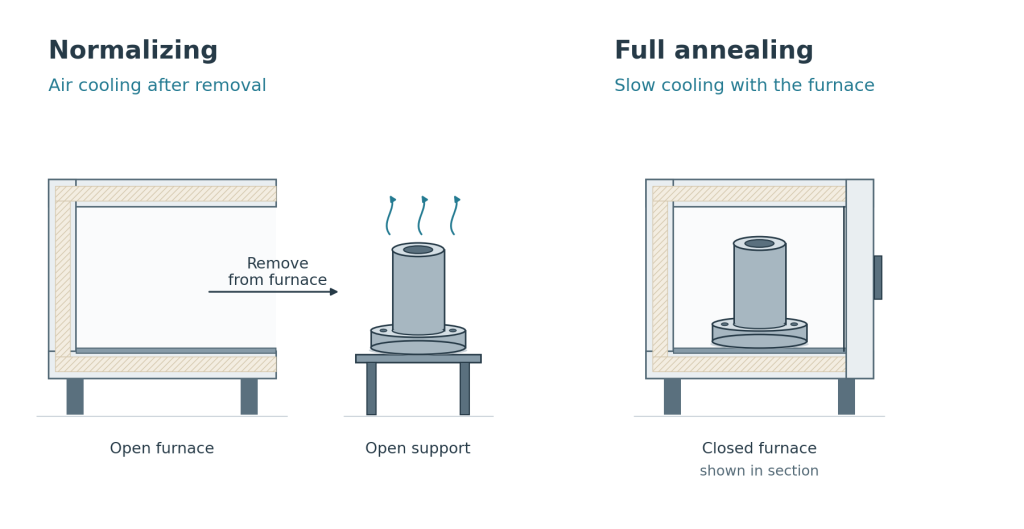
Section size matters because the surface and center do not cool at the same rate. The result also depends on composition and the structure present before treatment. Normalizing is therefore not a general promise to make any starting material harder. Highly hardenable grades can form hard structures even during air cooling, so the usual carbon-steel comparison should not be extended to every tool or stainless steel.
ASM International’s explanation of annealing and normalizing describes these process and structural distinctions. Use the applicable material specification and agreed treatment requirements to define the order.
Two other descriptions need attention:
- Spheroidize annealed: the treatment aims to produce rounded carbide particles. It is often used to improve the machinability of higher-carbon steels. It is not simply another label for a normalized structure.
- Stress relieved: the stated purpose is to reduce residual stress. This alone does not establish that the material has been fully annealed or normalized.
Keep these terms in the quotation and material records. Replacing all of them with “heat treated” removes information needed to decide whether the stock is suitable.
Does the Finished Part Keep the Incoming Condition?
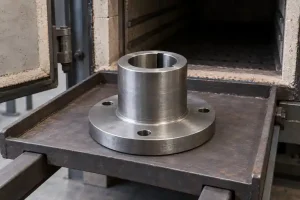
Return to the illustrative coupling hub. It has a central bore, a keyway and a mounting flange. The same outline can belong to orders with different final material requirements.
The finished hub must be delivered in the normalized condition
If no further heat treatment is planned, the incoming condition remains directly relevant to the finished part. Annealed stock cannot be accepted against a normalized requirement merely because the bore, keyway and flange meet their dimensions. Any proposed change needs approval against the drawing, material specification and required properties.
The machining proposal should also suit the offered stock. Lower hardness can help cutting in some steels, but the softest condition is not always the easiest to machine. Some low-carbon steels become soft and sticky after excessive softening. Evaluate the actual stock and operations rather than assigning a fixed machining advantage to either label.
If the supplier proposes starting with annealed stock and normalizing the rough-machined hub, that is a different route. Include the added treatment and the work needed afterward. Heating and cooling can change dimensions; surface oxidation or decarburization, a loss of carbon near the surface, may also need attention depending on the furnace atmosphere and process.
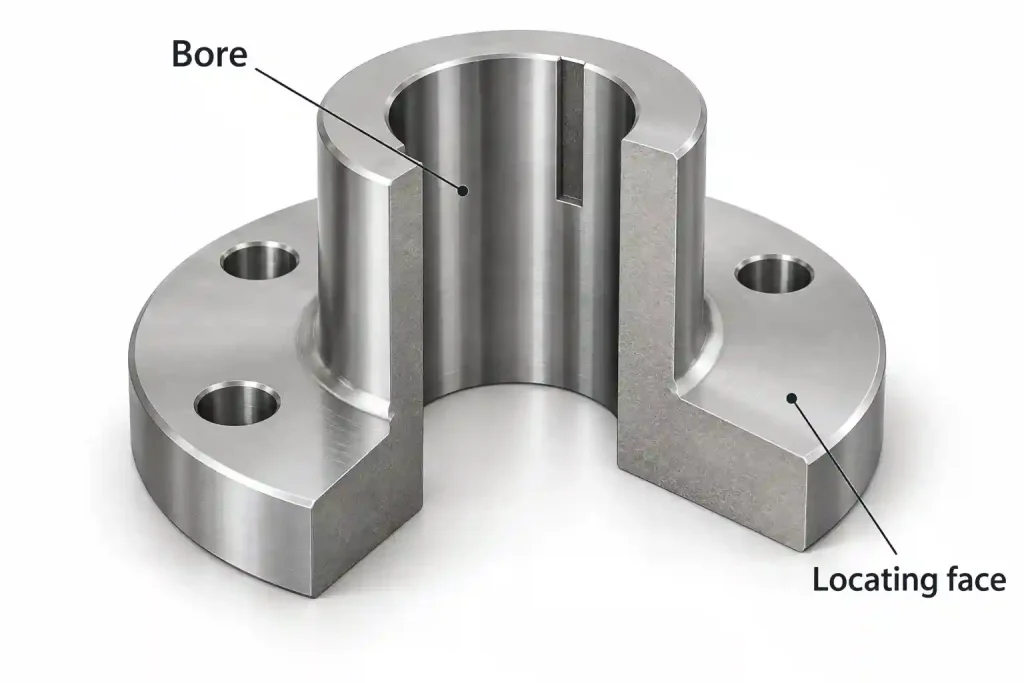
The bore and locating faces must reach their final requirements after the relevant treatment. Agree any finishing allowance and cleanup requirements before rough machining. A treatment described as air cooled does not establish that a finished bore will remain within tolerance.
The hub will later be quenched and tempered
If the order requires bulk quenching and tempering after rough machining, the delivered material condition is established by that later treatment. The properties listed for normalized or annealed starting stock are not the final acceptance values.
This gives the supplier room to propose a suitable starting condition, but it does not make all incoming conditions interchangeable. The machining supplier and heat treater must review whether the proposed stock can follow the intended route. A change may require different preparation or an additional treatment before hardening.
Keep the distinction between bulk and local treatment clear. Induction hardening of a selected surface does not automatically replace the material condition throughout the hub. Where only a surface is hardened, the untreated region can still make the starting condition important.
The order can distinguish the routes as follows:
| Incoming condition offered | Heat treatment still required by the order | Condition to accept at delivery |
|---|---|---|
| Normalized | No further heat treatment | The specified normalized condition and finished-part requirements |
| Fully annealed | No further heat treatment | An annealed-condition part, requiring approval if the drawing calls for normalized steel |
| Fully annealed | Normalizing after rough machining | The specified normalized condition, with dimensions and surfaces accepted after treatment and finishing |
| An approved normalized or annealed condition | Bulk quenching and tempering after rough machining | The specified quenched-and-tempered condition, with the starting route approved separately |
For a CNC machining review, provide the drawing’s material-condition note, the proposed stock description and the planned last heat treatment. Identify whether the supplier is delivering a finished hub or a rough-machined part for treatment elsewhere. That handover determines which treatment, finishing and verification activities belong in the quotation.
Which Results Apply to the Delivered Steel?
Check what the material certificate covers and when any hardness results were obtained. Confirm that each record identifies the relevant material and processing stage. A mill report issued before later heat treatment cannot, by itself, verify the properties achieved afterward. The material certification guide explains how to connect material records to delivered CNC parts.
Hardness is useful when the order defines a requirement, a suitable test method and a representative test location. Prepare the test surface as required by that method. Scale or a decarburized surface can make an unqualified reading a poor basis for judging the underlying material.
Matching hardness results alone do not prove matching microstructure or every mechanical property. Where the specification requires strength, ductility, impact performance or a particular structure, use the applicable evidence. Do not silently replace those requirements with a convenient hardness test, or add every possible test to an order that does not require them.
For the hub, make clear whether a result applies to the incoming bar, a representative test piece or the component after its last treatment. Define any required sampling location and its relationship to the relevant section. Keep the material identity connected to the treatment batch when parts leave the machining supplier for outside processing.
Release the substitution against an explicit condition and the evidence required for that stage. If the finished part must be delivered in the normalized condition, an annealed quotation needs a corrected route or an approved change. If the finished part will be quenched and tempered, approve the starting stock as part of that route and accept the delivered part against its final requirements.