
Quick Answer: Non-standard hardware parts processing allows buyers to create custom parts that standard components cannot meet, especially when the project requires special dimensions, materials, structures, tolerances, or functional integration. The main advantages are customization, design flexibility, small-batch support, and better fit for special applications. The main disadvantages are higher cost, longer lead time, more technical review, and greater supply chain uncertainty.
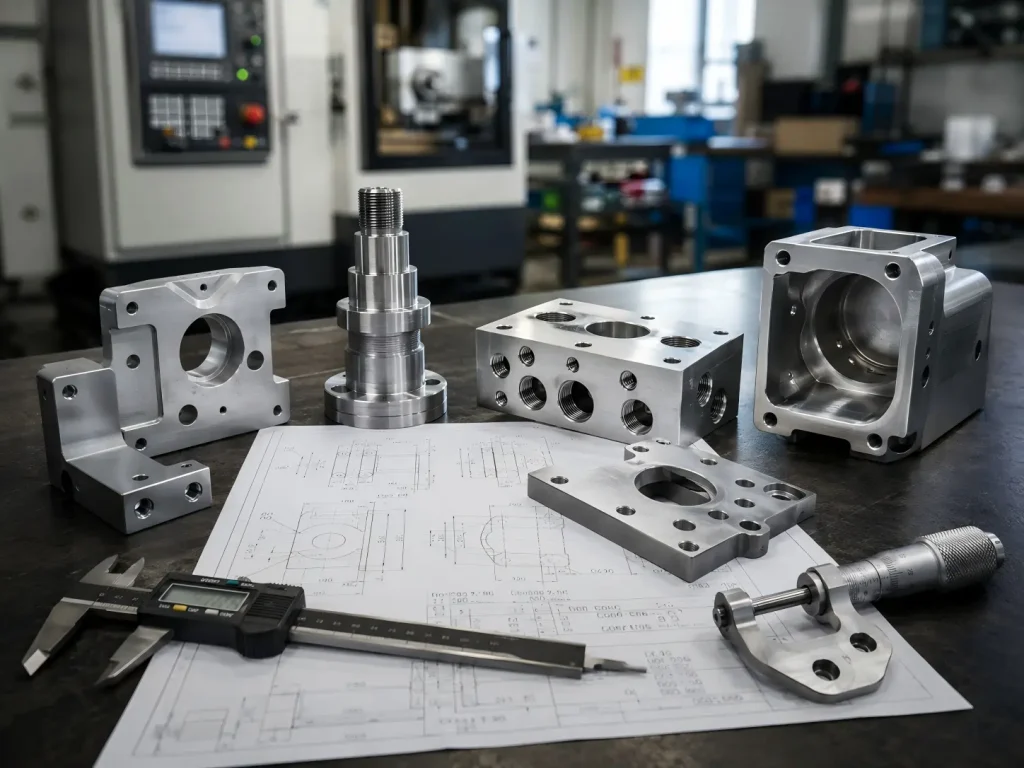
Introduction:Non-standard hardware parts processing refers to manufacturing custom metal or hardware components based on specific drawings, dimensions, materials, functions, and application requirements. Unlike standard fasteners, brackets, shafts, housings, or off-the-shelf components, non-standard parts are made for a specific design or assembly.
For buyers, the decision is not simply whether custom parts are “better.” Non-standard processing can solve fit, function, tolerance, and material problems that standard parts cannot handle. But it can also increase machining cost, lead time, technical review, inspection workload, and replacement difficulty.
This guide compares the advantages and disadvantages of non-standard hardware parts processing and explains when custom CNC machining or small-batch production makes sense. For broader manufacturability review, buyers can also refer to our CNC machining design guide before finalizing custom hardware drawings.
1. Advantages of Non-Standard Hardware Parts Processing
1.1 High Customization
Non-standard hardware parts can be designed around specific size, shape, material, assembly, and functional requirements. This is useful when standard parts cannot fit the product structure or cannot meet the required performance.
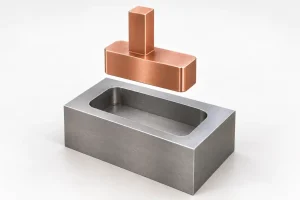
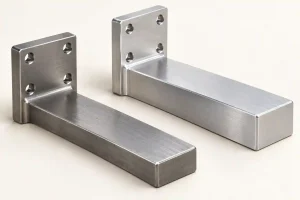
Common examples include custom brackets, special shafts, precision connectors, mounting plates, equipment parts, custom housings, and small structural components.
1.2 Better Fit for Complex Structures
Custom hardware processing can support parts with special holes, slots, threads, curved surfaces, thin walls, multi-face features, or integrated mounting structures. This helps reduce assembly gaps, interference, repeated adjustment, and unnecessary secondary modification.
For parts with multiple features or tight assembly relationships, the drawing should clearly define tolerances, datums, thread requirements, and inspection points.
1.3 Flexible Material Selection
Non-standard hardware parts can be made from different materials depending on strength, corrosion resistance, weight, conductivity, heat resistance, or wear requirements. Common materials include aluminum, stainless steel, brass, copper, titanium, carbon steel, and engineering plastics.
Material selection should be confirmed together with machining difficulty, surface finishing, cost, and delivery expectations.
1.4 Suitable for Prototypes and Small Batches
Non-standard processing is useful for prototype development, product testing, equipment repair, and small-batch production. Buyers can validate a design before investing in tooling or large-volume production.
This is especially helpful when the design may still change or when demand is too low for standard mass production. For early-stage product validation, buyers can also use rapid prototyping services before moving to repeat production.
1.5 Functional Integration
A custom hardware part can combine multiple functions into one component. For example, a single machined part may include mounting holes, alignment surfaces, threaded inserts, sealing features, and support structures.
This can reduce part count, simplify assembly, and improve structural stability when the design is reviewed properly.
Quick Advantages Table
| Advantage | Buyer Benefit | What to Confirm |
|---|---|---|
| High customization | Matches special design and assembly needs | Drawing, dimensions, tolerance, and function |
| Complex structure support | Allows holes, slots, pockets, threads, and multi-face features | Machining access and inspection method |
| Flexible material selection | Supports strength, weight, corrosion, or conductivity needs | Material grade and surface finish |
| Small-batch flexibility | Useful for prototypes and low-volume production | Quantity, lead time, and unit cost |
| Functional integration | Reduces part count and assembly steps | Tolerance stack-up and critical features |
2. Disadvantages of Non-Standard Hardware Parts Processing
2.1 Higher Cost
Non-standard parts usually cost more than standard parts because they require drawing review, programming, setup, material preparation, machining time, inspection, and sometimes surface finishing or special packaging.
For small batches, setup and programming cost cannot be spread across many parts, so the unit price is often higher. To understand how material, tolerance, quantity, and finishing affect pricing, see our guide to CNC machining cost in China.
2.2 Longer Lead Time
Custom hardware parts usually need more time for quotation, DFM review, material sourcing, CNC programming, fixture planning, machining, inspection, and finishing. If the drawing is incomplete or the material is uncommon, the lead time may increase further.
2.3 Higher Technical Requirements
Non-standard parts often require more engineering review than standard parts. Tolerance, datum selection, wall thickness, hole depth, thread type, surface finish, and inspection method may all affect manufacturability.
Poorly defined drawings can lead to wrong assumptions, rework, or inconsistent quality. For tolerance planning, buyers can compare standard, precision, and tight requirements using a CNC machining tolerance chart before sending RFQ files.
2.4 More Supply Chain Uncertainty
Custom materials, special coatings, unusual tolerances, and small-batch requirements can make the supply chain less predictable. Material availability, finishing capacity, and inspection requirements should be confirmed before production.
2.5 Replacement Difficulty
If a non-standard hardware part is damaged, it usually cannot be replaced immediately with an off-the-shelf component. The buyer may need to reorder the same custom part, provide drawings again, or confirm whether the previous process can be repeated.
Quick Disadvantages Table
| Disadvantage | Buyer Risk | Practical Control Method |
|---|---|---|
| Higher cost | Small batches may have high unit price | Confirm quantity, tolerance, finish, and inspection early |
| Longer lead time | Custom processing takes more review and setup | Provide complete drawings and 3D files |
| Higher technical requirement | Poor drawings can cause rework | Use DFM review before production |
| Supply chain uncertainty | Material or finishing delays may happen | Confirm material grade and finish availability |
| Replacement difficulty | Damaged parts cannot be replaced instantly | Keep drawings, revision records, and supplier history |
3. When Should Buyers Choose Non-Standard Hardware Processing?
Non-standard hardware parts processing is suitable when standard parts cannot meet the design, assembly, material, tolerance, or functional requirements.
Choose Non-Standard Processing When:
- Standard parts do not fit the product structure
- Special dimensions, holes, slots, or threads are required
- The part needs a specific material or surface finish
- Prototype validation or small-batch production is needed
- Assembly accuracy depends on custom features
- Functional integration can reduce part count or improve performance
Be Careful When:
- A standard part can meet the requirement at lower cost
- The project needs very fast delivery
- The design is not finalized
- The tolerance requirements are unclear
- The quantity is large enough for tooling or standardization
- Replacement speed is more important than customization
For many CNC projects, the best choice is not purely standard or fully custom. Buyers can often reduce cost by keeping non-critical features standard while customizing only the surfaces, holes, threads, or dimensions that affect assembly and function.
FAQ: Non-Standard Hardware Parts Processing
What is non-standard hardware parts processing?
Non-standard hardware parts processing means manufacturing custom parts based on specific drawings, dimensions, materials, tolerances, and functional requirements instead of using off-the-shelf standard components.
What are the advantages of non-standard hardware parts?
The main advantages are high customization, flexible material selection, support for complex structures, small-batch production, prototype validation, and functional integration.
What are the disadvantages of non-standard hardware parts?
The main disadvantages are higher cost, longer lead time, higher technical requirements, more supply chain uncertainty, and more difficult replacement compared with standard parts.
When should buyers use non-standard parts?
Buyers should use non-standard parts when standard components cannot meet the required size, function, material, tolerance, assembly, or environmental requirements.
How can buyers reduce the cost of non-standard parts?
Buyers can reduce cost by avoiding unnecessary tight tolerances, simplifying geometry, choosing machinable materials, confirming surface finish early, and providing complete 2D drawings and 3D files.
What should buyers provide before quotation?
Buyers should provide 2D drawings, 3D CAD files, material grade, quantity, tolerance requirements, surface finish, inspection needs, and application notes.
Conclusion
Non-standard hardware parts processing gives buyers more design freedom, material flexibility, and functional customization than standard components. It is useful for prototypes, small batches, special assemblies, complex structures, and parts that require unique dimensions or features.
However, custom hardware processing also brings higher cost, longer lead time, greater technical review, and more replacement difficulty. Buyers should compare whether the project really needs a custom part or whether a standard component can meet the functional requirement.
Rapid Efficient can review drawings, material requirements, tolerance risks, surface finish needs, inspection scope, and quantity before quotation to help identify whether non-standard CNC hardware processing is suitable for the project.