Quick Answer:
Most common engineering metals can be 3D printed today, including stainless steel, aluminum alloys, titanium alloys, nickel alloys, tool steels, cobalt-chrome, and some copper alloys. However, some metals are not practical for normal metal 3D printing because they are too reactive, too volatile, too brittle, too difficult to powder-process, or require special printing environments.
1. Why Some Metals Are Difficult to 3D Print
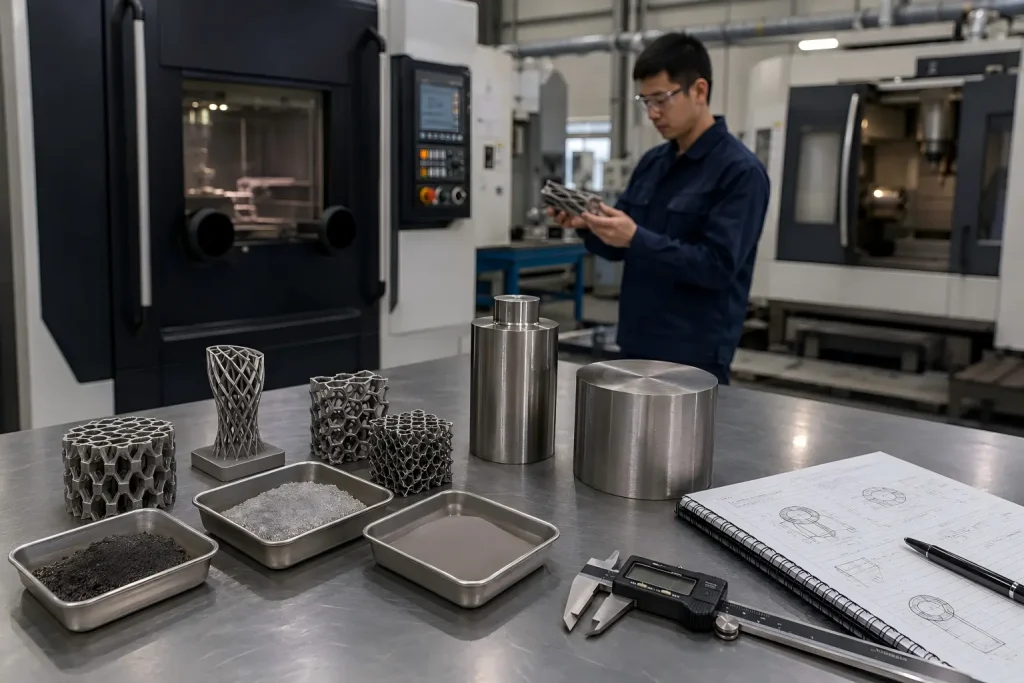
Metal 3D printing usually uses processes such as laser powder bed fusion, electron beam melting, binder jetting, directed energy deposition, or wire-based additive manufacturing. These processes require the metal powder, wire, or feedstock to behave predictably during heating, melting, cooling, solidification, and post-processing.
A metal may be difficult to 3D print because of:
- Very high melting temperature
- Strong oxidation during printing
- High vapor pressure or evaporation risk
- Poor powder flowability
- Cracking during solidification
- High brittleness after printing
- Dangerous reaction with air, moisture, or oxygen
- Limited commercial powder availability
- Unstable mechanical properties after printing
This is why some metals may be technically printable in a lab but not practical for normal production sourcing.
2. Metals That Are Usually Not Practical for Normal Metal 3D Printing
2.1 Highly Reactive Alkali Metals
Pure sodium, potassium, rubidium, and cesium are not practical for normal metal 3D printing. These metals react strongly with air or moisture and require special handling and storage. Alkali metals are known for reacting readily with air and moisture, so they are not suitable for ordinary metal powder-bed printing environments.
For buyers, these metals should not be treated like stainless steel, aluminum, titanium, or nickel alloy powders. If a project involves highly reactive metals, the manufacturing method, safety requirements, storage conditions, and application should be reviewed by a specialist.
2.2 Very Volatile or Low-Boiling Metals
Some metals or metal-like materials can evaporate, oxidize, or become unstable under the high energy input used in laser or electron beam printing. If the material evaporates too easily or reacts during melting, print quality can become unstable.
This can lead to porosity, composition change, contamination, surface defects, or unsafe processing conditions.
2.3 Refractory Metals Are Difficult, Not Always Impossible
Tungsten and molybdenum are often described as “difficult to 3D print” because they have very high melting points and cracking risks. But it is not accurate to say they cannot be 3D printed at all.
Research and specialized suppliers have shown that tungsten can be processed by selective laser melting, and molybdenum has also been studied through laser powder bed fusion. These materials are still challenging because density, cracking, brittleness, oxygen control, and process parameters are difficult to manage.
For most buyers, tungsten or molybdenum 3D printing should be treated as a specialist project, not a standard metal 3D printing order.
2.4 Some Pure Rare Earth Metals
Some pure rare earth metals can be difficult to process by metal 3D printing because of oxidation, powder safety, reactivity, cost, and unstable behavior during melting and solidification.
This does not mean every rare earth alloy is impossible to process. It means buyers should avoid assuming that every pure metal available as a raw material can also be printed as a stable metal 3D printed part.
2.5 Brittle or Crack-Sensitive Alloys
Some alloys are difficult to print because they crack during solidification or cooling. This may happen when the material has poor ductility, high residual stress, unsuitable phase transformation, or poor compatibility with rapid thermal cycling.
In these cases, the issue is not only whether the printer can melt the metal. The real question is whether the final part can meet strength, density, surface quality, and inspection requirements.
3. Metals Commonly Used in Metal 3D Printing
Many engineering metals are commonly used in metal 3D printing when the right process and parameters are selected.
| Metal Material | Printability | Common Notes |
|---|---|---|
| Stainless steel 316L / 17-4PH | Good | Common for functional metal parts, corrosion resistance, and prototypes |
| Titanium alloys | Good but controlled | Often used when strength-to-weight ratio and biocompatibility matter |
| Aluminum alloys | Moderate to good | Requires suitable alloy and process control due to reflectivity and thermal behavior |
| Nickel alloys | Good but expensive | Useful for heat-resistant or corrosion-resistant parts |
| Tool steels | Moderate | Heat treatment and cracking risk should be reviewed |
| Cobalt-chrome | Good | Often used for wear resistance and high strength |
| Copper alloys | Challenging but possible | High reflectivity and thermal conductivity make process control important |
| Tungsten / molybdenum | Very difficult / specialist | Possible in research or special processes, but not normal production for most buyers |
4. Better Alternatives When a Metal Is Not Practical to 3D Print
If a metal is too difficult, unsafe, or expensive to 3D print, buyers can consider other manufacturing routes.
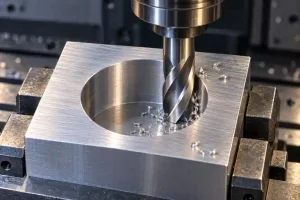
CNC Machining
CNC machining is often a better choice when the material is available as bar, plate, billet, or casting and the part needs accurate surfaces, threads, holes, or tight assembly features. For material and drawing planning, buyers can review our CNC machining design guide before choosing between machining and 3D printing.
Casting or Forging
Casting or forging may be more suitable for larger metal parts, high-volume production, or materials that do not print well.
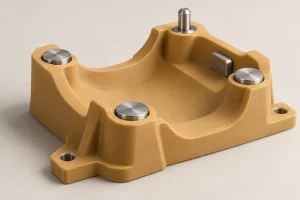
Hybrid Manufacturing
Some projects use additive manufacturing for near-net shape and CNC machining for critical surfaces, holes, threads, and datum features. For projects that require printed metal parts plus machined features, buyers can also review our metal 3D printing service.
Material Substitution
In some cases, the best solution is to replace the metal with a more printable alloy. For example, a buyer may choose a printable stainless steel, titanium alloy, nickel alloy, or aluminum alloy instead of a difficult pure metal.
5. What Buyers Should Confirm Before Requesting Metal 3D Printing
Before asking whether a metal can be 3D printed, buyers should confirm:
- Material grade
- Required mechanical properties
- Part size and wall thickness
- Internal channels or complex geometry
- Surface finish requirement
- Heat treatment requirement
- Density and porosity requirement
- Critical dimensions and inspection method
- Whether CNC finishing is needed
- Production quantity and budget
Metal 3D printing is powerful, but it is not the best process for every metal or every part. Process selection should be based on material behavior, geometry, function, cost, inspection requirements, and CNC machining tolerances if secondary machining is needed.
FAQ: Which Metals Cannot Be 3D Printed?
Can all metals be 3D printed?
No. Many engineering metals can be 3D printed, but not all metals are practical for normal metal 3D printing. Some metals are too reactive, too volatile, too brittle, too expensive, or too difficult to process safely.
Can tungsten be 3D printed?
Tungsten is very difficult to 3D print, but it is not completely impossible. Specialized research and processes have shown that tungsten can be processed by additive manufacturing, although cracking, density, brittleness, and process control remain difficult.
Can molybdenum be 3D printed?
Molybdenum is also difficult but not impossible. Laser powder bed fusion research has shown progress in printing molybdenum, but it remains a specialist material rather than a common production choice.
Why are sodium and potassium not used in metal 3D printing?
Sodium and potassium are highly reactive alkali metals. They react readily with air and moisture, making them unsafe and impractical for normal metal 3D printing environments.
What metals are easiest to 3D print?
Common metal 3D printing materials include stainless steel 316L, 17-4PH stainless steel, titanium alloys, nickel alloys, tool steels, cobalt-chrome, and selected aluminum alloys.
What should buyers do if a metal cannot be 3D printed?
Buyers can consider CNC machining, casting, forging, hybrid manufacturing, or switching to a more printable alloy. The best option depends on material requirements, part geometry, tolerance, surface finish, and production quantity.
Conclusion
Some metals are not practical for normal metal 3D printing, but “cannot be 3D printed” should not be used too broadly. Highly reactive metals such as sodium and potassium are not suitable for ordinary metal printing. Refractory metals such as tungsten and molybdenum are very difficult, but they may be printable through specialized processes.
For buyers, the key decision is not only whether the metal can melt in a printer. The real question is whether the final part can meet density, strength, surface finish, tolerance, inspection, and cost requirements.
Rapid Efficient can review material requirements, part geometry, tolerance needs, surface finish, production quantity, and whether metal 3D printing, CNC machining, or another process is more practical for your project.