
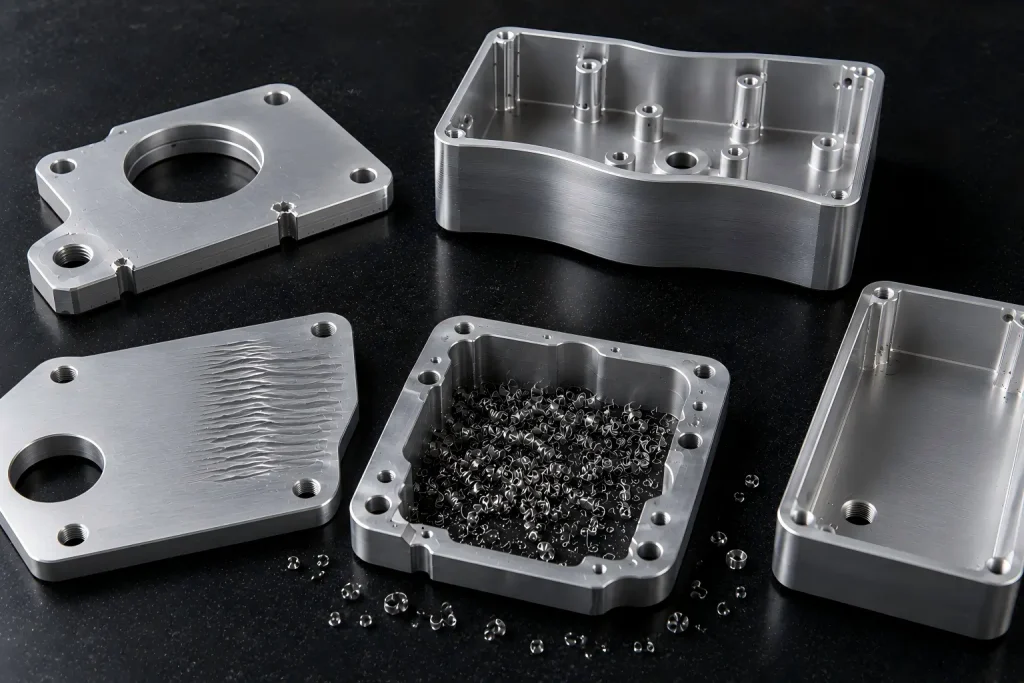
铝通常比许多钢更容易切割, 但这并不意味着每个铝制零件都很容易制造.
其硬度相对较低, 粘附倾向, 热膨胀, 可见表面要求, 对薄壁夹紧的敏感性可能会暴露出弱点:
- 工具选择
- 切割参数
- 刀具跳动
- 排屑
- 工件夹持
- 加工顺序
- 温度控制
- 检查
- 去毛刺
- 表面处理
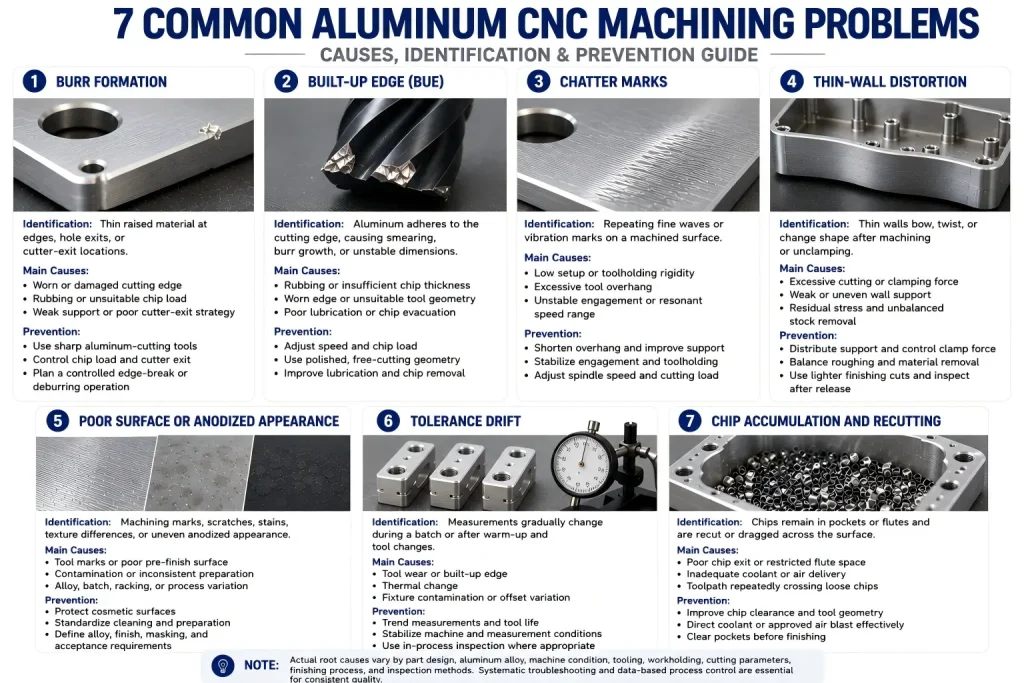
七个最常见的铝加工问题是:
- 毛刺形成
- 内置边缘
- 颤动和振动痕迹
- 薄壁变形
- 表面不良或阳极氧化外观
- 公差漂移
- 切屑堆积和表面再切削
正确的解决方案取决于合金, 特征, 机器, 工具, 设置, 数量, 结束, 及检验要求. 无单刀, 涂层, 夹具, 进给率, 或冷却液方法解决了所有铝加工问题.
快速解答
当铝制 CNC 零件出现质量问题时, 按此顺序检查流程:
- 确认实际症状,而不是使用“漆面不良”等笼统描述。
- 确定缺陷是否在同一位置重复出现.
- 检查切削刃, 刀具跳动, 持有者, 和工具投影.
- 检查芯片负载, 订婚, 切割速度, 和精加工津贴.
- 清洁夹具, 下巴, 定位面, 和工件.
- 验证切屑从型腔中排出, 插槽, 孔, 和成品脸.
- 检查夹紧压力和薄壁支撑.
- 比较第一个零件和后面的零件的工具磨损或热漂移.
- 确认该要求是否适用于阳极氧化或涂层之前或之后.
- 确保检查方法与图纸和基准结构相匹配.
不要通过降低进给率来解决所有问题. 过度摩擦会增加热量, 附着力, 毛刺, 和不稳定的表面光洁度.
铝加工问题总结
| 问题 | 它看起来像什么 | 常见原因 | 首先检查 |
|---|---|---|---|
| 毛刺形成 | 尖利的嘴唇, 卷材, 或羽毛边缘 | 钝边, 糟糕的退出, 弱支撑, 切屑负载不合适 | 前沿, 出口方向, 毛刺位置, 刀具磨损 |
| 内置边缘 | 表面有污迹, 撕裂的表面, 改变尺寸 | 铝附着力, 擦, 热, 磨损的工具, 润滑不良 | 刀刃, 芯片形状, 切削参数, 冷却剂输送 |
| 喋喋不休 | 重复的波浪或振动痕迹 | 刚性低, 长工具, 不稳定的参与, 薄壁 | 刀具悬伸, 支架跳动, 夹具, 主轴转速范围 |
| 薄壁变形 | 加工过程中壁弯曲或释放后发生变化 | 锁模力, 切削力, 残余应力, 不均匀的切削量 | 自由态测量, 下颌压力, 粗加工顺序 |
| 阳极氧化外观不良 | 可见线条, 划痕, 污渍, 或完成后纹理不均匀 | 预加工缺陷, 污染, 合金变化, 准备工作不一致 | 完成前的表面, 合金, 爆破, 处理, 机架区域 |
| 公差漂移 | 早期零件通过,但后期零件超出规格 | 刀具磨损, 温度, 夹具污染, 偏移量变化 | 趋势数据, 刀具寿命, 冷却液温度, 测量方法 |
| 切屑重切 | 随机划痕, 口袋装满, 负载不稳定, 损坏的边缘 | 疏散不畅, 有限的凹槽空间, 困屑 | 口袋状况, 凹槽几何形状, 冷却剂或空气输送 |
1. 铝边缘形成毛刺
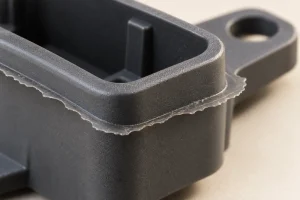
毛刺是铣削后在边缘周围留下的不需要的材料突出物, 钻孔, 转动, 开槽, 或线程准备.
它们可能显示为:
- 细羽毛毛刺
- 卷起嘴唇
- 出口毛刺重
- 钻孔周围有毛刺
- 交叉孔周围的凸起材料
- 薄壁上的锋利边缘
- 靠近成品面的污迹材料
常见原因
毛刺的形成可能与:
- 切削刃磨损或损坏
- 过度摩擦
- 切屑负载不合适
- 刀具退出方向不良
- 边缘附近支撑较弱
- 刀具偏斜过大
- 出口处的薄料
- 内置边缘
- 错误的钻探突破策略
- 最后一次传球时边缘未得到支撑
首先检查什么
确定毛刺出现的位置.
总是在一侧形成的毛刺可能表明:
- 可预测的刀具退出
- 零件方向
- 刀具旋转方向
- 当地缺乏支持
- 刀具磨损不均匀
随着时间的推移,毛刺变大可能表明刀具逐渐磨损或积屑瘤.
如何降低风险
取决于操作, 该过程可能会使用:
- 适用于铝材的锋利工具
- 受控切屑负载
- 将出口放置在非关键边缘上的刀具路径
- 突破时减少无支撑材料
- 专用倒角或断边操作
- 对精简功能的支持
- 根据磨损情况更换刀具
- 受控的手动或机械去毛刺
请勿使用强力去毛刺来隐藏加工问题. 过度混合会改变边缘尺寸, 化妆脸, 洞口, 密封面, 或阳极氧化外观.
2. 积边和铝附着力
当工件材料粘附在切削刃上时会出现积屑瘤.
附加的铝改变了有效的切削几何形状. 而不是切割干净, 该工具可能会开始摩擦, 撕, 涂抹, 或间歇地将粘附的材料释放到零件上.
可能的迹象包括:
- 粗糙或撕裂的表面光洁度
- 有光泽的涂抹区域
- 改变切削噪音
- 增加毛刺尺寸
- 尺寸不稳定
- 材料粘在刀具上
- 主轴负载突然变化
- 释放材料造成的划痕
- 刀具寿命缩短
常见原因
积聚边缘可以通过以下方式促进:
- 切削刃磨损或变圆
- 过度摩擦
- 切屑厚度不足
- 切削温度不稳定
- 排屑不良
- 润滑不足
- 刀具几何形状不合适
- 刀具跳动太大
- 重新切割残留切屑
首先检查什么
检查:
- 尖端条件
- 笛子状况
- 芯片形状
- 刀架跳动
- 工具投影
- 冷却剂或润滑剂输送
- 实际切屑负载
- 工具是切削还是摩擦
如何降低风险
可能的改进包括:
- 锋利的, 自由切削几何形状
- 抛光凹槽表面
- 合适的排屑槽空间
- 稳定的切屑负载
- 减少不必要的摩擦
- 有效的冷却剂或润滑
- 可靠的排屑
- 受控刀具跳动
- 专用修整工具
- 为合金和有用的操作选择的涂层
DLC, 硼化钛, 氮化锆, 抛光无涂层硬质合金, 和其他选项在正确的条件下可能都是有用的. 任何一个都不应被视为普遍要求.
槽数的详细比较, 刀具几何形状, 涂料, 工具范围, 和特定功能的选择, 回顾我们的 铝铣刀选择指南.
适用主轴转速, 切割速度, 芯片负载, 和饲料关系, 查看我们的实用指南 铝铣削的切削速度.
3. 颤动和振动痕迹
颤振是切削刀具之间的不稳定振动, 工件, 机器, 和固定装置.
常常会产生:
- 规则的波浪图案
- 重复对角线标记
- 墙面不平整
- 噪音过大
- 改变主轴负载
- 尺寸重复性差
- 刀具崩刃
- 薄壁运动
加工时颤振很常见:
- 财力雄厚
- 高墙
- 长距离功能
- 细排骨
- 小内角
- 弱支撑零件
- 需要长刀具投影的特征
常见原因
- 刀具悬伸过大
- 夹紧力弱
- 夹具刚性差
- 无支撑的薄壁
- 刀具跳动
- 径向啮合不稳定
- 共振主轴速度范围
- 切削力过大
- 断续切割
- 夹具组件松动
- 主轴或刀柄接口磨损
首先检查什么
更改每个参数之前, 检查:
- 工具投影
- 刀具直径
- 支架状态
- 治具接触
- 夹紧位置
- 零件支持
- 主轴转速响应
- 切割方向
- 拐角处的参与度变化
- 痕迹是否出现在粗加工或精加工过程中
如何降低风险
可能采取的行动包括:
- 缩短工具投影
- 提高设置刚性
- 支持更接近切入点的功能
- 在几何形状允许的情况下使用更大的工具
- 减少突然的参与度变化
- 调整主轴转速范围
- 粗加工和精加工分离
- 留下受控的精加工余量
- 使用较轻的精加工路径
- 检查可变螺旋或其他振动控制工具
- 减少薄特征上的切削力
不要认为较低的主轴速度总是可以消除颤动. 远离共振范围可能需要增加或降低速度,具体取决于系统.
4. 薄壁铝变形
薄壁铝零件在切割过程中可能会移动, 松开后, 去毛刺期间, 或表面处理后.
墙壁被限制在固定装置中时看起来可以接受,并且在释放后会发生变化.
典型症状包括:
- 弓形墙
- 不平坦的面
- 孔椭圆度
- 壁厚不均匀
- 位置偏移
- 打开或关闭插槽
- 密封面变形
- 设置之间的尺寸变化
常见原因
- 锁模力过大
- 钳口接触面积小
- 高切削力
- 材料去除不平衡
- 库存不均
- 材料中的残余应力
- 靠近成品墙的重型粗加工
- 支持不足
- 热量积累
- 仅在零件受到约束时进行测量
首先检查什么
确认:
- 零件是否在自由状态下测量
- 夹紧力和接触面积
- 缺陷附近的壁厚
- 粗加工顺序
- 从两侧取出库存
- 粗加工和精加工之间的时间
- 基准位置
- 夹具是否迫使零件成形
如何降低风险
取决于设计, 该过程可能包括:
- 更大或更分散的支持区域
- 较低的受控锁模力
- 专用软钳口
- 牺牲标签
- 临时支撑材料
- 平衡粗加工
- 对称材料去除
- 分阶段粗加工和精加工
- 受控的精加工余量
- 较轻的精加工切割
- 阶段之间数据的重新鉴定
- 松开后自由状态检查
真空工件夹持或洋葱皮策略可能有助于选择扁平或薄的部件, 但两者都不适合所有住房, 肋骨, 钻孔, 或不规则部分.
5. 表面或阳极氧化外观不良
机加工的铝制零件在切割后可能看起来可以接受,但在喷砂后会出现明显的问题, 刷牙, 抛光, 阳极氧化, 绘画, 或处理.
可能的缺陷包括:
- 刀线
- 颤痕
- 随机划痕
- 混合表面纹理
- 抛光不均匀
- 凹痕
- 嵌入式污染
- 边缘损坏
- 阳极氧化颜色变化
- 机架标记
- 污渍
阳极氧化通常不会隐藏加工痕迹, 划痕, 或准备不均匀. 有些缺陷在完成后可能会变得更容易看到.
常见原因
- 整理路径不一致
- 工具在可见表面上重新进入
- 切屑拖过零件
- 肮脏的固定装置或托盘
- 强力去毛刺
- 喷砂珠不均匀
- 不同合金或材料批次
- 表面处理不一致
- 完成前的污染
- 化妆品表面轮廓不清晰
首先检查什么
比较表面:
- 加工后直接
- 去毛刺后
- 清洁后
- 表面处理前
- 表面处理后
这确定了缺陷首次出现的阶段.
如何降低风险
- 在绘图上标记装饰表面.
- 使用受控的整理策略.
- 卸载时保护可见面.
- 内部运输期间分开的部件.
- 保留托盘, 手套, 衣服, 和固定装置清洁.
- 定义爆破, 刷牙, 或抛光要求.
- 确认颜色至关重要的合金和材料批次.
- 定义机架和遮蔽区域.
- 精加工前后检查零件.
- 包装装饰部件时无需金属与金属接触.
6061 经常被考虑用于装饰性阳极氧化零件,因为它提供了可用性的实用组合, 加工, 腐蚀行为, 并完成回复. 当强度增加时,它不会自动成为正确的合金, 温度, 焊接, 疲劳, 或其他功能需要不同的等级.
有关清洁的更多详细信息, 检查, 零件分离, 内部交通, 和包装, 查看我们的指南 如何防止CNC铝件划伤.
对于颜色变化, 架痕, 烧伤, 点蚀, 污渍, 密封不良, 以及其他整理风险, 回顾我们的 铝阳极氧化缺陷指南.
为了更广泛地比较阳极氧化, 喷砂, 抛光, 绘画, 粉末涂料, 电镀, 和其他选项, 查看我们的指南 CNC 加工零件的表面光洁度.
6. 生产过程中的公差漂移
当第一批零件符合图纸但测量值在批量过程中逐渐发生变化时,就会发生公差漂移.
转变可能是连续的, 间歇性的, 或链接到工具更改, 机器重启, 治具清洁, 或温度变化.
常见原因
- 刀具逐渐磨损
- 内置边缘
- 机器预热
- 冷却液温度变化
- 工件温度变化
- 夹具污染
- 定位表面下的切屑
- 刀架跳动
- 偏移输入错误
- 探头校准变化
- 测量方法变化
- 夹紧不一致
- 物质运动
首先检查什么
按零件编号或生产时间进行趋势测量.
比较:
- 第一部分
- 温暖的机器状态
- 中批量零件
- 换刀前后的零件
- 夹具清洁前后的零件
- 由不同操作员或仪器测量的零件
逐渐的趋势通常表明工具磨损或热变化. 突然的一步可能预示着一个工具, 抵消, 夹具, 基准, 或测量变化.
如何降低风险
生产计划可能包括:
- 刀具寿命限制
- 过程检验
- 定期固定装置清洁
- 稳定的机器预热
- 受控冷却液条件
- 校准探测
- 定义的偏移调整规则
- 用于合适产量的 SPC
- 更换工具后的首次验证
- 在约定的温度下测量
- 车间和最终检验设备之间的关联
基于探头的偏移校正可能很有用, 但自动校正不应隐藏刀具损坏, 夹具移动, 零件变形, 或不稳定的过程.
7. 排屑和表面再切削
铝屑可能很长, 卷曲的, 支离破碎的, 黏, 或根据合金装入口袋中, 手术, 工具, 和切削条件.
当切屑残留在切削区域时, 他们可能:
- 通过工具重新切割
- 成品表面出现划痕
- 装入凹槽
- 增加切削负荷
- 损坏切削刃
- 块冷却剂输送
- 被困在工件下面
- 造成孔质量较差
- 增加循环时间
- 导致意外的工具故障
高风险功能
- 财力雄厚
- 窄槽
- 盲孔
- 水平壁架
- 深钻孔
- 长距离铣削
- 排水不良的固定装置
- 包含多个封闭腔的零件
首先检查什么
检查:
- 芯片堆积功能
- 笛空间
- 工具啮合
- 冷却液方向
- 在可用的情况下通过工具交付
- 允许的吹风方向
- 口袋清理和缩回路径
- 刀具是否反复穿过松散的切屑
如何降低风险
取决于机器和工作场所程序:
- 使用合适的凹槽几何形状和容屑空间.
- 将冷却液直接流向切削区域.
- 在适用的情况下使用通过工具交付.
- 仅在允许且安全控制的情况下使用鼓风.
- 添加计划的清屑动作.
- 避免将切屑困在口袋底部.
- 单独的粗加工和精加工操作.
- 重新装载零件之前清洁固定装置.
- 保持成品表面远离松动的切屑.
- 当切屑反复拉回切削时检查刀具路径.
高压力并不一定会更好. 交货方向, 体积, 工具几何形状, 外壳, 安全程序, 和芯片退出路径很重要.
铝加工问题的诊断顺序
当出现缺陷时, 使用受控诊断序列.
步 1: 定义缺陷
记录:
- 缺陷位置
- 方向
- 频率
- 深度或严重性
- 是否重复
- 无论它出现在完成之前还是之后
- 松开后尺寸是否变化
步 2: 检查工具
检查:
- 前沿
- 长笛
- 涂装条件
- 材料附着力
- 碎屑
- 跳动
- 工具投影
- 支架状态
步 3: 检查设置
检查:
- 钳口和定位器
- 零件下方有切屑
- 夹紧压力
- 夹具刚性
- 零件支持
- 联系日期
- 部分座位
步 4: 检查切割过程
审查:
- 切割速度
- 每齿进给量
- 轴向和径向啮合
- 进入和退出
- 角接触度
- 粗加工余量
- 整理策略
- 冷却液或润滑液
- 排屑
步 5: 检查测量和精加工
确认:
- 仪器与校准
- 日期对齐
- 零件温度
- 自由或限制条件
- 检验阶段
- 表面处理余量
- 化妆品验收标准
- 包装和搬运
在可行的情况下一次改变一个有意义的因素. 更换工具, 速度, 喂养, 夹具, 冷却液, 和程序同时进行导致很难确定真正的原因.
铝 CNC 零件买家询价清单
报价前请提供以下信息:
- 3CAD模型
- 受控二维绘图
- 铝合金及状态
- 库存形式
- 数量
- 关键尺寸
- 基准结构
- 薄壁区域
- 深口袋和插槽
- 化妆品表面
- 所需的边缘断裂
- 功能性表面粗糙度
- 阳极氧化, 绘画, 电镀, 爆破, 或抛光
- 遮蔽区域
- 螺纹和精密配合
- 自由状态或限制性检验要求
- CMM 或尺寸报告要求
- 材料证书要求
- 经批准的化妆品样品(如有)
- 包装和零件分离要求
- 先前生产中的已知问题
之前被拒绝的样本, 缺陷照片, 或者检查报告可以帮助确定问题是否源于加工, 处理, 精加工, 或测量.
Rapid Efficient 如何支持 CNC 铝制零件
Rapid Efficient 支持定制 CNC 加工铝制原型, 小批量零件, 并重复生产:
- 外壳
- 括号
- 盘子
- 镜框
- 封面
- 散热器
- 电机安装座
- 轴承座
- 自动化组件
- 光学及电子设备零件
项目支持可能包括:
- 图纸和 DFM 审核
- 合金和型材审查
- 数控铣削和车削
- 刀具和工件夹具规划
- 薄壁风险审查
- 化妆品表面识别
- 表面精加工协调
- 尺寸检验
- CMM 根据要求提供报告
- 根据要求提供材料文件
- 零件分离和包装
- 国际配送协调
最终可行性取决于合金, 几何学, 壁厚, 宽容, 结束, 数量, 检查范围, 及包装要求.
了解更多关于我们的 CNC铝加工服务 用于定制原型, 小体积组件, 并重复生产.
收到完整图纸后, CAD 文件, 数量, 整理要求, 和检查期望, Rapid Efficient 通常会在以下范围内提供报价反馈: 24 小时.
常问问题
铝为什么这么容易形成毛刺?
许多铝合金具有延展性,可能会在无支撑的边缘弯曲或涂抹,而不是干净地分离. 工具状况, 芯片负载, 出口方向, 墙壁支撑, 和积屑瘤都会影响毛刺的形成.
铝为什么会粘在切削刀具上?
铝在压力和热量下可能会粘附在切削刃上, 特别是当边缘磨损时, 该过程会产生摩擦, 润滑不足, 或切屑未有效去除.
是 6061 最容易加工的铝?
6061-T6是一种实用且广泛使用的加工合金, 但最好的选择还是要看实力, 结束, 腐蚀, 焊接, 库存形式, 尺寸稳定性, 和成本. 易加工合金可能更容易切割,但可能无法满足项目的功能要求.
为什么薄铝壁在加工后会移动?
锁模力, 切削力, 热, 不均匀的切削量, 残余应力会使零件变形. 一些运动仅在夹具释放后才可见.
为什么阳极氧化后会出现明显的划痕?
阳极氧化通常遵循现有的铝表面. 加工痕迹, 处理划痕, 抛光差异, 或不一致的准备工作可能仍然可见或变得更容易注意到.
为什么生产过程中尺寸会发生漂移?
常见原因包括刀具磨损, 积屑瘤, 热变化, 夹具污染, 夹紧不一致, 偏移量变化, 和测量变化.
减少进给量能否解决表面光洁度差的问题?
并不总是. 进给量过低可能会导致摩擦, 热, 附着力, 和不稳定的切削. 应使用工具状况诊断表面问题, 芯片负载, 切割速度, 订婚, 刚性, 和排屑一起.
铝加工是否总是需要鼓风?
福田街道. 取决于机器和操作, 排屑可使用冷却液, 通过工具交付, 在安全允许的情况下进行空气喷射, 或其他经批准的方法. 正确的选择取决于芯片的行为, 零件几何形状, 机器外壳, 安全, 并完成要求.
喷砂是否掩盖了加工缺陷?
喷砂可以创造更均匀的纹理, 但有很深的划痕, 凹痕, 喋喋不休, 去毛刺不均匀, 并且主要工具痕迹可能仍然可见.
何时应更换精加工工具?
刀具更换应根据磨损情况, 完成趋势, 毛刺生长, 维度趋势, 切削负荷, 噪音, 和生产要求而不仅仅是固定的时间值.
请求铝加工审查
快速高效地发送您的:
- 2D图
- 3D型
- 铝牌号
- 数量
- 临界公差
- 化妆品表面
- 完成要求
- 以前的缺陷照片或报告
- 检查期望
- 包装要求
我们可以回顾一下毛刺的可能原因, 积屑瘤, 喋喋不休, 形变, 精加工外观不佳, 公差漂移, 以及生产开始前的切屑重新切削.