不锈钢数控加工难点的解决方案

快速解答: 不锈钢由于加工硬化性强,因此很难加工, 高切削力, 散热不良, chip adhesion, and a higher risk of tool wear. To improve stainless steel CNC machining, manufacturers should use sharp coated carbide tools, suitable rake and clearance angles, controlled feed and speed, stable coolant, 刚性工件夹持, proper chip evacuation, and inspection for critical dimensions.

介绍:Machining stainless steel parts is more difficult than machining aluminum, 黄铜, or many carbon steels. Stainless steel has high toughness, strong work hardening, 导热性差, and a tendency to create built-up edge on cutting tools. These problems can increase tool wear, 切割温度, 表面粗糙度, 毛刺, 尺寸漂移, and machining cost.

对于买家, stainless steel machining difficulty often appears as longer lead time, higher unit cost, unstable surface finish, 螺纹质量差, tolerance drift, or rejected parts after inspection.

This article explains why stainless steel parts are difficult to machine and what practical methods can help improve tool life, 表面饰面, 尺寸精度, and production stability.


1. Why Stainless Steel Is Difficult to Machine

1.1 Severe Work Hardening

Austenitic stainless steels such as 304 和 316 can work-harden during cutting. 如果工具摩擦而不是干净地切割, the surface layer becomes harder and more difficult to machine in the next pass. This can increase tool wear, 切削力, 热, and surface finish problems.

1.2 Faster Tool Wear

Stainless steel can cause adhesion wear, diffusion wear, 芯片, and built-up edge on cutting tools. Hard carbide particles, high cutting temperature, and work-hardened surfaces can all shorten tool life. Tool wear may also lead to dimensional drift and poor surface finish.

1.3 Higher Cutting Force

Compared with aluminum or brass, stainless steel usually requires higher cutting force. This makes machine rigidity, tool holding, 夹具稳定性, and cutting parameters more important. If the setup is weak, the part may vibrate, the tool may deflect, and the final dimensions may become unstable.

1.4 Chip Adhesion and Built-Up Edge

Stainless steel chips can stick to the tool edge under high temperature and pressure. Built-up edge can damage the cutting edge, scratch the machined surface, and create inconsistent dimensions. Good chip control and suitable coolant are important for stable stainless steel machining.

1.5 热膨胀

Stainless steel has higher thermal expansion than many carbon steels. Heat generated during cutting can cause temporary dimensional changes and make tight tolerances harder to control. For precision stainless steel parts, finishing passes and inspection temperature should be considered.

1.6 Poor Heat Dissipation

Stainless steel does not conduct heat away from the cutting zone as efficiently as aluminum or copper. More heat stays near the tool and chip interface, which increases tool wear, 加工硬化, and surface finish risk.


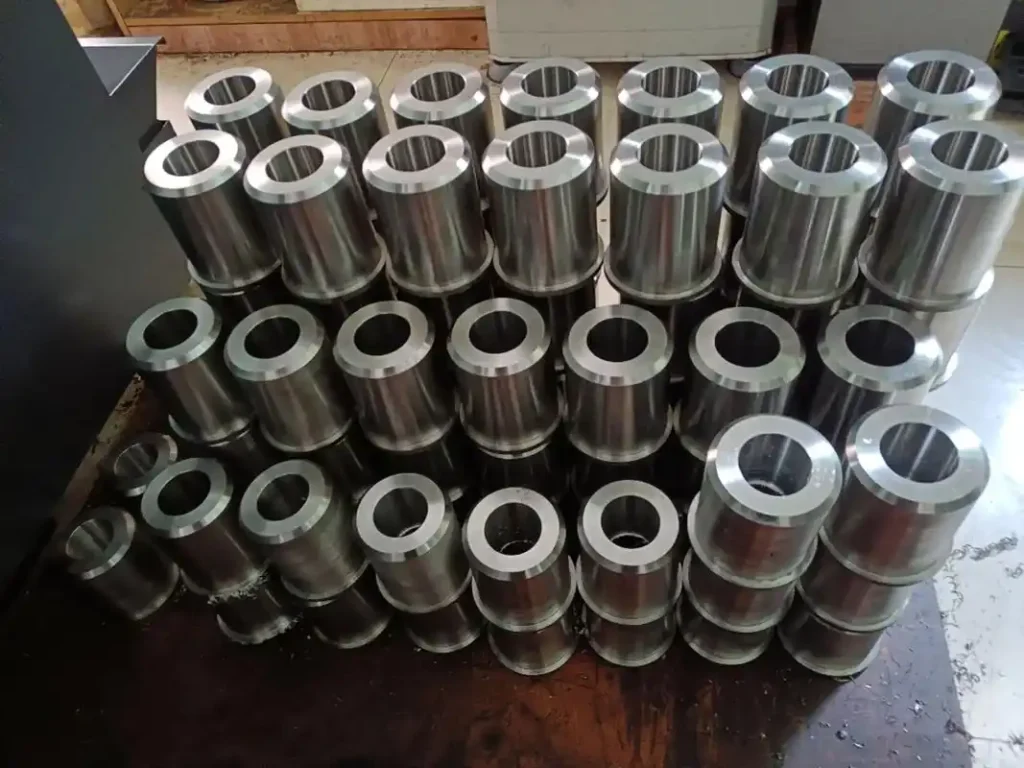
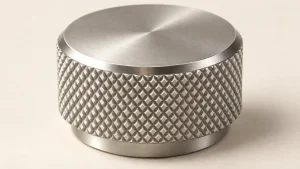
Stainless steel CNC machined parts showing machining quality, 表面饰面, and dimensional consistency.

2. Practical Solutions for Stainless Steel CNC Machining

Stainless steel machining problems are usually solved by controlling tool geometry, 工具材料, 切削参数, 冷却液, 排屑, 夹具稳定性, 和检查. The goal is not only to reduce tool wear, but also to maintain surface quality and dimensional stability.

2.1 Use Suitable Tool Geometry

Tool geometry strongly affects stainless steel cutting performance. A sharp cutting edge, suitable rake angle, proper clearance angle, and strong edge preparation can help reduce rubbing, 加工硬化, and cutting heat.

用于不锈钢零件, the tool should cut cleanly rather than rub the surface. If the tool edge becomes dull, it can harden the surface and make the next cutting pass more difficult. Tool geometry also matters, especially the rake angle and clearance angle used for stainless steel cutting.

2.2 Select the Right Tool Material and Coating

Coated carbide tools are commonly used for stainless steel CNC machining because they offer better wear resistance and heat resistance than uncoated tools. For some special applications, ceramic or CBN tools may be considered, but they should be selected based on material grade, 机器刚性, cutting condition, and part geometry.

工具涂层, edge strength, chip breaker design, and coolant compatibility should be reviewed together before production.

2.3 Keep the Cutting Edge Sharp

A sharp tool edge helps reduce cutting force and work hardening. Dull tools can rub against stainless steel, generate more heat, damage the surface, and accelerate tool wear.

For precision stainless steel parts, tool life should be monitored before finishing critical features such as threads, 钻孔, 密封面, and tight-tolerance holes.

2.4 Improve Chip Breaking and Chip Evacuation

Stainless steel chips can be tough, 连续的, and difficult to break. Poor chip evacuation may scratch the surface, damage the tool, or create heat concentration near the cutting zone.

A suitable chip breaker, correct feed rate, stable coolant flow, and proper toolpath strategy can help improve chip control during stainless steel machining.

2.5 Use Proper Coolant and Cutting Fluid

Stainless steel machining usually requires good cooling and lubrication. Suitable coolant can reduce cutting temperature, improve chip evacuation, lower built-up edge risk, and help protect the machined surface.

Coolant selection should consider stainless steel grade, 工具材料, machining operation, 表面光洁度要求, and corrosion risk after machining.

2.6 Control Cutting Parameters

Aggressive feed, 速度, or depth of cut can increase heat, 刀具磨损, 喋喋不休, and dimensional drift. Conservative parameters may improve stability but reduce production efficiency.

The best cutting parameters depend on stainless steel grade, 工具几何形状, 机器刚性, 夹具支撑, 冷却液, and required tolerance. For tight-tolerance stainless steel parts, tolerance planning should also consider CNC加工公差叠加.


Stainless Steel Machining Problems and Solutions

Machining ProblemCommon CausePractical Solution
加工硬化Tool rubbing, low feed, repeated light cuttingUse sharp tools, proper feed, and avoid rubbing cuts
快速工具穿High heat, adhesion, hard particles, poor coatingUse coated carbide tools, stable coolant, and tool life monitoring
表面光洁度差内置边缘, 喋喋不休, dull tool, chip scratchingImprove chip control, tool sharpness, 冷却液, and cutting parameters
Burrs and edge damageTough material and unstable cuttingUse proper tool geometry, 终结传球, and deburring plan
尺寸漂移切削热, 刀具磨损, weak fixture控制冷却液, inspect critical dimensions, and monitor tool life
Thread problems加工硬化, chip clogging, wrong tapping strategyConsider thread milling, suitable tapping fluid, and proper hole preparation

For stainless steel threaded holes, buyers may also compare 螺纹铣削与攻丝对比 before finalizing drawings.

通过以上分析, 我们了解不锈钢加工难的原因. 解决方案应主要关注刀具和切削油. 这将克服加工困难, 提高精度和效率, 延长刀具寿命, 减少工具更换, 并降低劳动强度.

迅速的:Stainless steel parts are difficult to machine because of work hardening, 高切削力, 散热不良, chip adhesion, 刀具磨损, and thermal expansion. These problems can affect tool life, 表面饰面, 公差控制, 毛刺形成, 螺纹质量, and machining cost.

To improve stainless steel CNC machining, the process should combine suitable tool geometry, coated carbide tools, sharp cutting edges, stable coolant, proper chip evacuation, 刚性工件夹持, controlled cutting parameters, and inspection for critical dimensions.

Rapid Efficient can review stainless steel part drawings, 材料等级, 公差要求, 表面光洁度需求, thread features, 检查范围, and delivery expectations before quotation to help identify machining risks and practical solutions. 用于更广泛的可制造性审查, 看看我们的 CNC加工设计指南 before sending RFQ files.

发表评论

滚动至顶部

获取报价

点击或拖拽文件到该区域即可上传. 您最多可以上传 10 文件.
文件格式:TXT PDF DOC DOCX XLS XLSX PPT PPTX JPG PNG ZIP RAR DWG DXF DXF DWT DWS DWS

3D文件格式: 步, STP, sldprt, IPT, prt, 坐着, IGES, IGS, catpart, X_T, OBJ, STL