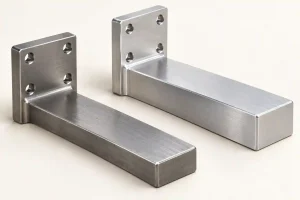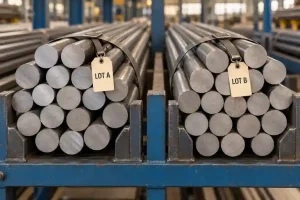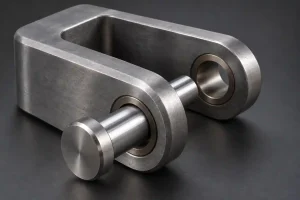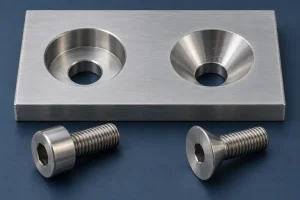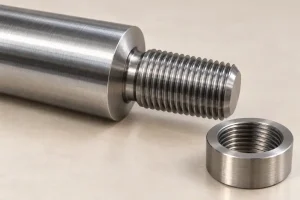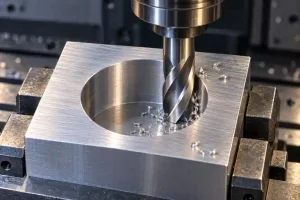

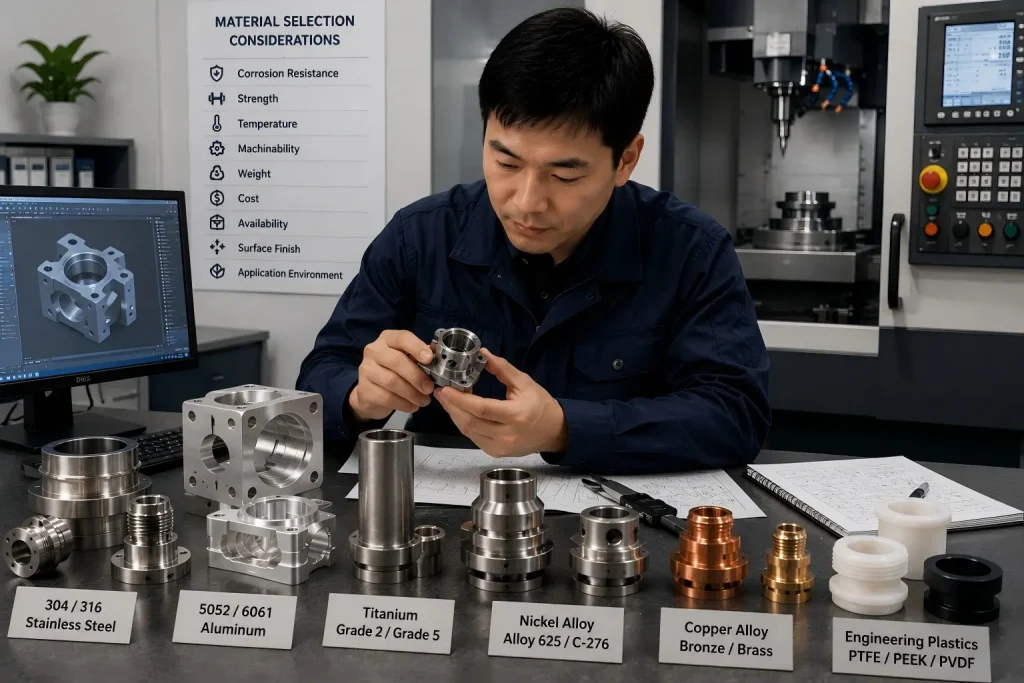
Corrosion resistance is not a fixed property that can be judged only from a material name.
A material that performs well in dry indoor equipment may fail near seawater, cleaning chemicals, high temperatures, trapped moisture, or contact with another metal. Even two grades from the same material family can behave differently when exposed to chloride, acid, alkali, heat, stress, or crevice conditions.
For CNC machined parts, material selection must also account for machining, tolerances, threads, surface treatment, inspection, assembly, cleaning, and packaging.
The best corrosion-resistant material is therefore the one that matches the actual service environment while still meeting the part’s mechanical and manufacturing requirements.
Quick Answer
Common corrosion-resistant materials for CNC machined parts include:
- 304 and 316 stainless steel for general industrial, wet, food-equipment, and selected chloride-exposure applications
- 5052, 5083, 6061, and other aluminum alloys for lightweight parts where the alloy and surface treatment match the environment
- Commercially pure titanium and titanium alloys for seawater, chloride, medical, and selected chemical applications
- Nickel-based alloys such as Alloy 625 or C-276 for more aggressive chemical, marine, or elevated-temperature environments
- Copper alloys such as bronze or selected brass grades for specific water, marine, bearing, and electrical applications
- PTFE, PVDF, PEEK, PP, and HDPE when chemical resistance, insulation, or low weight is more important than metallic strength
No material is corrosion-proof in every environment.
Selection should be based on the chemical, concentration, temperature, exposure time, oxygen level, stress, fluid velocity, cleaning process, mating materials, and required service life.
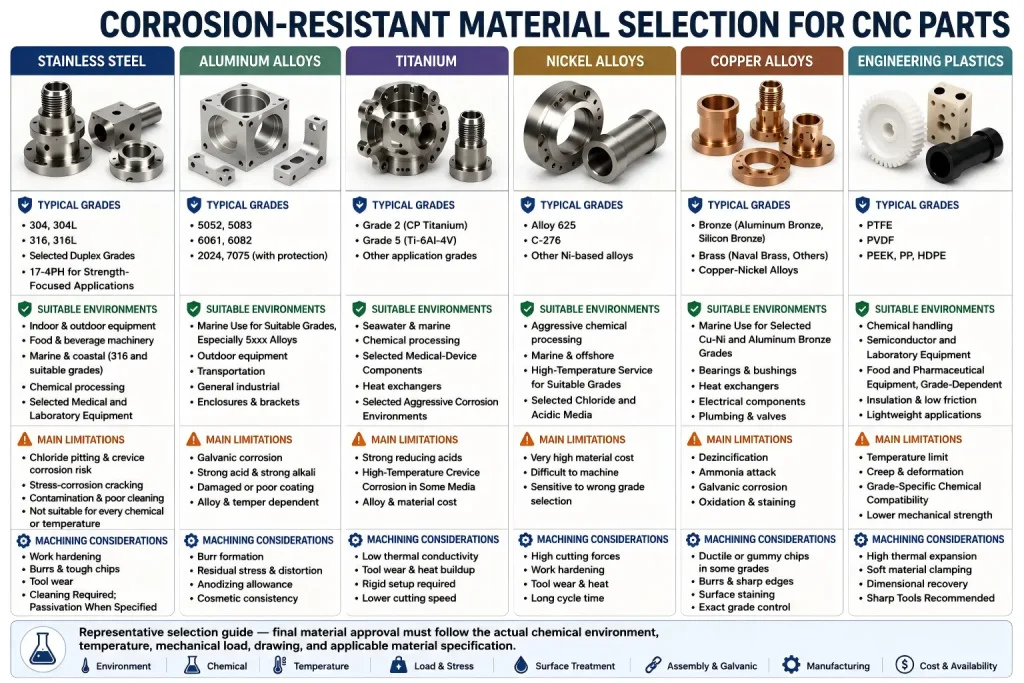
Quick Comparison Table
| Material family | Grades commonly reviewed | Main corrosion advantage | Important limitation | CNC machining consideration |
|---|---|---|---|---|
| Stainless steel | 304, 304L, 316, 316L, duplex, 17-4PH | General corrosion resistance and a stable passive surface | Chloride pitting, crevice corrosion, contamination, and stress-corrosion risk remain possible | Work hardening, burrs, tool wear, passivation and cleaning |
| Aluminum | 5052, 5083, 6061, 6082 | Lightweight with a naturally protective oxide layer | Alloy family, galvanic contact, strong acid, strong alkali, and damaged coating affect performance | Burr control, residual stress, anodizing allowance and cosmetic consistency |
| Titanium | Grade 2, Grade 5 and application-specific grades | Excellent resistance in many oxidizing, neutral, chloride, and seawater conditions | Strong reducing or complexing chemicals may attack the passive film | Heat concentration, tool wear, rigid setup and material cost |
| Nickel alloys | Alloy 625, C-276 and environment-specific grades | Strong resistance in selected aggressive chemical, marine, and high-temperature environments | Expensive, difficult to machine and highly grade-specific | High cutting forces, heat, work hardening and long cycle time |
| Copper alloys | Bronze, aluminum bronze, naval brass and selected copper alloys | Useful resistance in specific water, marine and bearing applications | Dezincification, ammonia attack, galvanic corrosion and oxidation may occur | Burrs, ductility, surface staining and exact grade control |
| Engineering plastics | PTFE, PVDF, PEEK, PP, HDPE | No electrochemical rust and broad chemical compatibility in suitable environments | Temperature, creep, swelling, permeability and chemical compatibility vary | Thermal expansion, clamping deformation and dimensional recovery |
This table is a starting point, not a substitute for a chemical-compatibility review or controlled material specification.
Corrosion Resistance Depends on the Environment
The question should not begin with:
Which material has the best corrosion resistance?
A better starting point is:
What will the part contact, at what temperature, for how long, and under what mechanical condition?
Several different corrosion mechanisms may need to be considered.
General Corrosion
General corrosion affects a large area of the surface relatively evenly.
Carbon steel exposed to moisture is a common example. Material loss may be visible and reasonably predictable, but it can still weaken the part or damage fits, sealing surfaces, threads, and appearance.
Pitting and Crevice Corrosion
Pitting creates localized cavities that may penetrate deeply while much of the surrounding surface still looks acceptable.
Crevice corrosion can develop in areas where liquid becomes trapped or oxygen access is restricted, including:
- Threads
- Gasket interfaces
- Blind holes
- Overlapping joints
- Narrow pockets
- Washer contact areas
- Sealing grooves
- Deposits and contamination
Stainless steel can resist broad surface corrosion but remain vulnerable to localized attack in chloride-containing environments.
Galvanic Corrosion
Galvanic corrosion can occur when dissimilar conductive materials are electrically connected in the presence of an electrolyte.
Examples include:
- Aluminum housing with stainless steel fasteners
- Copper component connected to aluminum
- Carbon-fiber composite touching aluminum
- Stainless insert installed in a wet aluminum structure
- Coated parts with exposed edges around fasteners
The material combination, exposed-area ratio, electrolyte, coating condition, drainage, and assembly design all affect the result.
Material selection should therefore consider the complete assembly rather than only the individual CNC part.
Stress-Corrosion Cracking
Some materials may crack when three conditions occur together:
- A susceptible material
- Tensile stress
- A damaging environment
The stress may come from assembly load, press fits, welding, cold work, residual stress, or service pressure.
A grade that performs well in a simple immersion test may still be unsuitable for a highly stressed threaded or welded component.
High-Temperature Oxidation and Hot Corrosion
A material that resists room-temperature moisture may not perform the same way at elevated temperature.
Temperature can affect:
- Reaction rate
- Passive-film stability
- Scaling
- Thermal cycling
- Strength
- Coating behavior
- Stress-corrosion risk
- Chemical concentration after evaporation
High-temperature applications require both corrosion and mechanical-property review.
Stainless Steel
Stainless steel is often the first material family considered for corrosion-resistant CNC parts.
Its corrosion resistance comes from a chromium-rich passive film that forms on the surface. However, stainless steel is corrosion-resistant rather than corrosion-proof.
304 and 304L Stainless Steel
304 and 304L are practical choices for:
- Indoor industrial equipment
- Food-processing equipment
- Laboratory components
- Housings and brackets
- General outdoor parts
- Clean appearance requirements
- Humid environments without severe chloride exposure
304L has lower carbon content and is often reviewed where welding and resistance to sensitization are important.
304 may not be the safest choice when the part is exposed to salt spray, seawater, hot chloride solutions, aggressive cleaning chemicals, or stagnant fluid inside narrow crevices.
316 and 316L Stainless Steel
316 and 316L contain molybdenum, which improves resistance to pitting and crevice corrosion in many chloride-containing environments compared with 304.
They are frequently reviewed for:
- Marine and coastal equipment
- Fluid fittings
- Food and beverage machinery
- Laboratory components
- Medical-related equipment parts
- Chemical-handling components
- Outdoor assemblies
- Corrosion-sensitive fasteners and shafts
However, 316 is not automatically suitable for every seawater or chloride application. Temperature, concentration, stress, stagnant conditions, surface finish, cleaning, and crevice design still matter.
For a more focused comparison, review 18-8 vs 316 stainless steel.
Duplex and Higher-Alloy Stainless Steel
Duplex or higher-alloy stainless steels may be considered when 304 or 316 does not provide enough resistance to chloride pitting, crevice corrosion, or stress-corrosion cracking.
Their suitability depends on:
- Exact grade
- Heat treatment
- Welding route
- Product form
- Required strength
- Temperature
- Inspection requirements
They should not be specified only as “duplex stainless” without a controlled grade and applicable standard.
Machining and Passivation
Machining can leave free iron, cutting-fluid residue, abrasive contamination, burrs, and debris on a stainless steel surface.
Passivation may be specified after machining, deburring, and cleaning to remove free iron contamination and support the passive surface.
Passivation does not:
- Add a thick visible coating
- Repair deep pits
- Correct the wrong stainless grade
- Guarantee resistance in every chemical
- Replace proper cleaning and packaging
Read more about stainless steel passivation for CNC parts.
Aluminum Alloys
Aluminum forms a thin oxide layer naturally and can provide useful corrosion resistance with much lower density than stainless steel.
The alloy family matters.
5052 and 5083
5052 and 5083 belong to the aluminum-magnesium family and are frequently reviewed for:
- Marine-related structures
- Sheet-metal enclosures
- Welded components
- Outdoor equipment
- Tanks and covers
- Corrosion-resistant lightweight structures
5052 is commonly used for formed sheet parts, while 5083 is often selected for stronger plate and welded marine structures.
Their exact suitability still depends on temper, welding, stress, exposure, fasteners, and fabrication route.
6061 and 6082
6061 and 6082 provide a useful balance of:
- Machinability
- Strength
- Availability
- Weldability
- General corrosion resistance
- Anodizing options
They are common choices for CNC machined:
- Housings
- Brackets
- Frames
- Fixture components
- Equipment parts
- Covers
- Mounting plates
They may be suitable for many indoor and outdoor applications, but bare 6061 should not automatically be treated as equivalent to a marine-focused alloy in severe saltwater exposure.
2024 and 7075
2024 and 7075 are often selected for strength rather than maximum corrosion resistance.
They may require:
- Anodizing
- Conversion coating
- Painting
- Cladding
- Controlled sealing
- Careful galvanic isolation
A stronger aluminum alloy is not automatically the better choice for a corrosion-sensitive part.
Anodizing and Coating
Anodizing can improve surface corrosion resistance, wear behavior, insulation, and appearance when the process is matched to the alloy and application.
The drawing should define:
- Anodizing type
- Required thickness
- Sealing
- Color
- Visible surfaces
- Masked areas
- Threads
- Bearing seats
- Electrical contact areas
- Dimensional requirements before or after finishing
Review available surface finishes for CNC machined parts before finalizing the drawing.
Titanium
Titanium develops a stable and strongly adherent oxide film that provides excellent resistance in many oxidizing, neutral, chloride, and seawater environments.
Grade 2 Titanium
Commercially pure Grade 2 titanium is often reviewed where corrosion resistance, formability, weldability, and moderate strength are more important than maximum mechanical strength.
Possible applications include:
- Chemical-processing components
- Heat-exchanger parts
- Seawater equipment
- Fluid-handling parts
- Medical and laboratory equipment
- Corrosion-resistant fasteners and fittings
Grade 5 Titanium
Grade 5 titanium, also known as Ti-6Al-4V, provides much higher strength than commercially pure titanium while retaining useful corrosion resistance.
It is commonly reviewed for:
- High-strength lightweight parts
- Aerospace components
- Medical-device components
- Marine hardware
- High-load brackets and fasteners
Grade 5 should not automatically replace Grade 2 in chemical-service applications. Mechanical strength and corrosion behavior must both be reviewed against the actual environment.
Titanium Limitations
Titanium is not universally immune to chemical attack.
Potential concerns include:
- Strong reducing acids
- Fluoride-containing chemicals
- Crevice conditions at elevated temperature
- Contaminated surfaces
- Galvanic interaction with less noble metals
- Incorrect alloy or product form
Titanium also costs more and is more demanding to machine than aluminum or common stainless steel.
Nickel-Based Alloys
Nickel-based alloys are considered when common stainless steels cannot meet the combined corrosion, temperature, and mechanical requirements.
Examples may include:
- Alloy 625 for selected marine, chloride, chemical, and high-temperature applications
- C-276-type alloys for selected aggressive chemical environments
- Other nickel-chromium, nickel-molybdenum, or nickel-chromium-molybdenum grades
The exact alloy is critical.
“Inconel” or “nickel alloy” alone is not a complete material specification because different grades are designed for different combinations of strength, oxidation resistance, chemical resistance, fatigue, and temperature.
Nickel alloys can create substantial CNC machining challenges:
- High cutting forces
- Work hardening
- Heat concentration
- Rapid tool wear
- Tough chips
- Burr formation
- Long cycle times
- High raw-material cost
They should be selected because the environment requires them, not simply because they sound more advanced than stainless steel.
Copper Alloys
Copper alloys can provide useful corrosion resistance, conductivity, bearing performance, and anti-fouling behavior in selected applications.
Possible materials include:
- Bronze
- Aluminum bronze
- Silicon bronze
- Naval brass
- Copper-nickel alloys
- Application-specific brass grades
However, “brass” or “bronze” is too broad for a controlled drawing.
Potential risks include:
- Dezincification
- Ammonia-related cracking
- Galvanic corrosion
- Surface oxidation
- Chemical staining
- Lead or composition restrictions
- Accelerated attack in unsuitable water chemistry
The drawing should define the exact alloy rather than allowing the supplier to choose any copper-colored material.
Engineering Plastics
Engineering plastics do not rust like metals and may provide strong chemical resistance in suitable environments.
PTFE
PTFE provides very broad chemical resistance and a low coefficient of friction.
It may be used for:
- Seals
- Insulators
- Valve components
- Sliding parts
- Chemical-handling components
- Gaskets and backup rings
Its limitations include low stiffness, creep, high thermal expansion, and dimensional instability under load.
PVDF
PVDF may be reviewed for chemical-handling, fluid, semiconductor, laboratory, and outdoor applications requiring a combination of chemical resistance, cleanliness, and better mechanical stability than PTFE.
PEEK
PEEK combines useful chemical resistance with higher temperature capability, strength, wear resistance, and dimensional stability than many common plastics.
It may be selected for:
- Bearings
- Seals
- Electrical insulation
- Fluid-handling parts
- High-temperature equipment
- Semiconductor components
- Medical-related equipment
PP and HDPE
PP and HDPE are cost-effective choices for many tanks, covers, fluid components, chemical-handling parts, and low-load structures.
Their suitability depends on:
- Chemical type
- Concentration
- Temperature
- Exposure time
- Mechanical load
- UV exposure
- Required tolerances
- Cleaning process
A general statement such as “plastic is chemical-resistant” is not enough. The exact polymer grade and compatibility data should be reviewed.
How to Select the Right Material
1. Identify the Exact Environment
Provide:
- Chemical name
- Concentration
- Temperature
- Exposure duration
- Continuous or intermittent exposure
- Immersion, splash, vapor, or outdoor exposure
- Chloride or salt level
- Cleaning chemicals
- Sterilization method
- Fluid velocity
- Oxygen availability
“Marine use” or “chemical environment” is usually too vague for reliable selection.
2. Define the Failure Mode
Clarify whether the design must prevent:
- General material loss
- Pitting
- Crevice corrosion
- Rust staining
- Galvanic corrosion
- Stress-corrosion cracking
- High-temperature oxidation
- Chemical swelling
- Loss of strength
- Surface discoloration
- Customer cosmetic rejection
Different failure modes may require different material or finishing strategies.
3. Review Mechanical Requirements
The material must also meet:
- Strength
- Stiffness
- Hardness
- Fatigue
- Wear
- Impact resistance
- Thread strength
- Temperature capability
- Weight target
- Electrical or thermal requirements
The material with the highest corrosion resistance may not provide the required load capacity or dimensional stability.
4. Review Machining and Finishing
Material choice affects:
- Tool wear
- Burr formation
- Work hardening
- Heat generation
- Thin-wall distortion
- Thread quality
- Surface roughness
- Polishing
- Passivation
- Anodizing
- Plating
- Inspection
- Packaging
For a broader manufacturing comparison, use our CNC machining materials guide.
5. Review the Complete Assembly
Corrosion may be controlled by the assembly rather than one part alone.
Confirm:
- Fastener materials
- Inserts
- Washers
- Coatings
- Electrical grounding
- Carbon-fiber contact
- Drainage
- Sealing
- Trapped moisture
- Contact-area ratios
- Cleaning and maintenance
A corrosion-resistant CNC part can still fail when assembled with an incompatible material.
RFQ Checklist
Before requesting a quotation, provide:
- Exact material grade
- Temper, condition, or heat treatment
- Applicable material standard
- 3D CAD model
- Controlled 2D drawing
- Quantity
- Service environment
- Chemicals and concentrations
- Operating temperature
- Critical dimensions and tolerances
- Threads and sealing surfaces
- Surface-finish requirement
- Passivation, anodizing, coating, or plating requirement
- Masked areas
- Material certificate requirement
- Inspection and testing requirements
- Cleaning and packaging expectations
- Whether material substitution is permitted
These details help the supplier evaluate whether the requested material, machining route, surface treatment, and inspection plan are compatible.
How Rapid Efficient Supports Corrosion-Resistant Parts
Rapid Efficient supports CNC machining for aluminum, stainless steel, copper alloys, engineering plastics, titanium, and other project-specific materials.
Support may include:
- Drawing and manufacturability review
- Material-grade review
- CNC milling and turning
- Prototype and low-volume production
- Surface-finishing coordination
- Passivation, anodizing, polishing, plating, and coating coordination
- Dimensional inspection
- Material documentation when requested
- CMM reports when required
- Cleaning, packaging, and international delivery coordination
Final feasibility depends on the material grade, geometry, quantity, tolerances, surface treatment, documentation, and service environment.
Learn more about our CNC milling services.
FAQ
What metal has the best corrosion resistance?
There is no universal best metal. Titanium and selected nickel alloys perform very well in many demanding environments, while 316 stainless steel or aluminum may be more practical for less aggressive conditions. The chemical, temperature, stress, crevices, cost, and manufacturing requirements determine the best choice.
Is 316 stainless steel corrosion-proof?
No. 316 generally resists chloride-related pitting better than 304, but it can still suffer pitting, crevice corrosion, contamination, and stress-corrosion cracking in sufficiently aggressive environments.
Which aluminum alloy has good corrosion resistance?
5052 and 5083 are commonly reviewed for marine and corrosion-sensitive fabricated parts. 6061 also provides useful general corrosion resistance and better CNC machinability for many housings, brackets, and equipment parts.
Is titanium always better than stainless steel?
No. Titanium offers excellent corrosion resistance and low density, but it is more expensive and more difficult to machine. Stainless steel may provide a better balance of cost, strength, availability, machining, and corrosion resistance for many projects.
Can anodizing make any aluminum alloy corrosion-resistant?
Anodizing can improve aluminum surface protection, but the final result still depends on the alloy, pretreatment, anodizing type, thickness, sealing, geometry, damage, and operating environment.
Can stainless steel rust after CNC machining?
Yes. Stainless steel can show rust staining when free iron, dirty abrasives, tools, fixtures, handling, or packaging contaminate the surface. Cleaning and passivation may be required for corrosion-sensitive parts.
Are plastics better than metals for chemical resistance?
Sometimes. PTFE, PVDF, PEEK, PP, and HDPE resist many chemicals, but compatibility depends on chemical concentration, temperature, time, load, swelling, creep, and the exact polymer grade.
What information is needed to select a corrosion-resistant material?
Provide the exact chemical environment, concentration, temperature, exposure duration, mechanical loads, mating materials, expected service life, cleaning method, material standard, surface treatment, and inspection requirements.
Request a Material Review
Send Rapid Efficient your 2D drawing, 3D model, quantity, operating environment, material preference, surface-treatment requirements, and inspection expectations.
We can review:
- Material and grade options
- Machining risks
- Galvanic-corrosion concerns
- Threads and sealing features
- Passivation or anodizing requirements
- Critical dimensions after finishing
- Inspection and documentation scope
- Packaging and moisture-control requirements
After receiving complete project information, Rapid Efficient can review manufacturability and typically provide quotation feedback within 24 hours.