
Quick Answer: SK2, SK4, SK5, and SK7 are Japanese high carbon tool steels that mainly differ in carbon content, hardness, toughness, machinability, and wear resistance. In general, SK2 has higher carbon content and can reach higher hardness after heat treatment, but it is less tough and more difficult to machine. SK5 and SK7 have lower carbon content, so they are usually easier to machine and less brittle, but they may offer lower wear resistance. The right choice depends on the part function, heat treatment, cutting or wear requirement, tolerance, and manufacturing method.
1. Introduction
1.1 Why SK Steel Selection Matters
When choosing between SK2, SK4, SK5, and SK7, the grade should not be selected by name alone. These high carbon tool steels differ in carbon content, hardness potential, toughness, wear resistance, and machinability. The wrong choice may lead to brittle parts, fast tool wear, poor forming performance, heat treatment distortion, or higher machining cost. This guide compares the main differences so buyers and engineers can choose a more suitable grade before production.
1.2 Importance of understanding high carbon steels
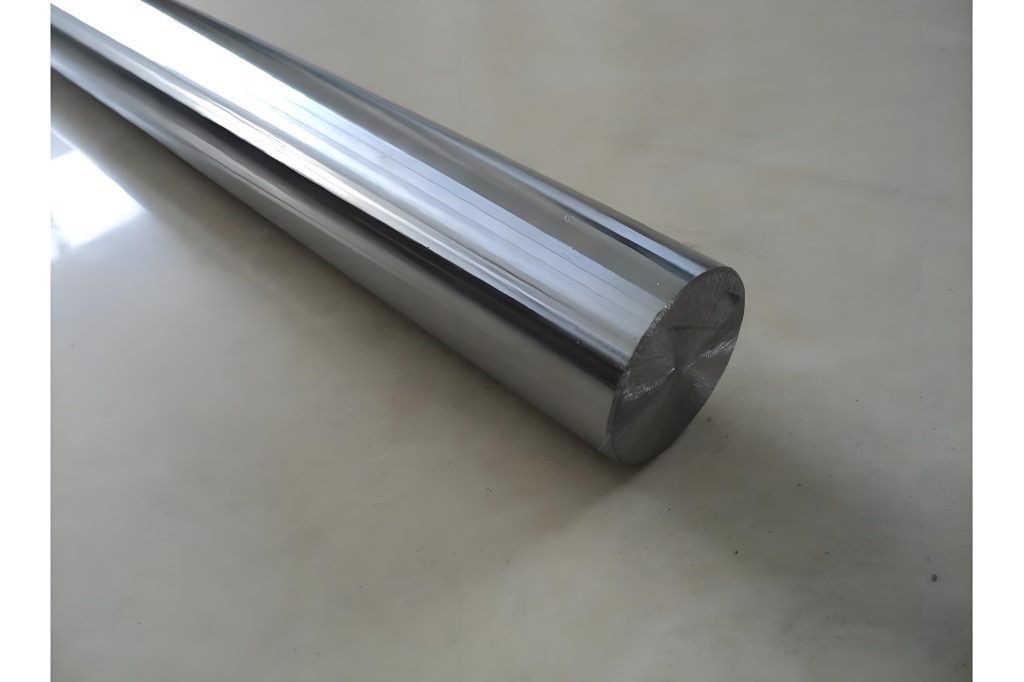
High carbon steels play a crucial role in various industries, including manufacturing, tool making, and construction. Their unique combination of hardness, strength, and wear resistance makes them ideal for applications where durability and precision are essential. Understanding the characteristics and differences between high carbon steel grades like SK2, SK4, SK5, and SK7 is vital for engineers, machinists, and DIY enthusiasts alike. It enables them to make informed decisions, optimize their production processes, and ensure the success of their projects. Whether you’re crafting a custom knife, manufacturing industrial machinery, or working on a DIY metalworking project, the right choice of high carbon steel can make all the difference. So, let’s roll up our sleeves and explore the fascinating world of high carbon steels!
2. Understanding High Carbon Steel
2.1 Definition and characteristics
High carbon steel is a type of steel that contains a relatively high carbon content, typically ranging from 0.6% to 1.5%. This higher carbon content imparts several distinct characteristics to the steel. Firstly, it results in a high level of hardness, making it suitable for applications where wear resistance is crucial. The increased carbon also contributes to enhanced strength, enabling the steel to withstand significant mechanical stress. However, this comes at the expense of toughness, as high carbon steels tend to be more brittle compared to lower carbon counterparts. Additionally, high carbon steels are relatively easy to quench and temper, allowing for further control of their mechanical properties. One drawback is their susceptibility to corrosion, as the high carbon content can make them more prone to rusting. Therefore, proper surface treatment and maintenance are often necessary to prevent oxidation and ensure the longevity of high carbon steel components. Overall, the unique combination of hardness, strength, and other properties makes high carbon steel a popular choice in various industries, despite its limitations.
2.2 Common applications
High carbon steel finds extensive use in a wide range of applications due to its desirable properties. In the field of tool making, it is a preferred material for manufacturing cutting tools such as knives, saw blades, and drills. The high hardness and wear resistance of high carbon steel enable these tools to maintain a sharp edge and perform effectively over extended periods. For example, a chef’s knife made from high carbon steel can easily slice through various food items with precision and durability. In the manufacturing of molds, high carbon steel is utilized for its ability to withstand the high pressures and abrasion involved in the molding process. Dies for stamping, forging, and injection molding are often made from high carbon steel to ensure the production of high-quality and dimensionally accurate parts. In addition to tools and molds, high carbon steel is also employed in the production of mechanical parts such as springs, gears, and shafts. The strength and fatigue resistance of the steel make it suitable for these applications, where reliability and performance are essential. Springs made from high carbon steel can provide the necessary elasticity and resilience in various mechanical systems, while gears and shafts can transmit power efficiently and withstand the forces exerted during operation. Overall, the versatility and performance of high carbon steel make it an indispensable material in many industries, contributing to the production of a wide array of high-quality products.
3. SK2 High Carbon Steel
3.1 Chemical composition
The chemical composition of SK2 high carbon steel plays a significant role in determining its properties and performance. Typically, SK2 contains a carbon (C) content ranging from 0.90% to 1.04%, which is relatively high compared to some other steel grades. This high carbon content is primarily responsible for the steel’s excellent hardness and wear resistance, making it suitable for applications where these characteristics are crucial. In addition to carbon, SK2 also contains silicon (Si) in amounts up to 0.35%, manganese (Mn) in the range of 0.50% to 0.80%, phosphorus (P) limited to 0.030% or less, and sulfur (S) also restricted to 0.030% or less. The presence of manganese contributes to the steel’s strength and toughness, while the controlled levels of phosphorus and sulfur help to prevent brittleness and ensure good machinability. Overall, the specific chemical composition of SK2 high carbon steel is carefully balanced to achieve the desired combination of hardness, strength, and toughness for various industrial applications.
3.2 Material properties
SK2 high carbon steel exhibits a unique set of material properties that make it a popular choice in many industries. One of its most prominent features is its high hardness, which is a result of its relatively high carbon content. This hardness enables SK2 to withstand significant wear and abrasion, making it ideal for cutting tools and other applications where durability is essential. Despite its hardness, SK2 also possesses a certain degree of toughness, thanks in part to the presence of manganese in its composition. This combination of hardness and toughness allows the steel to resist cracking and breaking under stress, ensuring its reliability in demanding applications. In terms of machinability, SK2 is relatively easy to work with, allowing for efficient processing and shaping. It also responds well to quenching and tempering, processes that can further enhance its mechanical properties. However, one drawback of SK2 is its relatively poor corrosion resistance. Without proper protection, such as coating or surface treatment, SK2 is prone to rust and oxidation, which can limit its use in certain environments. Overall, the material properties of SK2 high carbon steel make it a versatile and valuable material, particularly in applications where hardness and wear resistance are of utmost importance.
3.3 Typical uses
SK2 high carbon steel finds extensive use in various industries, particularly in the manufacturing of cutting tools and blades. Its high hardness and wear resistance make it an excellent choice for applications such as knives, saw blades, and chisels, where a sharp and durable edge is required. In the food processing industry, SK2 knives are favored for their ability to maintain a sharp edge, allowing for precise and efficient cutting of various food items. In woodworking and metalworking, SK2 saw blades and cutting tools can withstand the rigors of continuous use, ensuring clean and accurate cuts. Additionally, SK2 is also used in the production of certain types of springs and precision dies, where its combination of strength and toughness is beneficial. For example, in the manufacturing of springs for mechanical watches, SK2 can provide the necessary elasticity and durability to ensure accurate timekeeping. Overall, the versatility and performance of SK2 high carbon steel make it a reliable choice for a wide range of applications that demand high hardness, wear resistance, and precision.
4. Comparison with SK4, SK5, and SK7
4.1 Carbon content differences
The carbon content is a key factor that distinguishes SK2 from SK4, SK5, and SK7. Here’s a comparison in tabular form:
| Steel Grade | Carbon Content Range (%) |
| SK2 | 0.90 – 1.04 |
| SK4 | 0.95 – 1.04 |
| SK5 | 0.80 – 0.90 |
| SK7 | 0.60 – 0.70 |
As the carbon content decreases from SK2 to SK7, there is a general trend of decreasing hardness and increasing toughness. SK2 and SK4, with their relatively high carbon content, are harder but less tough compared to SK5 and SK7. This difference in carbon content has a significant impact on the mechanical properties and, consequently, the applications of these steels. For example, in applications where high hardness and wear resistance are crucial, such as cutting tools, SK2 and SK4 might be preferred. On the other hand, for applications that require a balance between hardness and toughness, like some hand tools, SK5 could be a better choice. And for applications where toughness is of utmost importance, such as springs or certain types of blades that need to withstand bending without breaking, SK7 might be more suitable. Understanding these carbon content differences is essential for selecting the right high carbon steel for a specific application.
4.2 Property variations
In addition to carbon content, there are other property variations among SK2, SK4, SK5, and SK7. SK4, with a carbon content similar to SK2, also exhibits high hardness and good wear resistance. However, it may have slightly better toughness due to its specific alloying elements and microstructure. This makes it suitable for applications where a combination of hardness and some degree of toughness is required, such as certain types of cutting tools and dies. SK5, with a lower carbon content than SK2 and SK4, has a balance of hardness and toughness. It is more ductile and easier to work with, making it a popular choice for applications like hand tools, where ease of shaping and a reasonable level of hardness are needed. SK7, with the lowest carbon content among these grades, has the highest toughness. It is often used in applications where flexibility and resistance to fracture are important, such as springs and some types of blades that require bending without breaking. In terms of machinability, SK5 and SK7 are generally more machinable than SK2 and SK4 due to their lower carbon content. They can be cut, drilled, and milled more easily, which can reduce production time and costs. However, SK2 and SK4 may offer better performance in terms of hardness and wear resistance after heat treatment. Overall, understanding these property variations is crucial for selecting the most suitable high carbon steel grade for a particular application, taking into account factors such as performance requirements, manufacturing processes, and cost.
4.3 Application scenarios for each type
SK4 is often used in the manufacturing of tools and parts that require high hardness and a certain degree of toughness. For example, it is suitable for making punches, dies, and cutting blades for industrial applications. In the automotive industry, SK4 can be used to manufacture components that need to withstand high mechanical stress and wear, such as certain gears and shafts. SK5 finds its application in a wide range of hand tools, such as hammers, chisels, and screwdrivers. Its balance of hardness and toughness makes it ideal for these applications, where the tool needs to be durable yet not too brittle. In the woodworking industry, SK5 is commonly used to make saw blades and cutting tools that require a good combination of sharpness and toughness to cut through different types of wood. SK7 is widely utilized in the production of springs, especially those that need to endure repeated bending and stretching without losing their elasticity. It is also used in the manufacturing of some types of knives and blades that require high toughness, such as kitchen knives and certain types of hunting knives. In the construction industry, SK7 can be used to make components that need to withstand bending and impact, such as certain types of fasteners and connectors. Overall, each of these high carbon steel grades has its unique set of application scenarios, and choosing the right one depends on the specific requirements of the project at hand.
5. CNC Machining Considerations for SK2, SK4, SK5, and SK7 Steel
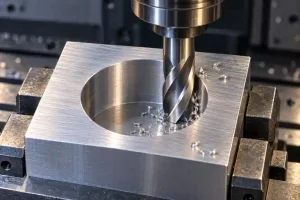
SK2, SK4, SK5, and SK7 should not be selected only by hardness. For CNC machined parts, the machining route also depends on heat treatment condition, part thickness, cutting features, tolerance, surface finish, and post-processing requirements.
High carbon tool steels can become difficult to machine after hardening. If tight dimensions, flatness, holes, slots, or sharp edges are required, the supplier should confirm whether the part should be machined before heat treatment, finished after heat treatment, or ground after hardening.
| Machining Factor | Why It Matters for SK Steel Parts | Buyer Should Confirm |
|---|---|---|
| Heat treatment condition | Hardness changes machinability, tool wear, and dimensional stability | Annealed, hardened, tempered, or final hardness requirement |
| Carbon content | Higher carbon may improve wear resistance but reduce toughness and machinability | Whether hardness or toughness is more important |
| Part thickness | Thin parts may distort during machining or heat treatment | Thickness, flatness, and deformation risk |
| Critical edges | Sharp cutting edges may need grinding or controlled finishing | Edge geometry and surface requirement |
| Holes and slots | Hardened high carbon steel is harder to drill, tap, and mill | Hole size, thread depth, and tolerance |
| Surface finish | Grinding, polishing, coating, or black oxide may be needed | Required finish and visible surfaces |
| Inspection | Heat treatment and finishing can change final dimensions | CMM, hardness test, flatness, or gauge requirements |
For custom CNC machined high carbon steel parts, material selection should be reviewed together with the drawing, heat treatment requirement, tolerance, and final application. A grade that works well for a blade may not be the best choice for a spring, washer, die insert, or precision machined component.
6. RFQ Notes for SK Grade Steel CNC Parts
If your project uses SK2, SK4, SK5, SK7, or similar high carbon tool steels, the RFQ should include more than the steel grade. Heat treatment condition, hardness target, critical dimensions, surface finish, and inspection method should be confirmed before quotation.
Please provide the 3D file, 2D drawing, material grade, heat treatment requirement, final hardness target if available, quantity, surface finish, and any critical tolerance or flatness requirement. Rapid Efficient can review these details before quotation and help identify machining, heat treatment, and inspection risks.
FAQ: SK2, SK4, SK5, and SK7 Steel
Which is harder, SK2 or SK7?
SK2 generally has higher carbon content than SK7, so it can usually reach higher hardness and wear resistance after proper heat treatment. SK7 has lower carbon content, so it is usually tougher and easier to machine, but it may not provide the same wear resistance as higher-carbon SK grades.
Is SK5 steel easier to machine than SK2?
In many cases, yes. SK5 has lower carbon content than SK2, so it is usually less brittle and easier to machine before hardening. However, machinability still depends on heat treatment condition, part geometry, tool selection, cutting parameters, and required surface finish.
Can SK2, SK4, SK5, and SK7 be CNC machined after heat treatment?
They can be machined after heat treatment in some cases, but hardened high carbon steel may require slower cutting, suitable tooling, grinding, EDM, or other finishing methods. For tight holes, slots, threads, or flatness requirements, the machining and heat treatment sequence should be reviewed before production.
Which SK grade is best for springs?
Lower-carbon SK grades such as SK5 or SK7 are often considered when better toughness or flexibility is needed, but the final choice depends on spring design, forming method, heat treatment, fatigue requirement, and operating condition.
Which SK grade is best for cutting tools?
Higher-carbon SK grades such as SK2 or SK4 may be selected for cutting tools or wear-resistant parts when hardness and edge retention are important. However, they can be more brittle and may require careful heat treatment and finishing.
What should buyers confirm before ordering SK grade steel parts?
Buyers should confirm the steel grade, heat treatment condition, final hardness target, part geometry, tolerance, surface finish, flatness, edge requirement, quantity, and inspection method. If the part will be hardened after machining, possible distortion and final finishing allowance should also be discussed.
Conclusion
SK2, SK4, SK5, and SK7 are all high carbon tool steels, but they are not interchangeable. SK2 and SK4 are usually selected when hardness and wear resistance matter more, while SK5 and SK7 may be better when toughness, flexibility, or easier machining is more important.
For CNC machined SK grade steel parts, the final choice should consider carbon content, heat treatment, hardness target, part geometry, tolerance, surface finish, and inspection method. If the part will be hardened after machining, possible distortion and final finishing allowance should be reviewed before production.
Rapid Efficient can review drawings, material grade, heat treatment requirement, tolerance, surface finish, and inspection needs before quotation.