
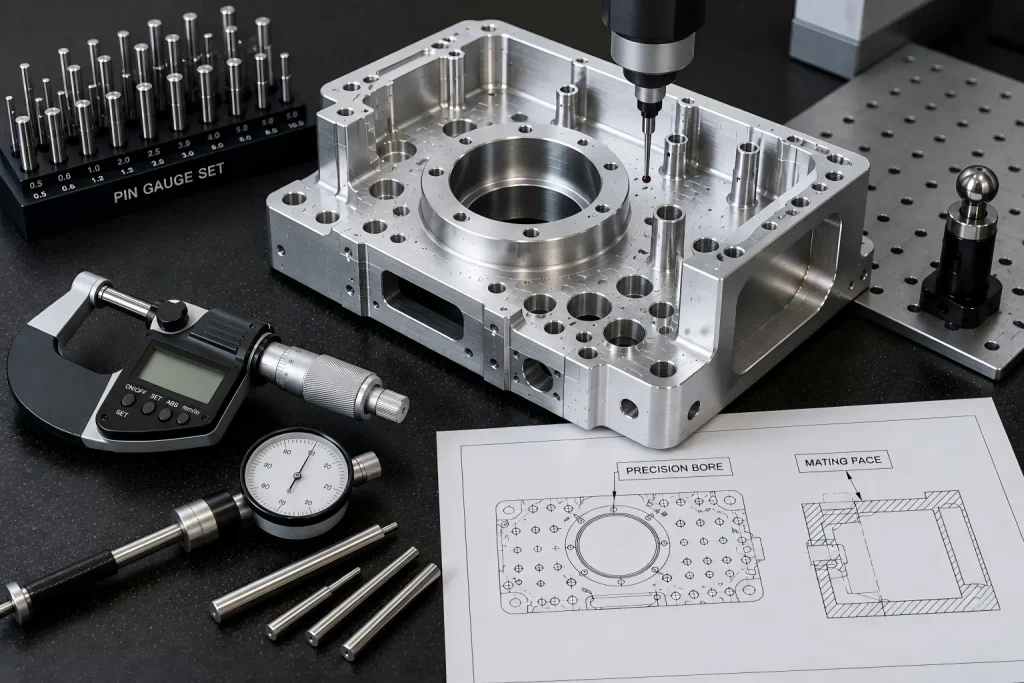
CNC铝公差应按特性和功能选择, 不是将一个严格的数字应用到整个绘图上.
一般外形尺寸, 精密轴承孔, 薄壁, 大盘子, 与基准相关的孔图案, 和阳极氧化螺纹不会产生相同的制造或检查风险.
对于许多非关键的加工尺寸, 供应商可以使用接近 ±0.10 毫米或 ±0.005 英寸的一般车间公差,除非图纸另有说明. 这不是通用的铝标准,也不是每个功能的保证能力.
选定的铝特征可能需要更严格的控制, 但供应商必须先审查:
- 特征尺寸和深度
- 铝合金及状态
- 库存形式
- 壁厚
- 工具访问
- 设置数量
- 基准结构
- 表面处理
- 数量
- 最终检验方法
- 该要求是否在完成之前或之后适用
在选定的产品上可能存在 ±0.005 mm 等公差, 在受控条件下可访问的功能. 不应将其视为铝零件每个尺寸的标准功能.
对于更广泛的, 与材料无关的公差规划, 审查我们现有的 CNC加工公差指南.
为什么一个公差数字是不够的
当公差图表显示每个特征均可同等实现的一个数字时,它就会产生误导.
例如, 同样的 ±0.02 mm 要求可能适用于:
- 浅浅的 10 毫米孔径
- 一个 300 毫米总长度
- 一个深的内部口袋
- 柔性薄壁
- 多面孔图案
- 阳极氧化后必须保持控制的特征
这些功能需要不同的工具, 设置, 工件夹持方法, 热条件, 及检验设备.
公差难度也随:
- 功能辅助功能
- 刀具长径比
- 零件刚性
- 材料去除率
- 夹具重复性
- 表面粗糙度
- 毛刺灵敏度
- 测量不确定度
- 批量大小
- 检查期间零件温度
因此,一个有用的图表应该描述 如何控制每个功能, 而不是承诺整个零件具有相同的精度. 这种功能级方法还将页面与更广泛的页面分开 紧公差加工指南, 涵盖多种材料和一般紧公差规划.
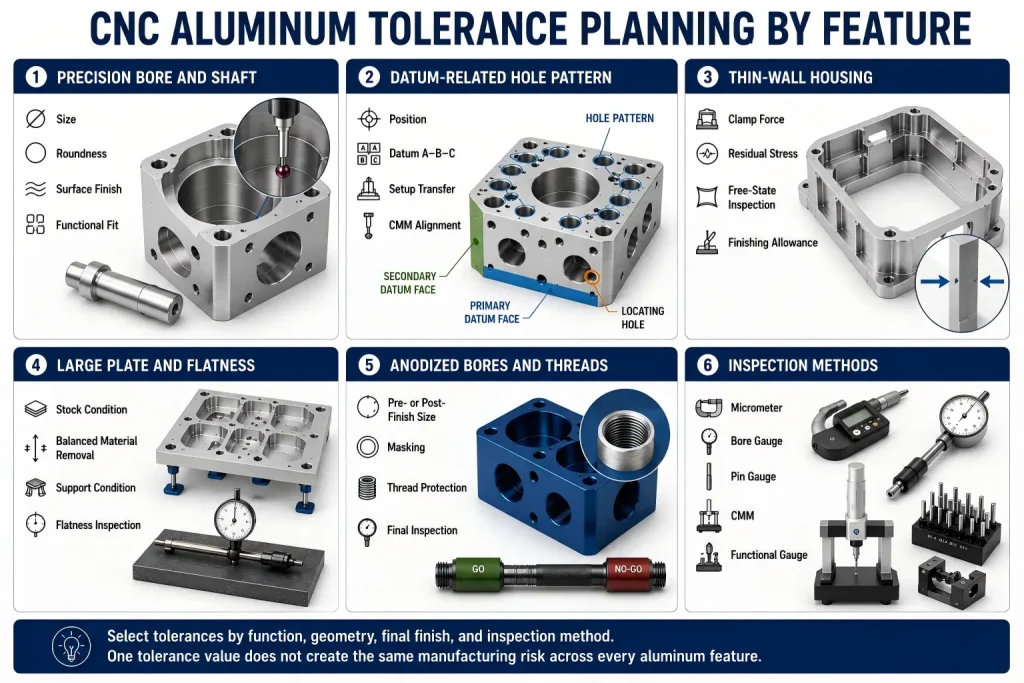
按功能分类的 CNC 铝公差计划表
下表是图纸和询价规划指南, 不是通用的能力保证.
| 铝的特点 | 实用的宽容方法 | 主要制造风险 | 检查注意事项 |
|---|---|---|---|
| 通用外部轮廓 | 除非功能需要更多,否则使用图纸的一般公差 | 刀具偏转, 设置传输, 毛刺 | 卡尺, 千分尺, CMM, 或轮廓检查 |
| 口袋长度或宽度 | 当它找到另一个组件时单独指定 | 角接触度, 刀具磨损, 测量访问 | 卡尺, 千分尺, 测量, 或坐标测量机 |
| 口袋深度或台阶高度 | 根据深度控制座位或组装位置 | 基准条件, 刀具长度, 筹码积累 | 深度千分尺, 高度尺, 或坐标测量机 |
| 精密内孔 | 使用明确的限制或批准的配合名称 | 刀具磨损, 圆度, 深度, 热, 表面饰面 | 内径规, 塞规, 气压计, 或坐标测量机 |
| 安装轴或凸台 | 使用基于配合组件的明确限制 | 刀具磨损, 热条件, 表面纹理 | 千分尺, 卡规, 或功能量表 |
| 孔型 | 使用相对于清晰基准的位置 | 设置对齐, 数据传输, 夹具重复性 | CMM 或商定的检验夹具 |
| 配合面 | 使用平整度, 并行性, 或需要时的垂直度 | 夹紧, 压力释放, 大面积精加工 | 表面板, 高度尺, CMM, 或光学方法 |
| 薄壁 | 松开后并处于要求状态时确认公差 | 锁模力, 切削力, 残余应力, 回弹 | CMM, 光学法, 夹具检查, 或自由态测量 |
| 大盘子 | 指定定义区域的平整度和支撑条件 | 库存平整度, 一侧去除, 温度, 重力 | 表面板, CMM, 直尺, 或光学检查 |
| 内螺纹 | 定义螺纹等级和最终精加工条件 | 毛刺, 阳极氧化, 掩蔽, 仪表访问 | GO/NO-GO 螺纹量规 |
| 阳极氧化孔或轴 | 说明最终尺寸是在阳极氧化之前还是之后应用 | 表面转换, 掩蔽变异, 后处理 | 内径规, 针规, 千分尺, 或功能性贴合 |
| 化妆品表面 | 与尺寸公差分开控制外观和粗糙度 | 工具痕迹, 处理, 爆破, 阳极氧化变化 | 视觉标准, 粗糙度测试仪, 批准样品 |
该表应用于开始供应商审查. 最终限制取决于完整的图纸, 合金, 库存, 几何学, 终点路线, 数量, 及检验要求.
一般公差, 关键特性, 和ISO 2768
图纸应区分可以遵循一般公差注释的尺寸和需要单独控制的特征.
一般公差
一般公差适用于尺寸,例如:
- 非关键外部轮廓
- 清仓口袋
- 盖子尺寸
- 没有拟合函数的倒角
- 化妆品边界
- 非定位间隙孔
- 具有宽敞的装配间隙的特点
这些尺寸应该仍然是可制造的, 可测量的, 并且一致, 但它们通常不需要与轴承座或定位孔相同的控制.
单独指定的公差
当特征控制时,使用单独的尺寸或形位公差:
- 压配合
- 滑动配合
- 轴承安装
- 轴对中
- 密封
- 运动
- 光学或传感器位置
- 配合部件位置
- 装配堆叠
- 加工后尺寸
- 功能检查
仅对关键特征应用紧公差通常会比将每个尺寸设置为 ±0.01 毫米更有用.
哪里ISO 2768 适合
ISO 2768-1 提供没有单独公差指示的线性和角度尺寸的一般公差. 它使用类很好, 中等的, 粗, 并且非常粗糙. 必须在图纸上注明预期类别; ISO 2768 不应被视为未命名的默认商店功能.
旧的ISO 2768-2 一般几何公差标准已撤销. 平面度等几何要求, 并行性, 垂直度, 位置, 轮廓, 跳动应使用适用的图纸和 GD 来定义&T 框架而不是依赖于不明确的一般注释. ISO 1101:2017 仍然是涵盖形状公差的已发布标准, 方向, 地点, 和跳动.
适用于需要控制配合的孔和轴, ISO 286 提供线性尺寸的标准化代码系统, 公差等级, 偏差, 适合. 配合名称应从实际装配要求中选择,而不是从不相关的项目中复制.
绘图笔记,例如 ISO 2768-m 并不能取代个人控制:
- 轴承孔
- 压接轴
- 与基准相关的孔阵列
- 密封面
- 精密对准功能
- 阳极氧化后尺寸
- 关键的平整度或位置要求
需要不同公差策略的三种铝特征
精密孔, 与基准相关的孔图案, 柔性铝结构可能会在图纸上显示类似的数值公差, 但它们需要不同的加工和检测策略.
精密孔, 轴, 和适合
精密孔和轴应作为完整的功能特征进行审查.
公称直径和尺寸公差只是要求的一部分. 性能还可能取决于:
- 圆度
- 圆柱度
- 直线度
- 表面粗糙度
- 钻孔深度
- 边缘条件
- 锥度
- 基准方向
- 零件温度
- 配合部件公差
- 最终表面处理
浅浅的, 刚性块中的可触及孔通常比穿过薄壁的深孔或跨多个装置加工的孔更容易控制.
报价前需确认的问题
- 该功能是否为压配合, 滑动配合, 间隙配合, 或轴承座?
- 什么是配合组件?
- 指定的尺寸适用于阳极氧化之前还是之后?
- 是否允许屏蔽?
- 圆度或圆柱度在功能上重要吗?
- 需要什么表面粗糙度?
- 是 100% 需要测量?
- 是否需要数字检验报告?
- 买家是否提供主组件或配套组件?
在未检查表面状况和几何形状是否能够支持所需配合的情况下,请勿指定较窄的直径公差.
孔位, 日期, 和GD&时间
孔尺寸和孔位置要求不同.
孔径可能取决于:
- 刀具直径和磨损
- 钻孔深度
- 材料附着力
- 表面光洁度
- 圆度
- 毛刺
- 检查方法
孔位置可能取决于:
- 基准选择
- 夹具重复性
- 设置数量
- 机器对中
- 特征间距
- 零件变形
- 数据传送
- 检查对准
用于功能性孔图案, 基于数据的位置控制通常比从多个边缘给出单独的±坐标公差更清晰.
一张有用的图可以识别:
- 主要数据
- 辅助数据
- 第三级基准
- 受控孔模式
- 基本尺寸
- 位置公差
- 适当的材料条件调节剂
- 检验依据
- 最终加工或成品状态
清晰的基准选择连接加工设置, 图纸要求, 组装功能, 和检验报告. 更多示例, 看看我们的 CNC加工基准指南.
薄壁铝公差
薄壁铝零件在加工过程中可能会移动, 松开后, 去毛刺期间, 或表面处理后.
该部件在受到约束时可以正确测量,并在释放后发生变化.
常见的风险因素包括:
- 锁模力过大
- 钳口接触面积小
- 高切削力
- 壁厚不均匀
- 单面材料去除
- 坯料中的残余应力
- 热量积累
- 无支撑的高墙
- 长精加工工具
- 检查压力不一致
对于薄壁要求, 图纸或询价应注明:
- 公称壁厚
- 厚度
- 无支撑墙高度
- 关键区域
- 基准参考
- 自由状态或限制检查
- 最终表面处理
- 数量
- 检查方法
可能的过程控制包括分布式支持, 专用软钳口, 分阶段粗加工和精加工, 平衡切削, 控制精加工余量, 以及松开后的检查.
这些控制措施可以降低风险, 但没有一个固定装置或加工顺序适合每个薄壁铝制外壳.
大板和平整度
大铝板产生的问题与小精密孔不同.
平整度可能受到以下因素的影响:
- 进货情况
- 板材回火
- 单面材料去除
- 口袋深度
- 材料去除率
- 夹紧顺序
- 残余应力
- 切削热
- 检查期间的零件支撑
- 重力和方向
平整度标注应定义受控表面和相关检查条件.
避免使用较小的双边厚度公差来代替平整度. 一块板可能在几个点上具有正确的厚度,但仍然会弯曲或扭曲.
对于大盘子, 供应商可能需要审查:
- 应力消除板或铸造工装板
- 平衡材料去除
- 多个粗加工阶段
- 操作之间的休息时间
- 最终加工期间的支持
- 检查期间的支持
- 平整度适用于表面处理之前还是之后
6061, 7075, 5052, 和库存形式的差异
不存在简单的排名来表明一种铝合金总是比另一种铝合金具有更严格的公差.
公差稳定性取决于以下各项的精确组合:
- 合金
- 脾气
- 盘子, 酒吧, 挤压, 床单, 锻造, 或铸件
- 零件尺寸
- 壁厚
- 材质方向
- 残余应力
- 加工顺序
- 去除材料体积
- 最终完成
| 铝选项 | 实际公差考虑 |
|---|---|
| 6061-T6 | 广泛适用于许多机加工零件, 但几何形状和库存形状仍然可以控制变形风险 |
| 6061-T651 | 通常考虑用于机加工板部件,其中消除应力的库存是有用的 |
| 7075-T6或T651 | 更高的强度和刚度有助于某些功能, 但残余应力, 腐蚀要求, 工装, 成本仍需审查 |
| 5052-H32或H34 | 通常选择用于成型板材零件; 它更软, 在大量加工过程中,更具延展性的切削行为可能会增加毛刺和表面光洁度风险 |
| 挤压铝材 | 纹理方向, 轮廓变化, 直线度, 壁的一致性可能会影响最终加工 |
| 铸造工装板 | 适用于一些大型平板和固定装置, 但品牌, 孔隙率, 力量, 螺纹要求, 并必须审查完成情况 |
必须在特定状态和库存形式之间进行比较,而不仅仅是在合金编号之间进行比较.
详细的材料比较, 看看我们的 5052 与 6061 铝导轨.
阳极氧化如何影响铝的公差
阳极氧化将铝表面转化为氧化层并改变受影响特征的最终尺寸.
尺寸效应取决于:
- 合金
- 阳极氧化型
- 所需的氧化物厚度
- 几何学
- 过程控制
- 掩蔽
- 货架
- 表面处理
- 特征是在完成之前还是之后测量
需要特别注意的功能包括:
- 轴承座
- 精密孔
- 装配轴
- 内螺纹
- 外螺纹
- 滑动接口
- 压接特性
- 电气接触区域
- 接地表面
- 密封面
图纸应注明
- 公差是否适用于阳极氧化之前或之后
- 哪些区域需要遮盖
- 是否必须保护螺纹特征
- 是否需要阳极氧化后检验
- 是否需要功能量规或配合部件检查
- 是否允许修补或后加工
- 哪些表面是装饰性的
一张图只说 black anodize 可能无法为紧公差装配提供足够的信息.
对于表面缺陷, 掩盖风险, 线程问题, 架痕, 污渍, 和尺寸审查, 看看我们的 铝阳极氧化缺陷指南.
铝特征检验方法
仅当可以使用适当的方法检查特征时,严格的公差才有用.
| 特征 | 可能的检查方法 |
|---|---|
| 外径或宽度 | 千分尺, 卡尺, 卡规 |
| 精密内孔 | 内径规, 塞规, 针规, 气压计 |
| 孔位 | CMM 或约定的检验夹具 |
| 平整度 | 表面板, 高度尺, CMM, 光学法 |
| 平行度或垂直度 | CMM, 高度尺, 面板设置 |
| 小槽 | 针规, 光学检查, CMM |
| 线 | GO/NO-GO 螺纹量规 |
| 表面粗糙度 | 粗糙度测试仪 |
| 薄壁柔性 | CMM, 光学检查, 夹具检查, 或商定的自由态方法 |
| 装配接口 | 功能仪表或配合部件检查 |
| 阳极氧化安装功能 | 精加工后量规, 尺寸检验, 或功能配合检查 |
CMM 对于许多位置都很有用, 轮廓, 以及与数据相关的要求, 但它并不是自动适合每个直径的最佳工具, 线, 或适合.
检查计划还应考虑:
- 仪器分辨率
- 校准状态
- 测量不确定度
- 功能访问
- 零件温度
- 零件清洁度
- 毛刺状况
- 自由或受约束状态
- 抽样计划
- 报告格式
对于报告结构, 日期对齐, 测量点, 采样, 和买家评论, 看看我们的 CNC零件指南的CMM检查.
是什么让 CNC 铝公差更贵?
成本不会仅根据公差宽度而增加.
选定的 ±0.02 mm 孔径可能很简单, 而平面度为 ±0.10 mm 的大而薄的外壳可能需要更多的工件夹具, 粗加工阶段, 稳定化, 和检查.
| 成本驱动因素 | 为什么会增加成本 |
|---|---|
| 仅对少数可访问功能进行严格容忍 | 通常更容易隔离和控制 |
| 整个绘图应用严格公差 | 更多的加工和检查工作 |
| 多个与数据相关的功能 | 需要稳定的设置传输和几何形状检查 |
| 薄壁或深口袋 | 更大的变形和刀具偏转风险 |
| 大盘子 | 库存状况, 压力释放, 和支撑影响平整度 |
| 深孔或长距离特征 | 工具访问和测量变得更加困难 |
| 阳极氧化后最终尺寸 | 可能需要遮蔽, 津贴, 和附加检查 |
| 完整的检验报告 | 增加测量和报告时间 |
| 100% 检查 | 增加每个零件的检查时间 |
| 定制仪表或固定装置 | 增加工具和验证成本 |
| 生产批量非常小 | 设置和检查成本分散在更少的零件上 |
最好的节省成本的方法不是自动放松每一个公差. 它正在识别哪些特征真正具有控制功能,并从绘图的其余部分中消除不必要的严格限制.
发送什么内容进行公差审核
有效审查铝耐受计划, 提供:
- 2D 绘图和 3D CAD 模型
- 铝合金, 脾气, 和数量
- 临界孔, 适合, 孔图案, 和交配特征
- 日期和 GD&技术要求
- 薄壁或大平面风险
- 阳极氧化, 掩蔽, 以及加工后尺寸要求
- 检查方法及报告要求
- 以前的尺寸或装配问题, 如果有的话
解释为什么关键功能很重要, 如轴承安装, 密封, 结盟, 滑动配合, 压配合, 或装配互换性. 这有助于将图纸要求与制造和检验路线联系起来.
了解更多关于我们的 CNC铝加工服务 用于定制原型, 精密零件, 并重复生产.
收到完整图纸后, CAD 文件, 数量, 材料, 结束, 及检验要求, Rapid Efficient 通常会在以下范围内提供报价反馈: 24 小时.
常问问题
铝材的标准CNC公差是多少?
不存在适用于每个铝部件的通用公差. 对于非关键加工尺寸,许多供应商使用接近 ±0.10 毫米或 ±0.005 英寸的一般车间公差, 但图纸必须定义适用的标准或商定的公差. 应单独指定关键功能.
CNC铝件能否保持±0.005毫米?
选定的特征可以检查 ±0.005 mm, 但可行性取决于特征尺寸, 几何学, 物质条件, 刚性, 设置, 精加工, 温度, 和检查. 不应将其用作整个铝零件的整体公差.
孔径或孔位置更难控制?
他们创造了不同的风险. 直径取决于工具, 深度, 穿, 表面状况, 和测量. 位置取决于数据控制, 夹具重复性, 设置传输, 特征间距, 和检查对准.
是 7075 比更精确 6061?
不会自动. 7075 比普通的具有更高的强度和刚性 6061 状况, 但尺寸稳定性仍取决于回火, 库存形式, 残余应力, 几何学, 加工顺序, 精加工, 和检查.
阳极氧化影响铝尺寸吗?
是的. 阳极氧化会改变受影响表面的最终尺寸. 图纸应说明关键尺寸是否适用于阳极氧化之前或之后,并标识任何遮蔽, 线程保护, 或完成后检验要求.
应该ISO 2768 用于每一个铝制拉丝?
ISO 2768-1 当指定预期等级时,可以为未指定的线性和角度尺寸提供一般公差. 它不能取代个人尺寸限制, 适合要求, 日期, 或GD&T 代表关键功能.
请求 CNC 铝公差审查
快速高效地发送您的:
- 2D图
- 3CAD模型
- 铝合金及状态
- 数量
- 临界公差
- 日期和 GD&技术要求
- 配合部件信息
- 表面光洁度
- 阳极氧化和遮蔽注意事项
- 检验要求
- 以前的尺寸或装配问题
我们可以检查公差计划是否与特征几何形状匹配, 材料, 加工路线, 最终完成, 以及生产开始前的检验要求.