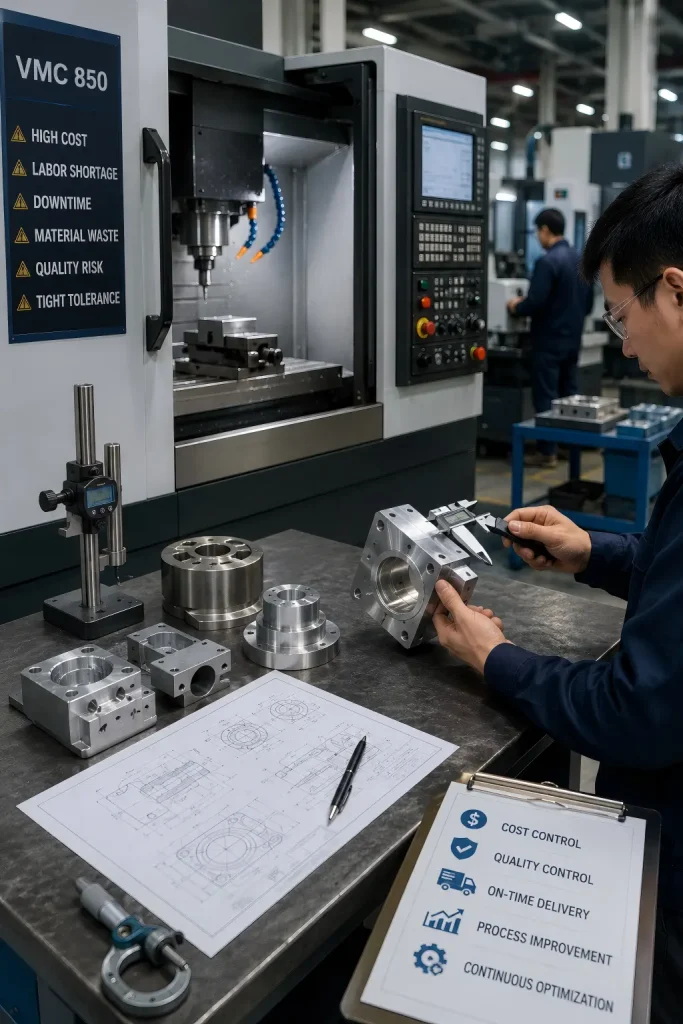
快速解答: 数控机床及数控加工行业最大的痛点是设备成本高, 熟练的劳动力短缺, machine downtime, 物质浪费, 质量不稳定, and difficulty meeting tight tolerance requirements. 对于买家, these problems often appear as delayed delivery, inconsistent part quality, higher machining costs, poor communication, and repeated rework.
A reliable CNC machining supplier should help reduce these risks through DFM review, suitable material and process selection, 优化的刀具路径, 稳定的夹具, documented inspection, and clear production communication before shipment.
介绍
The CNC machine tool industry supports precision manufacturing across industrial equipment, 机器人技术, automotive components, communication devices, medical device components, 半导体设备, and custom product development. 然而, the industry also faces real pain points: high machine investment, 熟练的劳动力短缺, 停机时间, 物质浪费, quality inconsistency, and increasing tolerance requirements.
对于买家, these industry problems are not abstract. They often become practical sourcing risks: delayed delivery, unstable part quality, higher CNC machining costs, repeated rework, poor inspection documentation, or parts that fail during assembly.
This article explains the major pain points in the CNC machine tool industry and how buyers can reduce sourcing risk when choosing a CNC machining supplier.
快速比较: Key Pain Points and Practical Solutions
| Pain Point | Impact on Buyers | Practical CNC Machining Solution |
|---|---|---|
| High equipment and setup costs | Higher project cost, especially for prototypes and small batches | Use a flexible CNC machining supplier with prototype and low-volume production support |
| Skilled labor shortage | 更长的交货时间, programming errors, and unstable machining quality | Work with suppliers who can review drawings, 公差, and toolpath strategy before production |
| Machine downtime | Delayed delivery and unstable production schedules | Choose suppliers with backup capacity, clear scheduling, and stable production planning |
| Material waste | Higher material cost and lower production efficiency | Improve DFM, stock allowance, nesting, roughing strategy, and finishing sequence |
| Quality inconsistency | 返工, rejected parts, 装配问题, and delayed product launches | Use first article inspection, 三坐标检测, 过程控制, and documented QC reports |
| Tight tolerance requirements | Higher scrap risk for thin-wall, 复杂的, or multi-feature parts | Control clamping, 形变, 刀具磨损, 温度, 基准选择, and tolerance stack-up |

CNC机床行业的关键疼痛点
1. 高初始投资成本
希望采用CNC加工技术的公司最重要的障碍之一是所需的高初始投资.
- 设备成本: 高级CNC机器很昂贵, 通常需要大量资本支出.
- 培训和设置: 操作员需要专门的培训才能有效使用这些机器, 增加整体成本.
影响: 高成本可以阻止中小型企业 (中小型企业) 从投资CNC技术, 限制他们与大公司竞争的能力.
If machining cost is your main concern, 请参阅我们的指南 how much CNC machining costs in China and what factors affect the final quotation.
2. 熟练的劳动力短缺
查找和保留熟练的劳动是CNC机床行业的持续挑战.
- 专业技能: 操作CNC机器需要了解CAD/CAM软件, 编程, 和机械工程原理.
- 劳动力老化: 许多经验丰富的运营商即将退休, 导致熟练工人短缺.
影响: 缺乏熟练的劳动会导致生产率降低, 错误增加, 和更长的交货时间.
3. 维护和停机时间
CNC机器需要定期维护以确保最佳性能, 但是停机时间可能是昂贵和破坏性的.
- 预防性维护: 需要定期检查和零件更换以防止故障.
- 计划外的停机时间: 意外的失败会停止生产, 导致延误和额外费用.
影响: 频繁的维护和意外停机时间可以显着降低运营效率并提高成本.
4. 物质浪费和效率低下
材料废物是CNC加工中的常见问题, 特别是在处理复杂的几何形状和紧张的公差时.
- 减法制造: 传统的CNC过程涉及删除材料, 这会导致大量浪费.
- 效率低下的工具路径: 优化不良的工具路径可能会导致不必要的材料去除和延长的加工时间.
影响: 高水平的物质废物和效率低下可以增加生产成本和环境影响.
5. 质量控制和一致性
确保所有生产零件的一致质量至关重要,但具有挑战性.
- 精确要求: 满足紧密的公差和表面表面要求需要一致关注细节.
- 质量保证系统: 实施强大的质量控制系统是必不可少的,但可以是资源密集型的.
影响: 质量变异性会导致返工, 客户不满意, 和潜在的召回.
For complex assemblies, tolerance issues can accumulate quickly. 我们的 CNC machining tolerance stack-up guide explains how small errors become scrap and how to prevent them early.
For projects with tight tolerances, inspection planning is just as important as machining. You can also read our CNC 加工零件 CMM 检验指南 to understand what buyers should check before approving precision parts.
6. 与现代技术集成
将CNC加工与物联网等新兴技术集成, 人工智能, 增材制造既提出了机遇和挑战.
- 数据管理: 从多个来源收集和分析数据可能很复杂.
- 技术采用: 采用新技术需要大量的投资和培训.
影响: 未能整合现代技术的公司有可能落后于利用这些进步的竞争对手.
How Rapid Efficient Helps Buyers Reduce CNC Machining Risk
Many pain points in the CNC machine tool industry eventually appear in real projects as delayed delivery, unstable part quality, repeated rework, and higher machining costs. 对于买家, the key is not only having advanced machines, but also working with a CNC machining supplier that understands process control, 耐受风险, 物质行为, 及检验要求.
1. DFM Review Before Machining
Before production starts, RapidEfficient reviews drawings, 公差, 材料选择, 壁厚, 表面光洁度要求, and critical assembly features. This helps identify possible machining risks early, such as difficult-to-hold tolerances, weak structures, 薄壁变形, or unnecessary cost caused by over-tight specifications.
2. Material and Process Selection
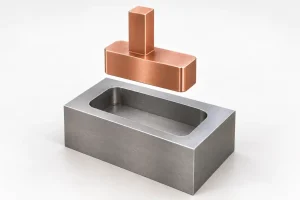
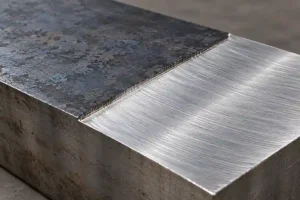
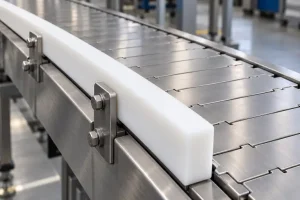
Different materials create different machining challenges. Aluminum is easier to cut but may deform in thin-wall structures. Stainless steel can cause tool wear and heat buildup. Copper and brass require careful control of burrs and surface oxidation. Engineering plastics such as PEEK, 聚甲醛, 尼龙, and PTFE may require special strategies to control thermal expansion and dimensional stability.
3. Toolpath and Fixture Optimization
Stable CNC machining depends heavily on toolpath strategy and workholding design. RapidEfficient uses suitable roughing and finishing sequences, controlled cutting parameters, 平衡材料去除, and proper fixtures to reduce vibration, 形变, 刀具磨损, and inconsistent surface quality.
4. Tolerance and Deformation Control
用于精密数控零件, small dimensional errors can lead to assembly failure, leakage, 轴承不对中, 或被拒绝的批次. Our engineering team focuses on tolerance stack-up, 锁模力, 加工顺序, 压力释放, and inspection planning to help maintain stable dimensions from prototype to production.
5. Quality Inspection Before Shipment
Quality control is not only a final check. It should be part of the entire machining process. RapidEfficient can provide dimensional inspection, 三坐标检测, surface finish checks, 螺纹检查, 材料验证, and first article inspection when required. This helps buyers reduce rework, avoid assembly problems, and receive parts that meet drawing requirements.
6. Flexible Capacity for Prototypes and Production
One common challenge in CNC machining is balancing fast lead time with stable quality. Rapid Efficient coordinates in-house manufacturing resources and a vetted supplier network to support prototypes, small batches, and on-demand production while maintaining engineering communication, 检查计划, and delivery follow-up.
常问问题:CNC Machining Industry Pain Points
What is the biggest pain point in the CNC machining industry?
The biggest pain point is usually the combination of skilled labor shortage, machine downtime, and unstable quality control. These problems directly affect delivery time, 零件准确性, and production cost.
How can buyers reduce CNC machining risks?
Buyers can reduce risk by choosing a supplier with strong DFM review, experienced engineers, stable machining capacity, and documented inspection processes such as CMM inspection and first article inspection.
Why does CNC machining quality vary between suppliers?
Quality varies because suppliers differ in machine capability, operator experience, 刀具路径策略, 夹具设计, inspection equipment, and process control. 对于紧公差零件, these details can decide whether a part passes or becomes scrap.
Why do CNC machining costs increase?
CNC machining costs increase when parts require difficult materials, 紧张的公差, 复杂的几何形状, 加工时间长, special fixtures, 表面处理, 检查报告, or urgent delivery.
How can buyers avoid CNC machining delays?
Buyers can reduce delays by providing complete 2D drawings, 3D 文件, 材料等级, 数量, 公差要求, 表面饰面, 检查需要, and delivery expectations before quotation.
结论
The CNC machine tool industry faces real pain points, including high equipment costs, 熟练的劳动力短缺, machine downtime, 物质浪费, quality inconsistency, and tighter tolerance requirements. 对于买家, these challenges often appear as delayed delivery, unstable part quality, 机械加工成本较高, weak documentation, and repeated rework.
A better sourcing strategy is not only to look for the lowest unit price. Buyers should also check whether the CNC machining supplier can review drawings, identify DFM risks, select suitable materials and processes, control deformation, plan inspection, and communicate clearly before production.
Rapid Efficient can review your drawings, 材料要求, 耐受风险, 表面光洁度需求, 检查范围, and delivery expectations before quotation to help reduce CNC machining risk for custom metal and engineering-plastic parts.