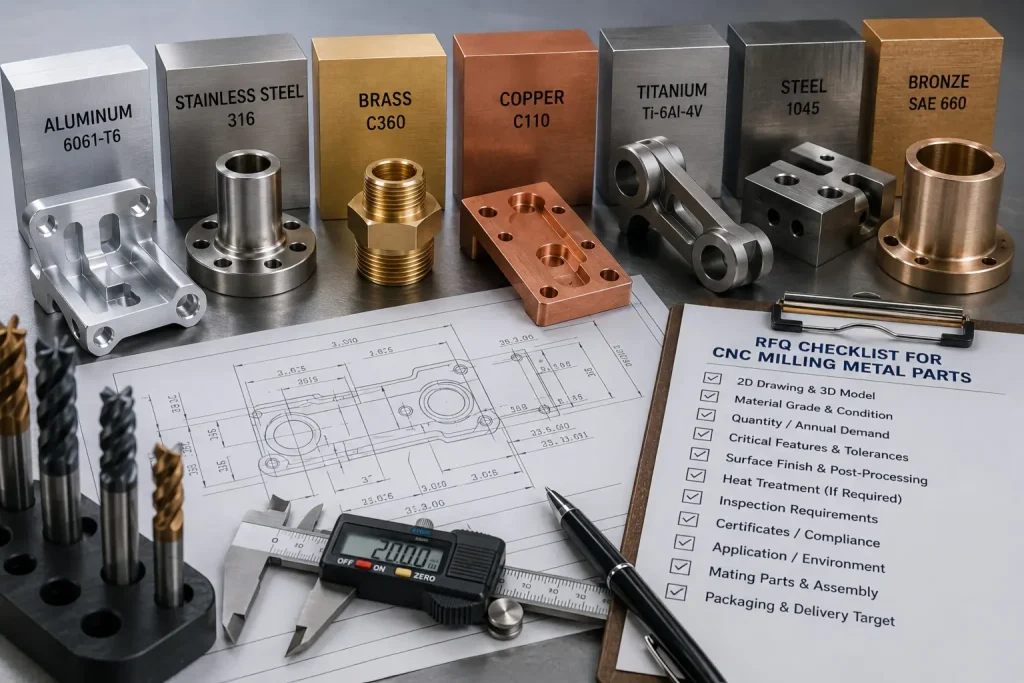
数控铣削金属: 如何为定制零件选择合适的材料

CNC 铣削金属精选

CNC 铣削金属不仅仅是一个加工决策.

这也是一个重大决定.

Two parts may look similar on a drawing, but the best metal can change depending on:

  • 力量
  • 重量
  • 耐腐蚀性
  • 导热系数
  • 电导率
  • 磨损行为
  • 表面饰面
  • 宽容
  • 成本
  • 数量
  • 后处理
  • final application

A buyer may ask for “metal CNC milling,” but that is not enough for a reliable quotation.

铝, 不锈钢, 黄铜, 铜, 钛, and tool steel all behave differently during milling. They also create different risks for tool wear, 毛刺, 表面饰面, 检查, 交货时间, 和零件总成本.

The best CNC milling metal is not always the strongest material.

It is the material that fits the part function, 加工路线, 公差要求, 完成要求, 和预算.


CNC Milling Metals Are Not Interchangeable

Many RFQ problems start when a metal is selected too early.

例如:

  • aluminum may be easy to machine, but it may not survive a high-temperature or high-wear environment
  • stainless steel may resist corrosion, but it can increase tool wear, 热, 和机械加工成本
  • copper may conduct heat and electricity well, but it can be sticky and burr-sensitive
  • brass may machine cleanly, but the alloy and lead content may matter for regulation
  • titanium may provide high strength-to-weight performance, but it needs careful toolpath and heat control
  • steel may be strong and affordable, but rust prevention and heat treatment may need review

Choosing the wrong metal can create problems after machining:

  • part deformation
  • 表面光洁度差
  • unexpected burrs
  • assembly failure
  • corrosion issue
  • galling or thread damage
  • coating failure
  • cost increase
  • delivery delay
  • inspection disagreement

A material should be selected with the part function in mind.

For CNC milling capability, 看看我们的 数控铣削服务 页.


Quick CNC Milling Metals Comparison

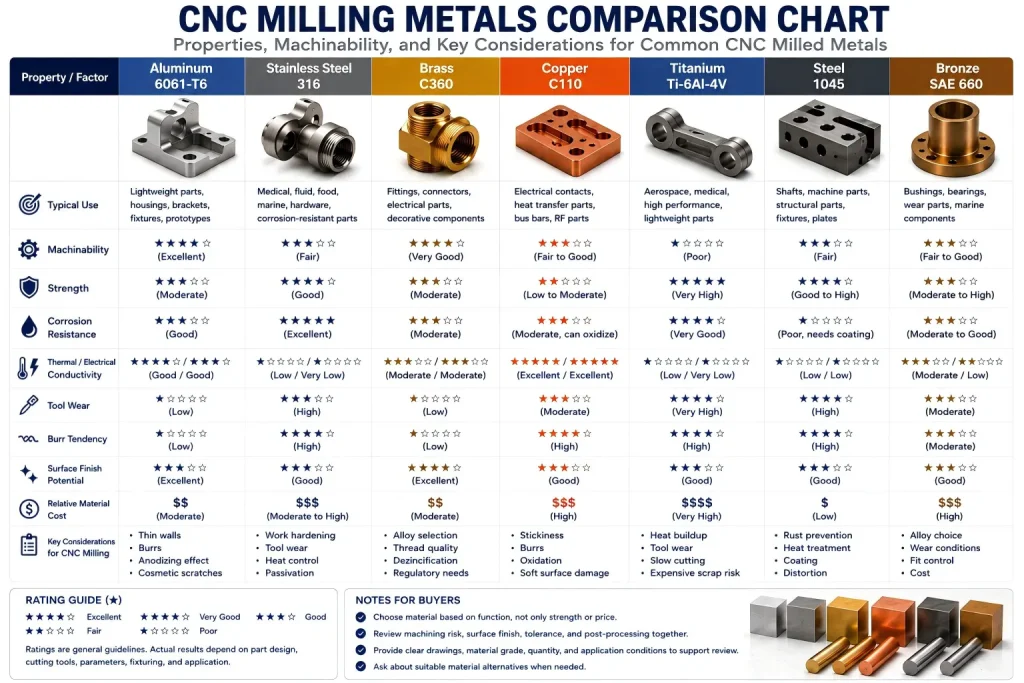
The table below gives a practical starting point for common CNC milled metals.

金属Common Reason to Use ItMain Milling Concern
轻的, 易于加工, good cost balance薄壁变形, 毛刺, anodizing effect, cosmetic scratches
不锈钢耐腐蚀, 力量, 干净的外观加工硬化, 刀具磨损, 热, 毛刺, 钝化
黄铜良好的机械加工性, 良好的外表, 低摩擦合金选择, 螺纹质量, dezincification risk in some environments
Electrical and thermal conductivityStickiness, 毛刺, 工具痕迹, 氧化, soft surface damage
高强度重量比, 耐腐蚀性热, 刀具磨损, low cutting speed, expensive scrap risk
碳钢力量, 成本, 可用性锈, 热处理, 涂层, 失真
Tool steel耐磨性, hardness after heat treatment硬度, heat treatment movement, 刀具磨损
青铜磨损行为, 衬套, bearing surfacesAlloy choice, 成本, 毛刺, fit control
Magnesium轻的Fire risk, supplier capability, handling controls
锌合金Good casting route and some machining needsOften better as casting plus finishing, not always ideal for milled-from-solid parts

该表只是一个起点.

The final choice depends on the drawing, application, 数量, 结束, 及检验要求.

CNC milling metals comparison chart showing aluminum 6061-T6, 不锈钢 316, brass C360, copper C110, titanium Ti-6Al-4V, 钢 1045, bronze SAE 660, 机械加工性, 力量, 耐腐蚀性, 电导率, 刀具磨损, burr tendency, 表面饰面, 材料成本, and CNC milling considerations.

铝: The Most Common CNC Milling Metal

Aluminum is one of the most common CNC milling metals because it offers a strong balance of machinability, 重量, 成本, 耐腐蚀性, and finish options.

It is often used for:

  • 外壳
  • 括号
  • 盘子
  • 封面
  • 固定装置
  • 原型
  • 散热器
  • automation parts
  • 电子外壳
  • aerospace-style lightweight parts
  • 机器人组件

Common aluminum milling grades include:

铝级典型用途
6061General CNC milled parts, 括号, 外壳, 固定装置
7075Higher strength parts, aerospace-style components, loaded structures
5052Sheet and plate parts, 耐腐蚀性, formed parts
6082Structural parts and machined components in some markets
2024High strength applications, but corrosion protection needs review

Aluminum is often a good default choice when the part needs moderate strength, lower weight, fast machining, and flexible finishing.

然而, aluminum is not risk-free.

Aluminum milling should review:

  • 薄壁稳定性
  • 排屑
  • 毛刺敏感边缘
  • internal corner radius
  • 表面划痕
  • 阳极氧化厚度
  • flatness after material removal
  • 螺纹强度
  • press-fit features
  • 化妆品表面要求

If the part is aluminum-specific, 看看我们的 CNC铝加工服务 页.


不锈钢: 更强, 清洁工, but Slower to Mill

Stainless steel is often selected when corrosion resistance, 力量, 耐热性, or clean appearance matters.

It is common in:

  • medical device parts
  • fluid system parts
  • food equipment parts
  • marine components
  • hardware
  • 括号
  • 传感器外壳
  • 阀门组件
  • 精密机械零件

Common stainless steel grades include:

Stainless Steel Grade典型用途
304General corrosion-resistant parts
316Better corrosion resistance, marine and chemical environments
303Improved machinability, but corrosion resistance differs from 304/316
17-4 PH值Higher strength stainless parts after heat treatment
420 / 440CWear-resistant or hardened applications, depending on requirement

Stainless steel milling needs more process control than aluminum.

Common risks include:

  • 刀具磨损
  • 热量积聚
  • 加工硬化
  • 毛刺
  • thread galling
  • 排屑不良
  • slow machining speed
  • 表面划痕
  • passivation requirement
  • distortion in thin features

A buyer should not choose stainless steel only because it sounds stronger.

The grade should match corrosion environment, 强度要求, machining cost, and finishing plan.

For deeper material guidance, 看看我们的 不锈钢CNC加工指南.


黄铜: Easy to Machine, but Alloy Choice Still Matters

Brass is often one of the easiest metals to machine.

It can produce clean features, good threads, and attractive surfaces.

Brass is often used for:

  • 配件
  • 终端
  • 连接器
  • electrical parts
  • 装饰部件
  • 衬套
  • small mechanical parts
  • low-friction components
  • 阀门零件
  • 螺纹嵌件

Brass milling is usually more stable than copper, but the exact alloy matters.

Buyers should review:

  • lead content
  • 监管要求
  • corrosion environment
  • dezincification risk
  • plating or polishing requirement
  • 螺纹质量
  • 毛刺控制
  • 表面外观
  • electrical function
  • fit with mating metals

Brass can be a strong choice for small precision parts, especially when the part needs good machinability and clean threads.

But it may not be suitable for every fluid, 食品接触, or regulatory application.

For brass and copper comparison, 看看我们的 黄铜和紫铜的区别 指导.


铜: Conductive, Valuable, and Burr-Sensitive

Copper is selected when electrical conductivity, 导热系数, or specific copper properties are important.

It is common in:

  • 电触点
  • 传热部件
  • bus bars
  • 连接器
  • 接地部件
  • thermal plates
  • 射频元件
  • custom conductive parts
  • battery-related components
  • high-conductivity prototypes

Copper milling can be more difficult than many buyers expect.

Copper can be soft, 黏, and burr-prone. It may also show tool marks or handling scratches more easily than harder metals.

Copper milling should review:

Copper Feature回顾什么
Thin edgesBurrs and deformation
Conductive surfaces划痕, 氧化, 并完成
螺纹孔毛刺, 螺纹质量, and mating screw
Flat thermal faces平整度, 工具痕迹, and surface direction
小孔Drill wander and exit burrs
Cosmetic copper surfacesHandling and oxidation protection
Plated copper partsCoating thickness and adhesion
High-conductivity requirementsExact copper grade and certificate need

Do not treat copper like aluminum.

Even if the geometry is similar, the cutting behavior and burr control can be very different.

For copper-specific machining, 看看我们的 铜数控加工 指导.


钛: Useful but Expensive to Mill

Titanium is selected when the part needs a strong combination of low weight, 耐腐蚀性, and high strength-to-weight performance.

It may be used for:

  • aerospace-style parts
  • medical-related components
  • high-performance brackets
  • 轻量化结构件
  • marine parts
  • chemical environment parts
  • precision mechanical components

Titanium is not selected because it is easy.

Titanium milling needs careful review because it can create:

  • 热量积聚
  • 刀具磨损
  • low cutting speed
  • 排屑不良
  • high scrap cost
  • difficult threads
  • galling risk
  • surface damage
  • workholding challenges
  • long lead time

Titanium should be chosen when the application truly needs its properties.

If the part can use aluminum, 不锈钢, or another material, the buyer should compare total cost and performance before selecting titanium.

A titanium RFQ should clearly state:

  • titanium grade
  • 数量
  • 关键特征
  • 表面饰面
  • 螺纹要求
  • 检验要求
  • 证书要求
  • application condition
  • delivery target

For a simple prototype bracket, titanium may be overkill.

For a high-performance part with weight, 力量, 和腐蚀要求, it may be justified.


Carbon Steel and Alloy Steel: Strong and Practical

Carbon steel and alloy steel are common CNC milling metals when the part needs strength, 耐用性, 可用性, or cost control.

They are often used for:

  • 工装板
  • machine parts
  • 括号
  • 结构件
  • 固定装置
  • hardened wear parts
  • low-cost mechanical parts
  • industrial equipment components

Steel selection depends on:

  • 力量
  • 硬度
  • 机械加工性
  • 热处理
  • 涂层
  • corrosion risk
  • welding requirement
  • 表面饰面
  • final environment

A soft steel part may machine easily but need coating to prevent rust.

A hardened steel part may need different tooling, 加工速度较慢, and grinding or EDM in some areas.

Steel RFQs should clarify:

  • exact grade
  • 热处理条件
  • hardness requirement
  • coating or plating requirement
  • corrosion environment
  • tolerance before or after heat treatment
  • flatness and distortion requirement

Heat treatment is especially important.

A steel part can change size or shape after heat treatment. If final tolerance is critical, the process should define whether machining happens before heat treatment, after heat treatment, or in multiple stages.


青铜: Good for Wear, 衬套, and Bearing Surfaces

Bronze is often used for wear-related parts, 衬套, sliding components, and bearing surfaces.

It may be selected for:

  • 衬套
  • 轴承
  • 耐磨板
  • sliding blocks
  • marine components
  • heavy equipment parts
  • 阀门组件
  • low-speed friction parts

Bronze is not just “strong brass.”

Different bronze alloys can behave differently in machining, 穿, 腐蚀, 和成本.

Buyers should review:

  • bronze alloy
  • load condition
  • sliding speed
  • 润滑
  • mating shaft material
  • 表面饰面
  • bore tolerance
  • 壁厚
  • wear requirement
  • corrosion environment
  • quantity and cost

For bushings, the bore and surface finish often matter more than the outer cosmetic shape.

The RFQ should identify the functional sliding or bearing surface clearly.


Material Choice by Part Function

A better way to choose CNC milling metals is to start from the part function.

Part FunctionCommon Material Direction
Lightweight bracket6061 铝, 7075 铝, or titanium if performance requires
Corrosion-resistant hardware304 不锈钢, 316 不锈钢, or coated steel
电接触铜, 黄铜, or plated copper alloy
Heat transfer partAluminum or copper
Wear bushing青铜, 黄铜, 德尔林, or other bearing material depending on load
Decorative metal part铝, 黄铜, 不锈钢, or plated material
High-strength compact part7075 铝, 合金钢, 不锈钢, 或钛
Low-cost mechanical part铝, 碳钢, or suitable brass/steel
Fluid-contact part316 不锈钢, 黄铜, 青铜, or specific alloy depending on fluid
Precision fixture铝, 钢, 不锈钢, or engineering plastic depending on use

This table does not replace engineering review.

It helps buyers avoid choosing a metal only by name.


Material Choice by Manufacturing Risk

Some metals look attractive on paper but create extra manufacturing risk.

Risk TypeMaterial Concern
毛刺控制铜, 不锈钢, soft aluminum, brass depending on alloy
刀具磨损不锈钢, 钛, 淬火钢, abrasive alloys
薄壁变形铝, 铜, some stainless parts, thin steel plates
热量积聚不锈钢, 钛, 铜, 淬火钢
表面划痕铝, 铜, 黄铜, polished stainless steel
螺纹磨损不锈钢, 钛
涂层厚度Aluminum anodizing, steel plating, copper plating, nickel plating
Flatness after machiningLarge aluminum plates, copper plates, steel after heat treatment
Material cost risk钛, 铜, specialty stainless, 青铜
Lead time riskUncommon alloys, certified material, special heat treatment

A low material price does not always mean low total cost.

If the material creates slow machining, high scrap risk, 检查困难, or special post-processing, total cost may increase.


Tolerance Depends on Metal and Geometry

CNC milling tolerance is not only controlled by the machine.

It is also affected by material behavior.

Tolerance can be affected by:

  • 零件尺寸
  • material hardness
  • 切削热
  • 壁厚
  • 内应力
  • 夹具支撑
  • 刀具磨损
  • 毛刺控制
  • 表面饰面
  • 后处理
  • 热处理
  • 检查方法

例如:

  • a small aluminum block may be easy to hold accurately
  • a large thin aluminum plate may move after material removal
  • a stainless steel part may need slower cutting to control heat and tool wear
  • a copper part may need extra burr and surface review
  • a steel part may move after heat treatment
  • a titanium part may require careful toolpath and inspection planning

Do not apply the same tolerance expectation to every metal and every feature.

对于一般公差规划, 看看我们的 CNC加工公差指南.


Surface Finish and Post-Processing Change the Decision

The final surface condition can affect material choice.

Common finish decisions include:

Finish NeedMaterial Review
透明阳极氧化Aluminum grade and cosmetic quality matter
硬质阳极氧化铝牌号, 厚度, and tolerance impact need review
钝化Stainless steel grade and cleanliness matter
珠光喷砂Surface uniformity and contamination risk need review
抛光Material hardness and geometry affect cost
电镀Base metal, 附着力, 厚度, 掩蔽, and tolerance impact matter
Black oxideUsually steel-focused; stainless needs route review
粉末涂料掩蔽, 厚度, and fit areas must be defined
热处理Steel and some alloys may move after treatment

A material can be easy to mill but hard to finish.

A drawing should define which surfaces are cosmetic, 功能性的, 涂层, 蒙面的, or inspected after finishing.

For finish comparison, 看看我们的 CNC 表面处理指南.


线程数, 适合, and Mating Metals

Threads and fits are often where CNC milling metal choices create assembly problems.

例子:

特征Material-Related Risk
Stainless threadGalling risk with stainless mating screw
Aluminum threadThread strength may be lower than steel
Copper threadBurrs and deformation may affect assembly
Titanium threadGalling and tool wear need review
Brass threadUsually clean, but alloy and load still matter
Press-fit pin in aluminumHole tolerance and wall thickness need review
Steel dowel holeHeat treatment and final sizing may matter
轴承座圆度, 表面饰面, and final inspection matter
密封螺纹表面光洁度, 涂层, and burrs matter

A drawing should not only state thread size.

It should define whether the thread is:

  • for light assembly
  • repeatedly assembled
  • 承重
  • 密封
  • 化妆品
  • used with a metal insert
  • used with a stainless screw
  • inspected by gauge
  • protected by coating or masking

This helps the supplier plan machining, 去毛刺, 和检查.


Cost Is Not Only Material Price

Material price is only one part of CNC milling cost.

Total cost may include:

  • material price
  • 库存情况
  • 证书要求
  • 设置时间
  • 加工时间
  • 刀具磨损
  • fixture cost
  • 报废风险
  • 检查时间
  • 整理成本
  • 包装
  • 交货时间
  • rework risk

例如:

  • aluminum material may cost more than mild steel in some cases, but it can machine faster
  • stainless steel may need slower cutting and more tool changes
  • titanium material and machining both increase cost
  • copper material is valuable and may need extra handling
  • brass may machine quickly but regulatory or alloy choice may matter
  • steel may be affordable but coating or heat treatment can add steps

The best material is the one that gives the right function at the right total project cost.


When to Ask the Supplier Before Choosing the Metal

Buyers should ask for material review before finalizing the drawing when the part has:

  • tight tolerance
  • 薄壁
  • 财力雄厚
  • high surface finish requirement
  • 密封面
  • 压配合
  • repeated assembly threads
  • high load
  • corrosive environment
  • 热暴露
  • electrical or thermal conductivity requirement
  • weight limit
  • coating or plating requirement
  • certification requirement
  • expensive material
  • short delivery target

Early review can prevent redesign, re-quoting, and unnecessary cost.

The supplier does not need to choose the material blindly.

The supplier needs enough information to review whether the selected metal fits the process and application.


RFQ Checklist for CNC Milling Metals

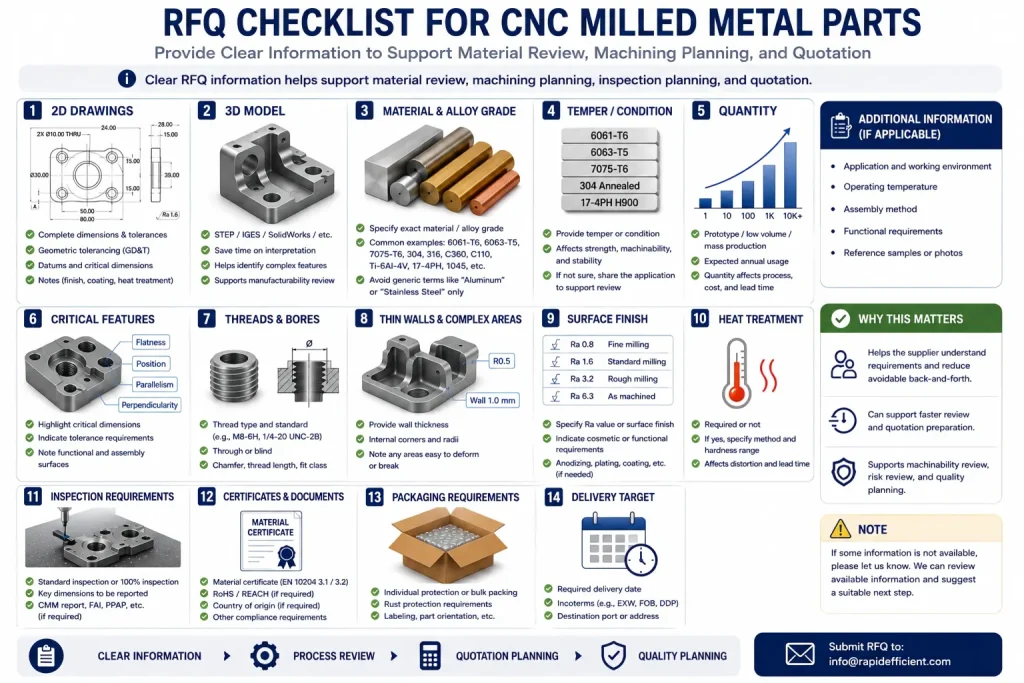
Before requesting a CNC milling quote, provide information that helps the supplier review the material and machining route.

询价项目提供什么
2D图方面, 公差, 日期, GD&时间, 表面饰面, and critical features
3D型步 / STP / IGES / X_T file
材质等级Exact alloy, 脾气, 硬度, or equivalent grade rule
数量原型, low-volume batch, 或重复生产
关键特性线程数, 钻孔, 密封面, 薄壁, 基准面, 压配合, 装饰表面
Application condition加载, 温度, 腐蚀, 化学暴露, 穿, 电导率, or weight limit
Mating parts螺丝, 轴, 针脚, 轴承, 密封, 外壳, 插入物, or assemblies
表面光洁度Ra value, 化妆品标准, 涂层, 抛光, 喷砂, 阳极氧化, 钝化
热处理Required hardness, condition before/after machining, and final inspection stage
检验要求三坐标报告, 首件检验, gauge check, 材料证明, or full inspection
Regulatory need有害物质限制指令, REACH, 食品接触, 医疗的, 航天, or industry-specific requirement if needed
Packaging needProtect cosmetic surfaces, 线程, 密封面, or soft metal parts
Delivery targetHelps review material availability, 工艺路线, 和检查时间

A good RFQ does not only say “metal CNC part.”

It explains what the part must do, what material is required, and which features control function.

RFQ checklist for CNC milling metals showing 2D drawing, 3D型, 合金牌号, 脾气, 硬度, 数量, 关键特征, 线程, 钻孔, 密封面, 薄壁, 表面饰面, 热处理, 检查需要, certificates, 包装, 及交付目标.

Practical Drawing Notes for CNC Milling Metals

例子 1: Aluminum Cosmetic Housing

材料: 6061-T6铝. Visible surfaces require uniform bead blast and clear anodizing. Mask threaded holes if required. Supplier to review cosmetic faces before production.

This connects the material, 结束, 及检验要求.

例子 2: Stainless Steel Fluid Part

材料: 316 不锈钢. Sealing face is functional. Supplier to review flatness, 表面饰面, 毛刺控制, and passivation requirement.

This helps prevent leakage and finishing disputes.

例子 3: Copper Conductive Part

材料: C110 copper or approved equivalent. Contact faces are functional. Supplier to review burr control, 氧化保护, and packaging method.

This protects conductive surfaces.

例子 4: Titanium Bracket

材料: Ti-6Al-4V. Critical holes are datum-related. Supplier to review tool access, 螺纹质量, 检查方法, and certificate requirement.

This helps control expensive material risk.

例子 5: Steel Heat-Treated Part

材料: 合金钢, heat treated to specified hardness after rough machining. Final tolerance applies after heat treatment and finish machining.

This prevents tolerance confusion before and after heat treatment.


Rapid Efficient Support for CNC Milling Metal Parts

Rapid Efficient can review custom CNC milled metal parts according to geometry, 材料等级, 宽容, 表面饰面, inspection need, 及交付目标.

We can review:

  • aluminum CNC milling
  • stainless steel CNC milling
  • brass and copper milling
  • titanium milling
  • steel and alloy steel parts
  • bronze and wear parts
  • material grade selection
  • surface finish route
  • tight tolerance features
  • 薄壁零件
  • threads and inserts
  • 密封面
  • CMM inspection needs
  • prototype and low-volume production plans

For broader CNC machining support, 看看我们的 数控加工服务 页.

If you are not sure which metal is suitable for your CNC milled part, send the 2D drawing, 3D型, application condition, 公差注释, 表面光洁度要求, 和数量. We can review the project and suggest a suitable material and machining route.


Buyer Questions About CNC Milling Metals

What metals can be CNC milled?

Common CNC milling metals include aluminum, 不锈钢, 黄铜, 铜, 钛, 碳钢, 合金钢, 工具钢, 青铜, and specialty alloys. The best choice depends on part function, 宽容, 结束, 成本, 及应用环境.

What is the easiest metal to CNC mill?

Aluminum and many brass alloys are often easier to machine than stainless steel, 钛, or hardened steel. 然而, the easiest metal is not always the best material for the application.

Is aluminum better than stainless steel for CNC milling?

Aluminum is lighter, 更容易加工, and often more cost-effective. Stainless steel is stronger in many conditions and offers better corrosion resistance depending on grade. The better choice depends on strength, 重量, 腐蚀, 结束, 和成本目标.

Which CNC milling metal is best for heat transfer?

Copper and aluminum are commonly used for heat transfer parts. Copper has high thermal conductivity, while aluminum offers lower weight and easier machining. The final choice depends on design, 成本, 表面饰面, 和组装.

Which metal is best for corrosion resistance?

不锈钢, 尤其 316, is often selected for corrosion resistance. 铝, 黄铜, 青铜, 钛, and coated steels may also be suitable depending on the environment.

What files should I send for CNC milled metal parts?

Send a 2D drawing, 3D型, 材料等级, 数量, 关键特征, 公差注释, 表面光洁度要求, coating or heat treatment notes, 检查需要, and application conditions.

发表评论

滚动至顶部

获取报价

点击或拖拽文件到该区域即可上传. 您最多可以上传 10 文件.
文件格式:TXT PDF DOC DOCX XLS XLSX PPT PPTX JPG PNG ZIP RAR DWG DXF DXF DWT DWS DWS

3D文件格式: 步, STP, sldprt, IPT, prt, 坐着, IGES, IGS, catpart, X_T, OBJ, STL